---
# Agentic BI fails to scale without a strong data engineering foundation
**URL:** https://www.sigmoid.com/blogs/agentic-bi-fails-to-scale-without-a-strong-data-engineering-foundation/
Date: 2026-10-09
Author: Joha Momin
Post Type: post
Summary: Key takeaways Pilots succeed on clean, hand-picked data that someone spent weeks preparing. Production data was never that clean, and nobody budgeted...Read More...
Categories: AI/ML
Tags: Agentic BI, Conversational Analytics, Data Engineering, Data Observability, Data Quality, Lineage
Featured Image: https://www.sigmoid.com/wp-content/uploads/2026/09/Agentic-BI-banner-img.jpg
---
## Key takeaways
- Pilots succeed on clean, hand-picked data that someone spent weeks preparing. Production data was never that clean, and nobody budgeted the time or ownership to fix it before rollout.
- This gets framed as an AI governance problem, but underneath it is a data engineering problem dressed up in AI language.
- Three foundations raise the stakes at agentic scale: data quality, because an agent acts on a bad row before a human can catch it; lineage, because it has to be live engineering infrastructure, not after-the-fact documentation; and validation, because it runs on every batch forever, not once before launch.
- Quality, lineage, and validation are one interlocking system, not three separate initiatives. Each one fails in a specific way without the other two.
- A practical start: instrument lineage before scaling agent count, give data ingestion a named owner, and set the quality bar against the decisions the agent is authorised to make.
Most agentic BI pilots succeed for a reason that has nothing to do with the agent. In test environments, agents run on carefully curated data sets where duplicates, anomalies, and edge cases have already been stripped out. Under those conditions, every question the agent is asked returns a reliable answer, because someone had already cleaned up the mess underneath.
Scaling stalls because operational pipelines are messy, and nobody budgeted the time or ownership to fix those structural gaps before rollout. The data preparation that quietly guaranteed the pilot's success is exactly the work that was never repeated at scale. What looked like an AI capability was, in large part, a one-time data cleanup that happened offstage.
When production agents start failing, leadership usually misdiagnoses the problem. The setback gets framed as an [AI governance](/blogs/building-trustworthy-agentic-ai-starts-with-the-right-guardrails/) shortfall and handed to a governance team to solve with policies and guardrails. The real constraint sits further down, in data engineering. Agents fail because they are running on a fragile data foundation that human analysts used to reconcile by hand, quietly, before anyone acted on the numbers.
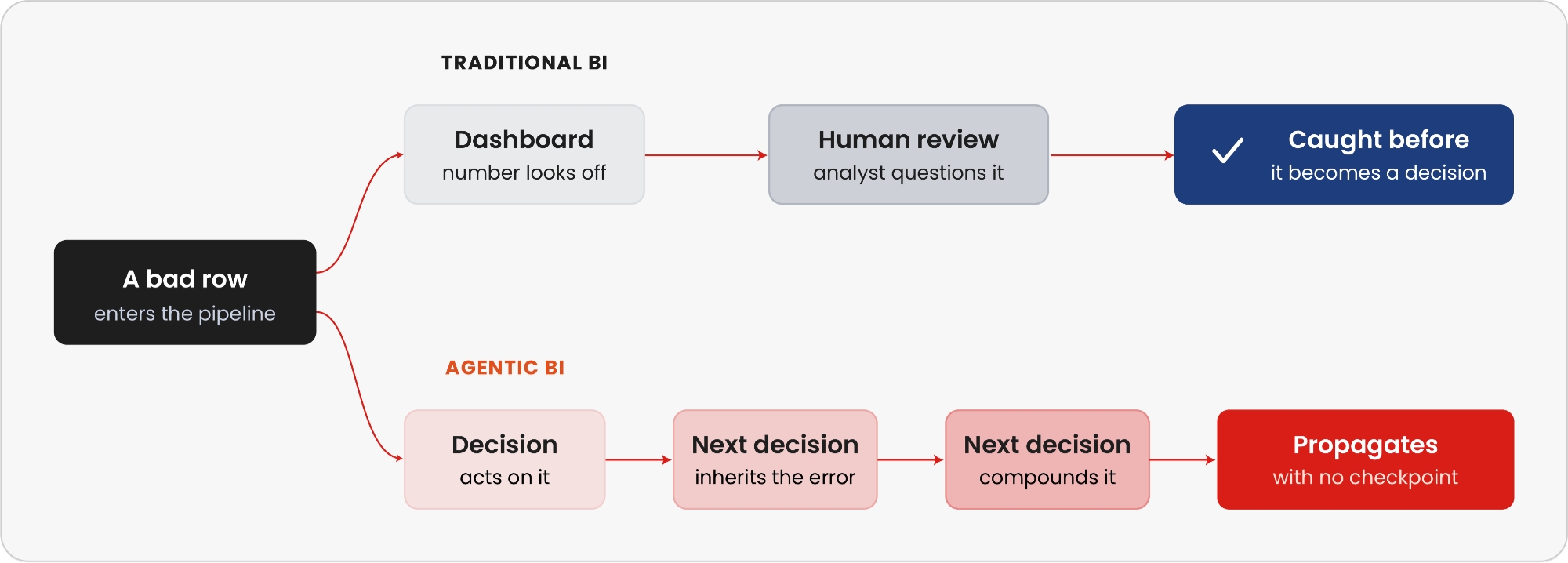
Fig.1. Why the agent worked in the pilot but not in production
## Foundations that raise the stakes on Agentic BI
Data quality, lineage, and validation are not new concerns. Every generation of BI has had to account for them. What changes for agentic BI is the cost of getting them wrong, because the agent removes the human pause where problems used to get caught.
### Data quality
In a traditional BI workflow, a bad row or a stale field sits in a dashboard until an analyst notices the number, looks off, questions it, and traces it back before anyone acts. An agent removes that pause. It acts autonomously and continuously, so a single bad row or stale field does not wait for a human to catch it; it becomes a decision, and then it becomes the input to the next decision.
That pressure compounds because agentic platforms coordinate multiple models and data sources continuously, often without human intervention at any single step. This puts far more operational pressure on data quality than prior [generative AI](/generative-ai/) or standalone analytics ever did, where a person still sat between the output and the action. The same data quality that was ‘good enough’ for human-in-the-loop BI may not hold at an agentic scale, because the failure mode compounds faster and is far more invisible. A wrong number in a dashboard is a wrong number. A wrong number fed to an autonomous agent is a wrong premise propagated across every decision downstream of it, with no natural checkpoint where it surfaces.
### Lineage
Lineage is where the gap between ‘documented’ and ‘usable’ becomes expensive. In many organizations, lineage is treated as documentation for auditors: produced after the fact, filed away, and quickly out-of-date the moment a pipeline changes. It exists to prove, months later, that a number came from a defensible source.
That is not the same asset an agent needs. Lineage has to be live engineering infrastructure that is queried and trusted daily, not a document retrieved during an audit. When an agent produces a number, the question of where that number came from, what transformed it, and whether the upstream source is current must be answerable in the moment, by the system itself. [Lineage](/blogs/monitoring-data-quality-with-ai-agents-that-move-from-alerts-to-action/) that is accurate on paper but stale in practice is not a compliance inconvenience; it is an engineering gap that directly stalls the scalability of agentic BI. An agent cannot safely expand into new domains and decisions if it cannot resolve, continuously, whether the data underneath a given answer can be trusted.
### Validation
Validation fails most often because it is treated as an event rather than a discipline. It is a pass completed before the pilot launched: the data was checked, the checks passed, the pilot went live. But agents do not pause to notice that a schema drifted overnight or that an upstream feed broke this morning.
Validation cannot be a one-off pass; it has to run on every batch, forever, because the conditions it was meant to catch change continuously and silently. A one-time validation pass is more dangerous than no validation at all, precisely because it looks like due diligence was done while the data quietly drifts the day after the check was run.
### Why fixing any one aspect at a time doesn't work
Quality, lineage, and validation are usually funded as three separate projects, with three separate owners and three separate timelines. That separation feels reasonable on a roadmap, and it is exactly why the system fails, because each of these foundations is load-bearing only when the other two are already in place. Completing them one at a time means the output stays unreliable until the last one lands, no matter how much progress the first two represent.
Each one fails in its own particular way. Quality without lineage catches a wrong number but cannot explain where it broke; the agent flags an anomaly and the investigation stalls because there is no live trail back to the source. Lineage without validation can clearly trace a mistake after it reaches a decision, but if nothing is intercepted along the way, the trail is perfect for the post-mortem and useless for prevention. Validation without a real quality standard runs every check green against a bar that was never demanding enough, so the output stays wrong even though due diligence appears to have been done.
[lc_get_post post_type="lc_block" slug="production-decision"]
This is why they cannot be sequenced as independent workstreams. Quality sets the bar, lineage makes failures explainable, and validation keeps enforcing that bar continuously. Resource them separately and you get three partial capabilities and no actual safety. Treated as one system, each covers the blind spot the other two leave open.
## A practical starting point for BI leaders
Establishing a resilient foundation does not require remediating enterprise-wide data assets prior to initial deployment. Rather, it depends on establishing clear architecture and implementation priorities from the outset.
- Implement lineage controls prior to expanding agent deployment, as establishing visibility early prevents complex, resource-intensive troubleshooting once systems scale across multiple domains.
- Establish dedicated operational ownership for [data ingestion pipelines](/etl-and-data-pipeline/), shifting from informal data preparation practices to explicit accountability for incoming data accuracy, equivalent to the oversight applied to agent performance.
- Define data quality thresholds around specific automated decision risks rather than abstract aggregate scores, ensuring criteria reflect the actual operational impact of dependent business processes.
### Building the foundation first
Operationalizing these foundational disciplines into a unified architecture requires purpose-built engineering infrastructure, which informs the design of [Sigmoid DataGuard](/data-quality-dataguard/). Developed to operate underneath agentic workflows, it integrates quality, lineage, and validation into continuous runtime processing.
The architecture begins by profiling key data entities and categorizing high-consequence attributes, such as product identifiers and regulatory fields. This structure enables target quality baselines to reflect actual operational risk rather than generic averages. System controls continuously monitor data streams, utilizing automated schema drift detection, anomaly scanning, and [data contract enforcement](/ebooks-whitepapers/unlock-governed-self-service-data-access-with-data-contracts/) to isolate unexpected modifications or out-of-range metrics prior to agent processing, while automatically routing flagged items directly to responsible engineering owners.
When operational pipeline failures occur, integrated lineage capabilities allow engineering teams to quickly trace issues back through upstream processing stages. By providing unified visibility across transformation steps, Sigmoid DataGuard simplifies root-cause analysis and reinforces the overall data foundation supporting autonomous decision-making.
## Conclusion
Ultimately, scaling agentic BI represents a data engineering challenge accessed through advanced conversational interfaces. Organizations that prioritize and resource their foundational data architecture alongside agent capabilities position their implementations to transition successfully from initial proof-of-concept projects into robust, enterprise-grade production systems.
## About the Author
**Harsha Pallapu** is a Data Analytics Manager at Sigmoid. She leads enterprise-scale data transformation and AI-ready data initiatives for global clients. Her expertise spans modern data warehousing, migration from legacy BI to cloud-native platforms, and building scalable analytics pipelines that power real-time decision-making and machine learning models. She has successfully driven end-to-end data modernization projects across retail, banking, insurance and finance, helping organizations move from static reporting to AI-driven operations.
[lc_the_tags]
## Suggested readings
[View all](/blogs/)

#### How to trust Agentic BI when it acts without being asked
[Read blog](/blogs/how-to-trust-agentic-bi-when-it-acts-without-being-asked/)

#### Why most Agentic BI pilots never reach production
[Read blog](/blogs/why-most-agentic-bi-pilots-never-reach-production/)

#### Conversational BI is redefining enterprise decision-making
[Read blog](/blogs/conversational-bi-is-redefining-enterprise-decision-making/)
## Featured blogs
[lc_get_posts post_type="post"
posts_per_page="4" orderby="date" output_view="lc_get_posts_mycustom_view" output_number_of_columns="4"
output_wrapper_class="row" output_article_class="shadow" output_hide_elements="Excerpt"
output_excerpt_length="0" output_excerpt_text="Read More" output_heading_tag="span"
output_featured_image_format="thumbnail" output_featured_image_class="card-img-left" ]
## Share
[addtoany]
## Subscribe to get latest insights
## Talk to our experts
Get the best ROI with Sigmoid’s services in data engineering and AI
---
## Categories
- AI/ML
---
## Navigation
- [Company](/about-sigmoid)
- [Newsroom](/newsroom)
- [Life at Sigmoid](/careers)
- [Takshashila](/takshashila)
- [Contact Us](/contact-us)
- [AI Strategy Blueprint your AI advantage](/enterprise-ai-strategy/)
- [Generative AI Drive innovation with Generative AI](/generative-ai/)
- [Responsible AI Build trust with ethical AI practices](/responsible-ai-in-enterprise/)
- [Agentic AI Reshape business with scalable agentic systems](/agentic-ai-solutions/)
- [AI Managed Services Ensure reliable AI performance](/ai-managed-services/)
- [Advanced Analytics Transform your business with data-driven insights](/advanced-data-analytics-solutions/)
- [Download whitepaper](/ebooks-whitepapers/the-new-qsr-playbook-transforming-menu-strategy-into-a-growth-engine/)
- [Data Strategy Strong data foundations for scalable AI](/data-analytics-strategy/)
- [Data Management Leverage data as a strategic asset](/ai-data-management-services/)
- [DataOps Automate data for speed and quality](/data-devops/)
- [Forward Deployed Engineering Scale enterprise AI with FDEs & specialized agents](/forward-deployed-engineering/)
- [Data Engineering Deliver insights faster with scalable pipelines](/data-engineering/)
- [Cloud Transformation Modernize data to maximise efficiency](/cloud-migration/)
- [Download whitepaper](/ebooks-whitepapers/building-data-products-in-a-data-mesh-to-drive-business-value/)
- [Data Modeling Structure data for better decisions](/data-modeling-services/)
- [Data Visualization Transform data into actionable stories](/data-visualization-service/)
- [BI Migration Enhance decision making with modern BI tools](/bi-migration/)
- [Data Observability Build trust with healthy, accurate data](/data-observability/)
- [Automated Insights Make smarter decisions with auto-generated insights](/automated-insights/)
- [Download whitepaper](/ebooks-whitepapers/how-cognitive-bi-drives-an-intelligent-enterprise/)
- [CPG & Retail End-to-end analytics for planning, operations, and commercial excellence](/industries/cpg-analytics/)
- [Life Sciences Trusted intelligence across clinical, commercial, and operational workflows](/industries/life-sciences/)
- [Banking & Financial Services AI-powered analytics for risk, compliance and customer experience](/industries/banking-financial-analytics-services/)
- [Insurance Modernize core insurance platforms and unlock new revenue streams with AI](/industries/insurance-reimagined-with-ai/)
- [Download infographic](/wp-content/uploads/2026/03/Infographic_Maturity-Framework-for-Scaling-Agentic-AI.pdf)
- [Helios Turn marketing data into measurable business outcomes](/marketing-suite-helios/)
- [Stratos AI-powered platform for resilient supply chains](/supply-chain-stratos/)
- [DataGuard Agentic AI platform for data quality and governance](/data-quality-dataguard/)
- [MediaIQ Advanced platform for in-flight marketing measurement](/accelerators/sigmoid-mediaiq-multi-touch-attribution-tool/)
- [CampaignIQ AI-driven platform for optimized campaign budget allocation](/accelerators/sigmoid-campaigniq/)
- [AssistBot GenAI email assistant that automates human-like responses](/accelerators/sigmoid-assistbot-for-ai-email-assistant/)
- [CreativeBot GenAI tool for personalized and brand-aligned creative design](/accelerators/sigmoid-creativebot/)
- [SocialBot GenAI platform to analyze digital conversations and trends](/accelerators/#marketing|socialbot)
- [DemandIQ Predict trends accurately and optimize inventory management](/accelerators/sigmoid-demandiq/)
- [NetworkIQ Track and optimize logistics operations in real-time to quickly address disruptions](/accelerators/sigmoid-networkiq/)
- [SupplyIQ End-to-end platform to optimize supply chain operations](/accelerators/sigmoid-supplyiq/)
- [ProcurementIQ Automated procurement operations for maximum savings, compliance and efficiency](/accelerators/sigmoid-procurementiq/)
- [RapidML Accelerated deployment for machine learning models](/accelerators/sigmoid-rapidml/)
- [DataGuard Comprehensive platform for proactive data quality management](/accelerators/data-quality-tool-sigmoid-dataguard/)
- [CloudPulse Cloud cost optimization platform with multi-cloud management](/accelerators/sigmoid-cloudpulse/)
- [RAPID GenAI foundation with built-in governance and cost clarity](/accelerators/sigmoid-rapid/)
- [AnalyticsBot Conversational analytics for faster business decisions](/accelerators/sigmoid-analyticsbot/)
- [DataConnect Seamlessly ingest, integrate and harmonize data from diverse sources](/accelerators/sigmoid-dataconnect/)
- [Reconica AI-powered data harmonization and reconciliation engine](/accelerators/sigmoid-reconica/)
- [ConverseBot GenAI driven insights generation for automated insights from reports](/accelerators/#sales|conversebot)
- [iNRM Cross-lever revenue growth optimization platform](/accelerators/sigmoid-inrm/)
- [AssortmentIQ Optimize shelf layouts and assortment mix at scale with AI-based insights](/accelerators/sigmoid-assortmentiq/)
- [Read whitepaper](/ebooks-whitepapers/building-agentic-ai-chatbots-for-business-process-transformation/)
- [Listen Podcast](/events/podcast/how-jack-in-the-box-is-redefining-personalization-and-supply-chain-with-ai/)
- [Blogs](/blogs/)
- [White Papers](/ebooks-whitepapers/)
- [Case Studies](/case-studies/)
- [Podcast](/events/podcast/#Podcasts)
- [Download case study](/case-studies/ai-based-dynamic-targeting-and-personalized-hcp-engagement-for-pharma-marketing/)
- [ConverseBot](/accelerators/#sales|conversebot/)
## Tags
- Agentic BI
- Conversational Analytics
- Data Engineering
- Data Observability
- Data Quality
- Lineage
---
## Footer Links
- [Talk to our AI experts](/contact-us/)
- [AI Strategy](/enterprise-ai-strategy/)
- [Agentic AI](/agentic-ai-solutions/)
- [Generative AI](/generative-ai/)
- [AI Managed Services](/ai-managed-services/)
- [Responsible AI](/responsible-ai-in-enterprise/)
- [Advanced Analytics](/advanced-data-analytics-solutions/)
- [Data Strategy](/data-analytics-strategy//)
- [Data Engineering](/data-engineering/)
- [Data Management](/ai-data-management-services/)
- [Cloud Transformation](/cloud-transformation/)
- [DataOps](/data-devops/)
- [Forward Deployed Engineering](/forward-deployed-engineering/)
- [Data Visualization](/data-visualization-service/)
- [Automated Insights](/automated-insights/)
- [BI Migration](/bi-migration/)
- [Data Modeling](/data-modeling-services/)
- [Data Observability](/data-observability/)
- [CPG & Retail](/industries/cpg-analytics/)
- [Life Sciences](/industries/life-sciences/)
- [Banking & Financial Services](/industries/banking-financial-analytics-services/)
- [Insurance](/industries/insurance-reimagined-with-ai/)
- [Case Studies](/case-studies/)
- [Thought Leadership](/ebooks-whitepapers/)
- [Blogs](/blogs/)
- [Helios](/marketing-suite-helios/)
- [Stratos](/supply-chain-stratos/)
- [DataGuard](/data-quality-dataguard/)
- [Company](/about-sigmoid/)
- [Newsroom](/newsroom/)
- [Accelerators](/accelerators/)
- [Careers](/careers/)
- [Privacy Policy |](/privacy-policy/)
- [Cookie Policy](/cookie-policy/)