---
# Process workflow for running Spark application on Kubernetes using Airflow
**URL:** https://www.sigmoid.com/blogs/process-workflow-for-running-spark-application-on-kubernetes-using-airflowark/
Date: 2023-06-30
Author: Sigmoid
Post Type: post
Summary: In recent years, there has been a significant surge in companies using Spark on Kubernetes (K8s) and it’s no wonder why. The...Read More...
Categories: Data Management
Featured Image: https://www.sigmoid.com/wp-content/uploads/2023/10/Process-Workflow-Banner-opt.jpg
---
In recent years, there has been a significant surge in companies using Spark on Kubernetes (K8s) and it's no wonder why. The benefits that K8s offer have been the driving force behind this trend. In fact, a recent [survey](https://www.cncf.io/reports/cncf-annual-survey-2021/) states that 96% of organizations are now either using or evaluating Kubernetes. As more and more businesses migrate to the cloud, the number of companies deploying Spark on Kubernetes continues to rise. However, it's important to note that this approach does have its drawbacks. Enterprises that choose to run Spark with Kubernetes must be prepared to tackle the challenges that come with this solution. This means having a strong understanding of their infrastructure and being able to optimize its performance across multiple dimensions. Ultimately, success with Spark on Kubernetes depends on the ability to monitor and manage the platform effectively.
This blog will detail the steps for setting up a Spark App on Kubernetes using the Airflow scheduler. The goal is to enable data engineers to program the stack seamlessly for similar workloads and requirements.
## Benefits of running Spark on Kubernetes
Kubernetes can save effort and provide a better experience while executing Spark jobs. In addition, deploying Spark on K8s solution could offer some benefits to the business:
- Scalability to meet any workload demands
- Monitoring compute nodes and automatically replaces instances in case of failure, ensuring reliability
- Portability to any [cloud environment](/cloud-migration/), making it less dependent on any particular cloud provider. This approach saves time in orchestrating, distributing, and scheduling Spark jobs across different cloud providers
- Cost-effectiveness by not relying on a specific cloud provider
- Ad-hoc monitoring for better visibility into the system's performance
- Uses a common k8s ecosystem as with other workloads and offers features such as continuous deployment, role-based access control (RBAC), dedicated node-pools, and autoscaling, among others.
## Understanding the technologies
Before moving to the setup part, let’s first have a quick look at all the technologies that will be covered ahead:-
- Kubernetes
- Spark
- Airflow
### Kubernetes
Kubernetes is a container management system developed on the Google platform. Kubernetes helps to manage containerized applications in various types of physical, virtual, and cloud environments. Google Kubernetes is a highly flexible container tool to consistently deliver complex applications running on clusters of hundreds to thousands of individual servers.
### Spark
Apache Spark is a distributed processing system for handling big data workloads. It is an open-source platform that leverages in-memory caching and optimized query execution to deliver fast queries on data of any size. Spark is designed to be a fast and versatile engine for large-scale data processing.
### Airflow
Apache Airflow is an open-source platform designed for developing, scheduling, and monitoring batch-oriented workflows. Airflow provides an extensible Python framework that enables users to create workflows connecting with virtually any technology. The platform includes a web interface that helps manage the state of workflows. Airflow is highly versatile and can be deployed in many ways, ranging from a single process on a laptop to a distributed setup capable of supporting the largest [data workflows](/data-devops/).
### Spark on Kubernetes using Airflow
Apache Spark is a high-performance open-source analytics engine designed for processing massive volumes of data using data parallelism and fault tolerance. Kubernetes, on the other hand, is an open-source container orchestration platform that automates application deployment, scaling, and management. When used together, [Spark and Kubernetes](/blogs/containerization-of-pyspark-using-kubernetes/) offer a powerful combination that delivers exceptional results. Simply put, Spark provides the computing framework, while Kubernetes manages the cluster, providing users with an operating system-like interface for managing multiple clusters. This results in unparalleled cluster use and allocation flexibility, which can lead to significant cost savings.
The Spark on k8s operator is a great choice for submitting a single Spark job to run on Kubernetes. However, users often need to chain multiple Spark and other types of jobs into a pipeline and schedule the pipeline to run periodically. In this scenario, Apache Airflow is a popular solution. Apache Airflow is an open-source platform that allows users to programmatically author, schedule, and monitor workflows. It can be run on Kubernetes.
### The current setup
Kubernetes is used to create a Spark cluster from which parallel jobs will be launched. The launch of the jobs are not managed directly through the master node of the Spark cluster but from another node running an instance of Airflow. This provides more control over the executed jobs as well as interesting features such as backfill execution. This consists in performing executions that correspond to past time from the current time, when the scheduling is defined. Airflow comprises a robust server and scheduler that provides a Python API for defining executors. With this API, programmers can specify tasks and their execution using a DAG (directed acyclic graph) format.
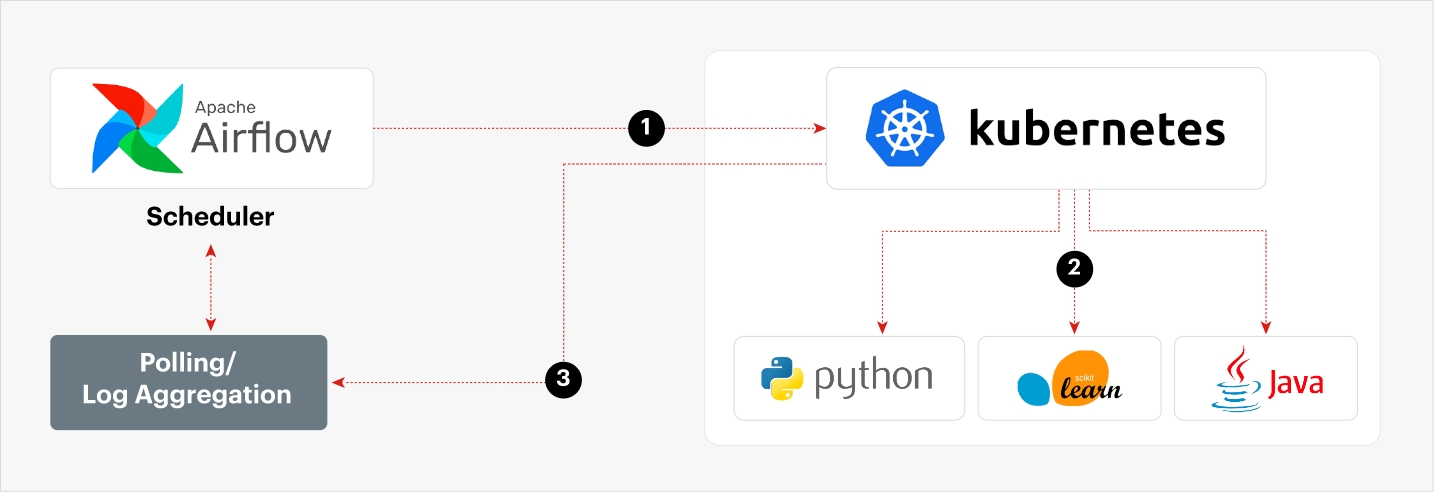
Source: [Kubernetes.io](https://kubernetes.io/blog/2018/06/28/airflow-on-kubernetes-part-1-a-different-kind-of-operator/)
### Steps to run Spark application on Kubernetes through Airflow schedule:
- Step 1 - Setting up Kubernetes Cluster
- Step 2 - Spark operator setup over Kubernetes
- Step 3 - Installation of Airflow over Kubernetes
### Step 1: Setting up Kubernetes Cluster
The setup is done using [RKE2](https://docs.rke2.io/). The RKE document captures all the steps on the installation process.
### Step 2: Spark operator setup on Kubernetes (k8s)
**2a.** After setting up the k8s cluster, install spark-operator inside the k8s using the following command:
```
$ kubectl create namespace spark-operator
$ kubectl create namespace spark-jobs
$ helm repo add spark-operator
https://googlecloudplatform.github.io/spark-on-k8s-operator
$ helm install spark-operator/spark-operator --
namespace spark-operator --set webhook.enable=true
```
**2b.** Set k8s to run spark applications in the custom namespace by adding< --set sparkJobNamespace=spark-jobs>
```
$ helm install spark-operator spark-operator/spark-operator --namespace
spark-operator --set webhook.enable=true --set sparkJobNamespace=spark-jobs
```
**2c.** Create a service account called spark and clusterrolebinding.
```
$ kubectl create serviceaccount spark -n spark-jobs
$ kubectl create clusterrolebinding spark-role --clusterrole=edit --
serviceaccount=spark-jobs:spark --namespace=spark-jobs
```
Spark-operator setup is now complete.
**2d.** Next, the spark operator will be tested by submitting a sample spark application using a deployment file. Here’s how you can code the file:
```
**sample.yaml**
apiVersion: "sparkoperator.k8s.io/v1beta2"
kind: SparkApplication
metadata:
name: spark-pi
namespace: spark-jobs
spec:
type: Scala
mode: cluster
image: "gcr.io/spark-operator/spark:v2.4.4"
imagePullPolicy: Always
mainClass: org.apache.spark.examples.SparkPi
mainApplicationFile: "local:///opt/spark/examples/jars/spark-examples_2.11-
2.4.4.jar"
sparkVersion: "2.4.4"
restartPolicy:
type: Never
volumes:
- name: "test-volume"
hostPath:
path: "/tmp"
type: Directory
driver:
cores: 1
coreLimit: "1200m"
memory: "512m"
labels:
version: 2.4.4
serviceAccount: spark
volumeMounts:
- name: "test-volume"
mountPath: "/tmp"
executor:
cores: 1
instances: 1
memory: "512m"
labels:
version: 2.4.4
volumeMounts:
- name: "test-volume"
mountPath: "/tmp"
```
**2e.** Start the application
```
$ kubectl apply -f sample.yaml
```
**2f.** List out all sparkapplication jobs
```
$ kubectl get sparkapplication -n spark-jobs
```


**2g.** To check the spark application log, use the following command -
```
$ kubectl -n logs -f
```
Example is below:
```
$ kubectl -n spark-jobs logs -f spark-pi-driver
```
### Step 3: Installation of Airflow On Kubernetes.
**3a.** Create namespace in k8s cluster
```
$ kubectl create namespace airflow
```
**3b.** Install Airflow using helm
```
$ git clone -b main https://github.com/airflow-helm/charts.git
$ helm upgrade --install airflow charts/airflow -f values.yaml -n airflow
$ helm upgrade --install airflow /home/ubuntu/airflow/charts/charts/airflow -f
values.yaml --namespace airflow
```
Some of the changes that were pushed (for a specific requirement) in charts/charts/airflow/values.yaml, as follows-
**3c.** Changed executor type from CeleryExecutor to **KubernetesExecutor**

**1.** Disabled the Flower component
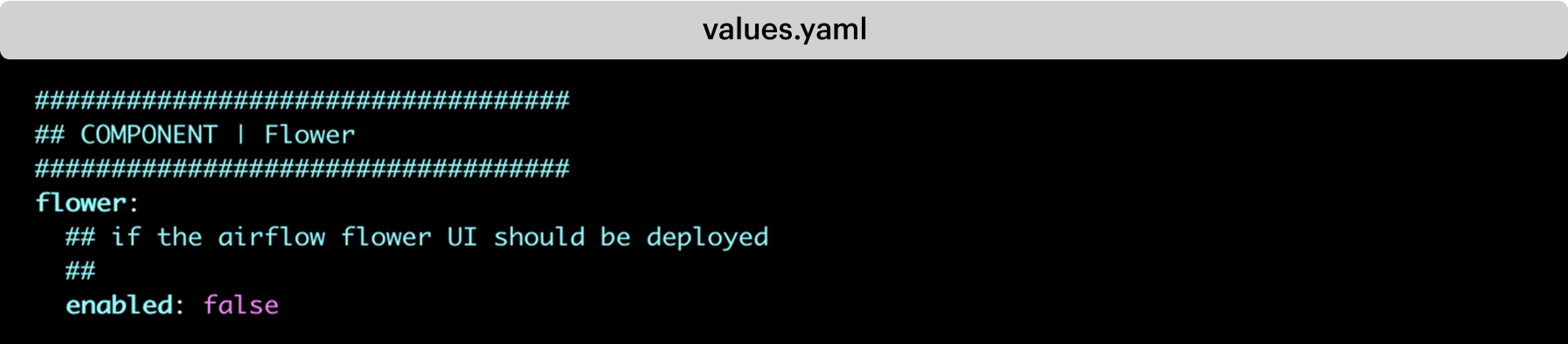
**2.** Disabled redis
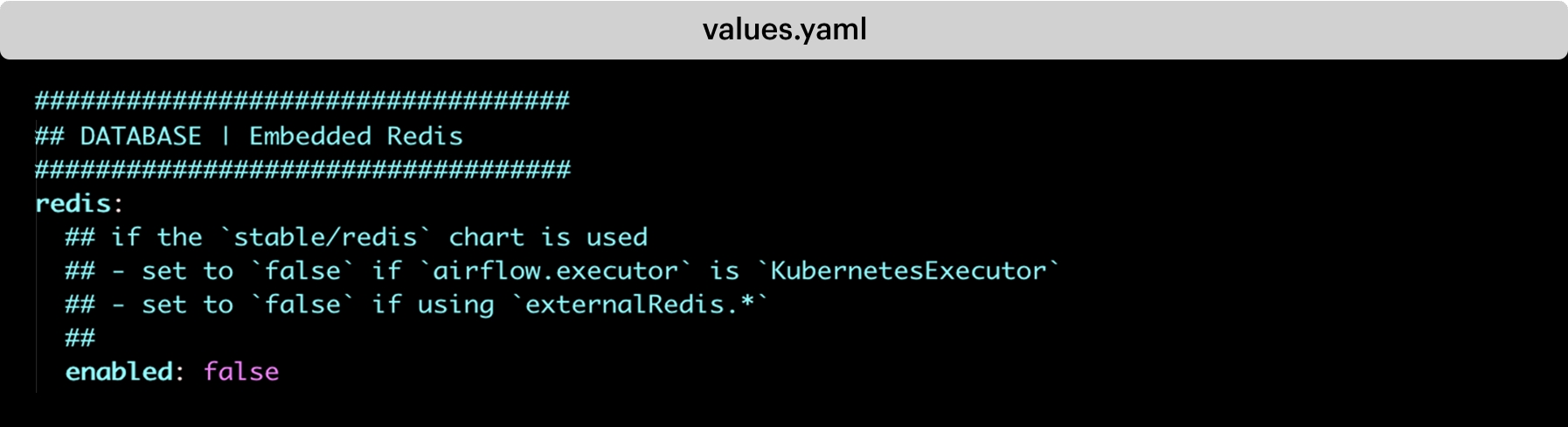
**3.** Added git repo url where airflow will check the DAG files -

**4.** Configured web UI user account for the defined users and roles with the access. The command shown below is a dummy. Programmers can completely customize this.
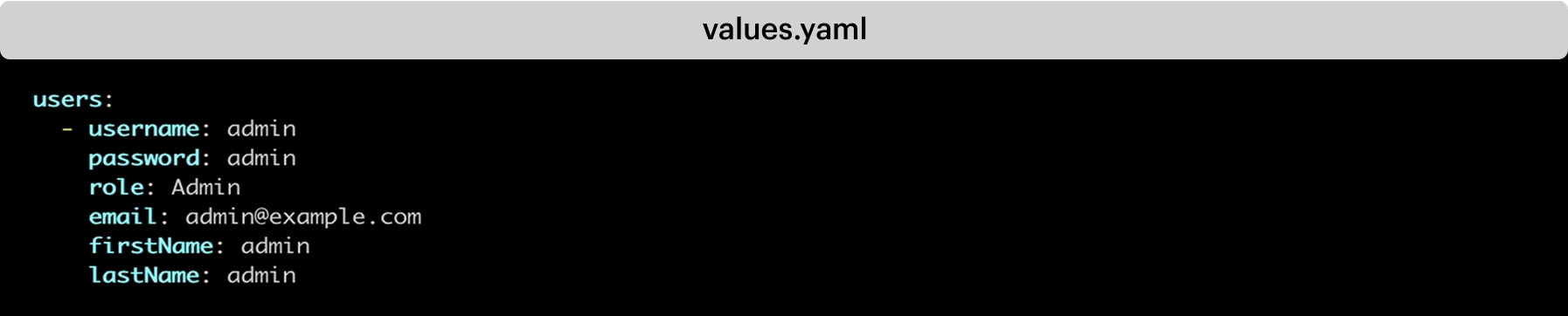
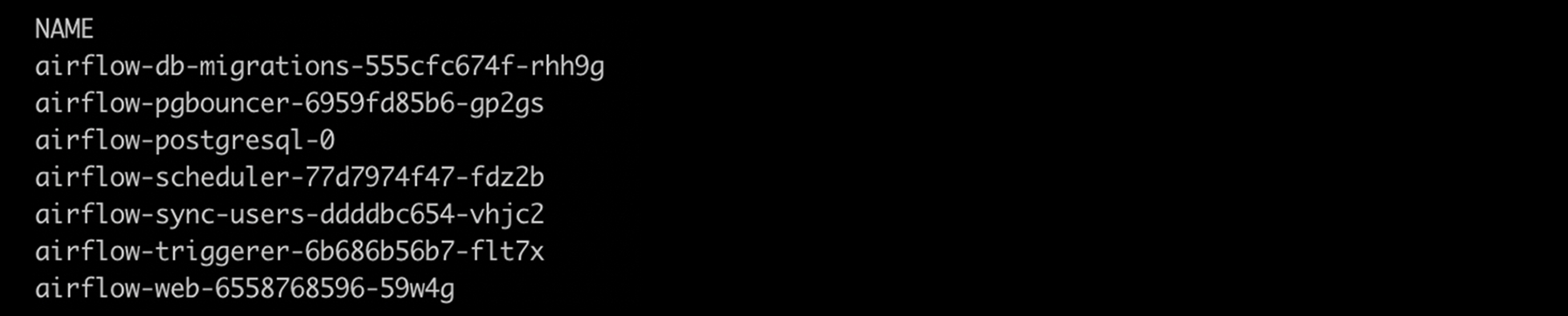
Once installation is done we can see the pods and services of airflow.
```
$ kubectl get pods -n airflow
```
```
$ kubectl get svc -n airflow
```

**3d.** Airflow can be connected by UI using airflow-web service with user account details which are configured in values.yaml file.
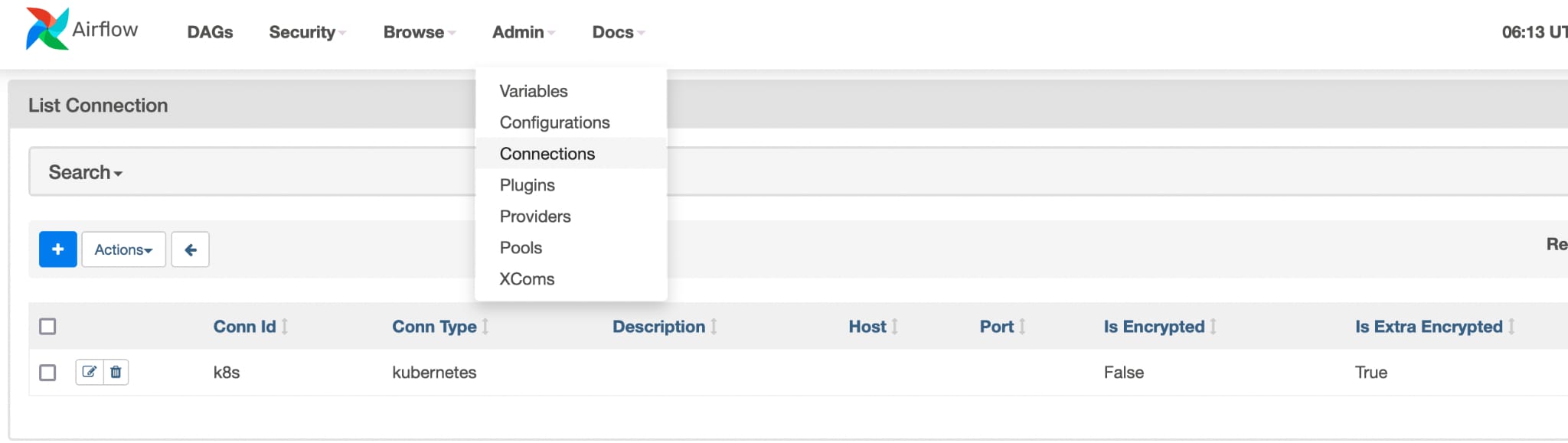
**a.** Next, create a kubernetes_conn_id from airflow web UI.
**1.** Select Admin>> connections>> select the connection>> create connection ID
**2.** Sample DAG used for testing:
```
**sample-dag.py**
from airflow import DAG
from datetime import timedelta, datetime
from airflow.providers.cncf.kubernetes.operators.spark_kubernetes import
SparkKubernetesOperator
from airflow.providers.cncf.kubernetes.sensors.spark_kubernetes import
SparkKubernetesSensor
from airflow.models import Variable
from kubernetes.client import models as k8s
from airflow.contrib.operators.kubernetes_pod_operator import KubernetesPodOperator
default_args={
'depends_on_past': False,
'email': ['[email protected]'],
'email_on_failure': False,
'email_on_retry': False,
'retries': 1,
'retry_delay': timedelta(minutes=5)
}
with DAG(
'my-second-dag',
default_args=default_args,
description='simple dag',
schedule_interval=timedelta(days=1),
start_date=datetime(2022, 11, 17),
catchup=False,
tags=['example']
) as dag:
t1 = SparkKubernetesOperator(
task_id='n-spark-pi',
trigger_rule="all_success",
depends_on_past=False,
retries=3,
application_file="new-spark-pi.yaml",
namespace="spark-jobs",
kubernetes_conn_id="myk8s",
api_group="sparkoperator.k8s.io",
api_version="v1beta2",
do_xcom_push=True,
dag=dag
)
```
**3.** Sample new-spark-pi.yaml file:
```
**new-spark-pi.yaml**
apiVersion: "sparkoperator.k8s.io/v1beta2"
kind: SparkApplication
metadata:
name: spark-pi
namespace: spark-jobs
spec:
type: Scala
mode: cluster
image: "gcr.io/spark-operator/spark:v2.4.4"
imagePullPolicy: Always
mainClass: org.apache.spark.examples.SparkPi
mainApplicationFile: "local:///opt/spark/examples/jars/spark-examples_2.11-2.4.4.jar"
sparkVersion: "2.4.4"
restartPolicy:
type: Never
volumes:
- name: "test-volume"
hostPath:
path: "/tmp"
type: Directory
driver:
cores: 1
coreLimit: "1200m"
memory: "512m"
labels:
version: 2.4.4
serviceAccount: spark
volumeMounts:
- name: "test-volume"
mountPath: "/tmp"
executor:
cores: 1
instances: 1
memory: "512m"
labels:
version: 2.4.4
volumeMounts:
- name: "test-volume"
mountPath: "/tmp"
```
**b.** Once the DAG and spark application file is pushed into the configured repo, Airflow automatically picks the job and starts processing.
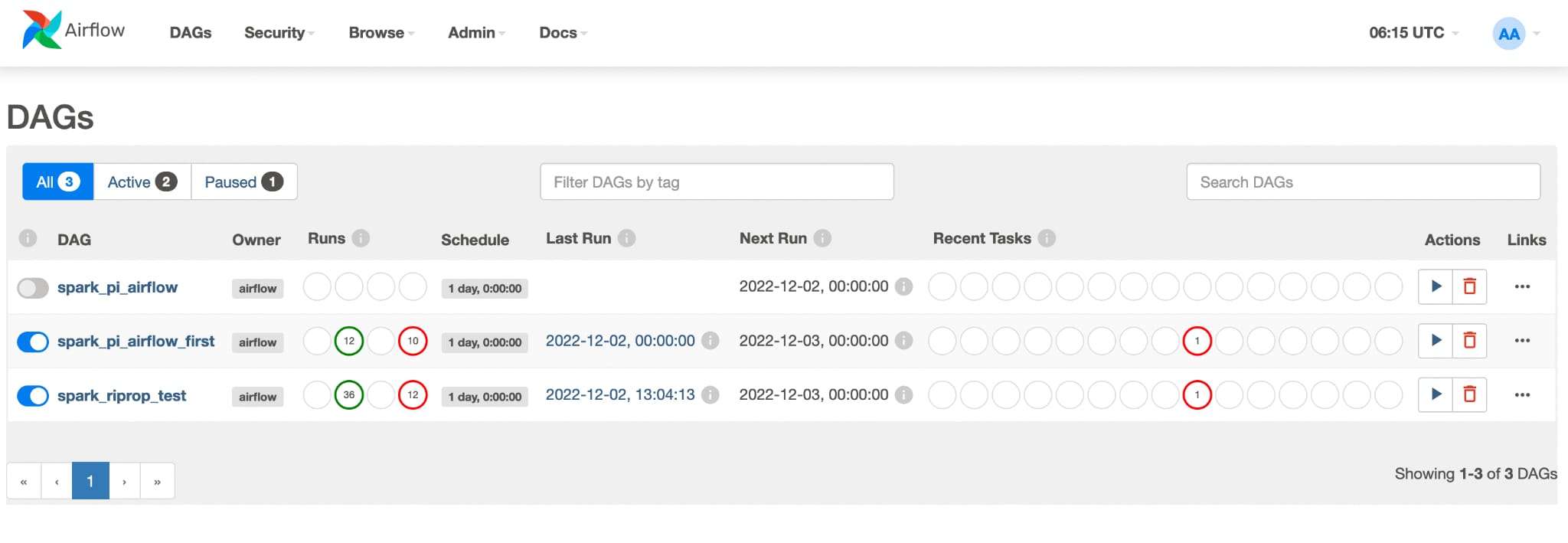
The same can be verified from seeing the spark driver pod log using the command shared previously (kubectl -n spark-jobs logs -f spark-pi-driver).
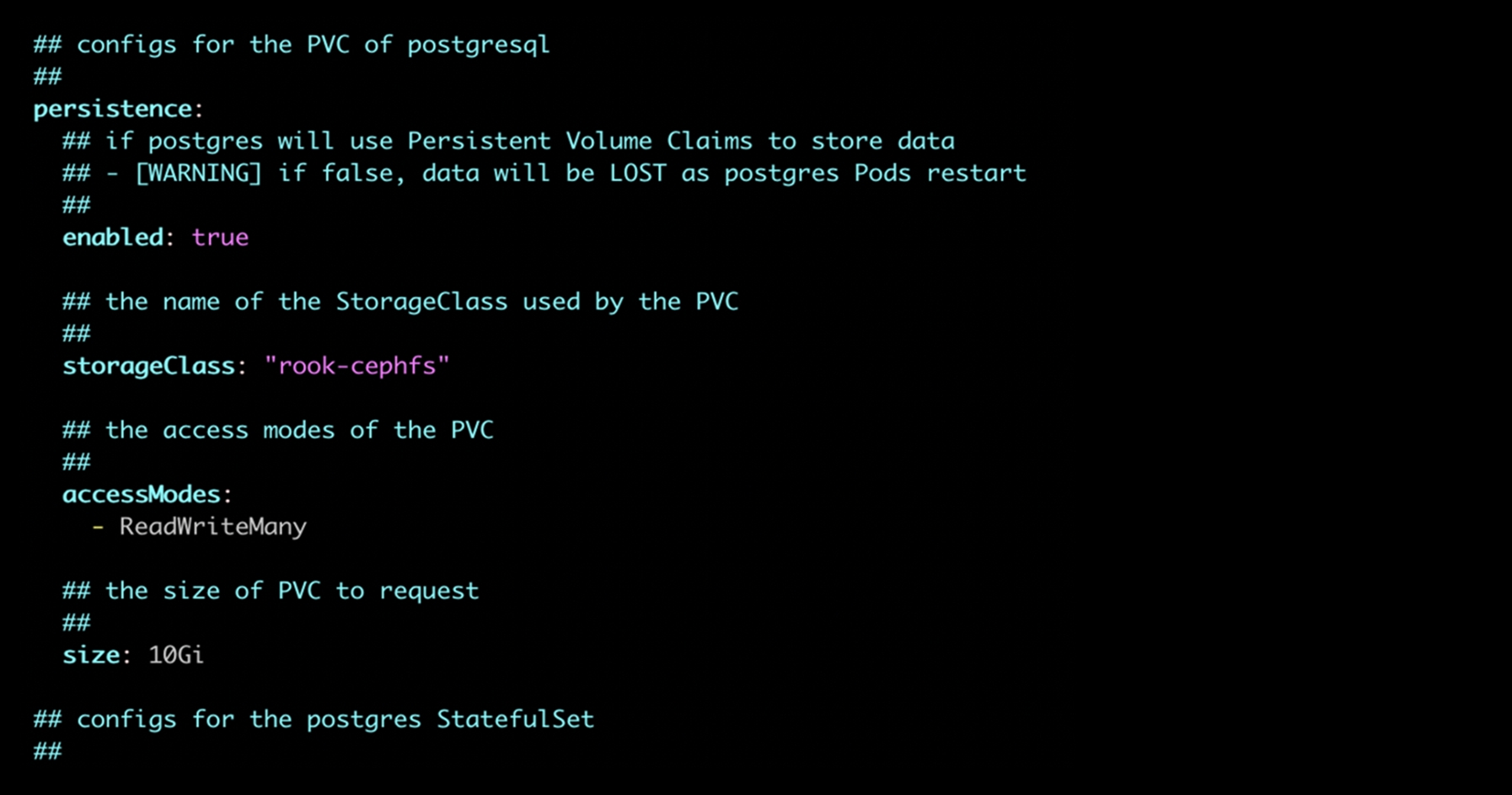
At this point, the development process can start for running the Spark application. It is recommended to add a PVC for PostGres to preserve all the data in Airflow. Additionally, as per requirements or specific needs, consider adding PVC to all necessary pods, including the Spark application.
**3e.** Steps to add PVC for PostGres:-
- For adding the PVC, set ‘enabled to true’ under the persistence section
- Add storageClass (in case of using rook-cephfs)
- Add the size according to requirement
## Conclusion
It is evident that Kubernetes allows testing of the system without having to reserve or dedicate hardware to the purpose and this facilitates and makes it much more comfortable trying new things, ways of working, new features, different configurations, etc. Spark is a powerful [data analytics](/data-science-services/#ip-SSI-1) platform that empowers you to build and serve machine learning applications with ease. With Kubernetes, the containerized hosting model of applications can be automated, thanks to its scheduler and APIs that optimize resource usage across hosted applications in clusters. Together, Spark and Kubernetes offer the ultimate solution for ML experts, providing the best of both worlds. By setting up Spark instances into K8s clusters,enterprises can unlock a seamless and well-documented process that streamlines data workflows.
## About the author
Chandan Pandey is DataOps Lead Engineer at Sigmoid. He has 7+ years of providing end-to-end solutions for scalable, highly available, and secure cloud environments using platforms like AWS, GCP & Azure. He specializes in leveraging the most cutting-edge tools and technologies to build secure and robust architectures, and in deploying and managing containerized applications.
Ganesh Kumar Singh is DataOps II Engineer at Sigmoid. He specializes in development, deployment and maintenance of cloud-based applications with extensive hands-on experience in automation, scripting, source control management, and configuration management using a variety of platforms and tools for more than 4 years.
## Featured blogs
[lc_get_posts post_type="post"
posts_per_page="4" orderby="date" output_view="lc_get_posts_mycustom_view" output_number_of_columns="4"
output_wrapper_class="row" output_article_class="shadow" output_hide_elements="Excerpt"
output_excerpt_length="0" output_excerpt_text="Read More" output_heading_tag="span"
output_featured_image_format="thumbnail" output_featured_image_class="card-img-left" ]
## Share
[addtoany]
## Subscribe to get latest insights
## Talk to our experts
Get the best ROI with Sigmoid’s services in data engineering and AI
---
## Categories
- Data Management
---
## Navigation
- [Company](/about-sigmoid)
- [Newsroom](/newsroom)
- [Life at Sigmoid](/careers)
- [Takshashila](/takshashila)
- [Contact Us](/contact-us)
- [AI Strategy Blueprint your AI advantage](/enterprise-ai-strategy/)
- [Generative AI Drive innovation with Generative AI](/generative-ai/)
- [Responsible AI Build trust with ethical AI practices](/responsible-ai-in-enterprise/)
- [Agentic AI Reshape business with scalable agentic systems](/agentic-ai-solutions/)
- [AI Managed Services Ensure reliable AI performance](/ai-managed-services/)
- [Advanced Analytics Transform your business with data-driven insights](/advanced-data-analytics-solutions/)
- [Download whitepaper](/ebooks-whitepapers/the-new-qsr-playbook-transforming-menu-strategy-into-a-growth-engine/)
- [Data Strategy Strong data foundations for scalable AI](/data-analytics-strategy/)
- [Data Management Leverage data as a strategic asset](/ai-data-management-services/)
- [DataOps Automate data for speed and quality](/data-devops/)
- [Forward Deployed Engineering Scale enterprise AI with FDEs & specialized agents](/forward-deployed-engineering/)
- [Data Engineering Deliver insights faster with scalable pipelines](/data-engineering/)
- [Cloud Transformation Modernize data to maximise efficiency](/cloud-migration/)
- [Download whitepaper](/ebooks-whitepapers/building-data-products-in-a-data-mesh-to-drive-business-value/)
- [Data Modeling Structure data for better decisions](/data-modeling-services/)
- [Data Visualization Transform data into actionable stories](/data-visualization-service/)
- [BI Migration Enhance decision making with modern BI tools](/bi-migration/)
- [Data Observability Build trust with healthy, accurate data](/data-observability/)
- [Automated Insights Make smarter decisions with auto-generated insights](/automated-insights/)
- [Download whitepaper](/ebooks-whitepapers/how-cognitive-bi-drives-an-intelligent-enterprise/)
- [CPG & Retail End-to-end analytics for planning, operations, and commercial excellence](/industries/cpg-analytics/)
- [Life Sciences Trusted intelligence across clinical, commercial, and operational workflows](/industries/life-sciences/)
- [Banking & Financial Services AI-powered analytics for risk, compliance and customer experience](/industries/banking-financial-analytics-services/)
- [Insurance Modernize core insurance platforms and unlock new revenue streams with AI](/industries/insurance-reimagined-with-ai/)
- [Download infographic](/wp-content/uploads/2026/03/Infographic_Maturity-Framework-for-Scaling-Agentic-AI.pdf)
- [Helios Turn marketing data into measurable business outcomes](/marketing-suite-helios/)
- [Stratos AI-powered platform for resilient supply chains](/supply-chain-stratos/)
- [DataGuard Agentic AI platform for data quality and governance](/data-quality-dataguard/)
- [MediaIQ Advanced platform for in-flight marketing measurement](/accelerators/sigmoid-mediaiq-multi-touch-attribution-tool/)
- [CampaignIQ AI-driven platform for optimized campaign budget allocation](/accelerators/sigmoid-campaigniq/)
- [AssistBot GenAI email assistant that automates human-like responses](/accelerators/sigmoid-assistbot-for-ai-email-assistant/)
- [CreativeBot GenAI tool for personalized and brand-aligned creative design](/accelerators/sigmoid-creativebot/)
- [SocialBot GenAI platform to analyze digital conversations and trends](/accelerators/#marketing|socialbot)
- [DemandIQ Predict trends accurately and optimize inventory management](/accelerators/sigmoid-demandiq/)
- [NetworkIQ Track and optimize logistics operations in real-time to quickly address disruptions](/accelerators/sigmoid-networkiq/)
- [SupplyIQ End-to-end platform to optimize supply chain operations](/accelerators/sigmoid-supplyiq/)
- [ProcurementIQ Automated procurement operations for maximum savings, compliance and efficiency](/accelerators/sigmoid-procurementiq/)
- [RapidML Accelerated deployment for machine learning models](/accelerators/sigmoid-rapidml/)
- [DataGuard Comprehensive platform for proactive data quality management](/accelerators/data-quality-tool-sigmoid-dataguard/)
- [CloudPulse Cloud cost optimization platform with multi-cloud management](/accelerators/sigmoid-cloudpulse/)
- [RAPID GenAI foundation with built-in governance and cost clarity](/accelerators/sigmoid-rapid/)
- [AnalyticsBot Conversational analytics for faster business decisions](/accelerators/sigmoid-analyticsbot/)
- [DataConnect Seamlessly ingest, integrate and harmonize data from diverse sources](/accelerators/sigmoid-dataconnect/)
- [Reconica AI-powered data harmonization and reconciliation engine](/accelerators/sigmoid-reconica/)
- [ConverseBot GenAI driven insights generation for automated insights from reports](/accelerators/#sales|conversebot)
- [iNRM Cross-lever revenue growth optimization platform](/accelerators/sigmoid-inrm/)
- [AssortmentIQ Optimize shelf layouts and assortment mix at scale with AI-based insights](/accelerators/sigmoid-assortmentiq/)
- [Read whitepaper](/ebooks-whitepapers/building-agentic-ai-chatbots-for-business-process-transformation/)
- [Listen Podcast](/events/podcast/how-jack-in-the-box-is-redefining-personalization-and-supply-chain-with-ai/)
- [Blogs](/blogs/)
- [White Papers](/ebooks-whitepapers/)
- [Case Studies](/case-studies/)
- [Podcast](/events/podcast/#Podcasts)
- [Download case study](/case-studies/ai-based-dynamic-targeting-and-personalized-hcp-engagement-for-pharma-marketing/)
- [ConverseBot](/accelerators/#sales|conversebot/)
---
## Footer Links
- [Talk to our AI experts](/contact-us/)
- [AI Strategy](/enterprise-ai-strategy/)
- [Agentic AI](/agentic-ai-solutions/)
- [Generative AI](/generative-ai/)
- [AI Managed Services](/ai-managed-services/)
- [Responsible AI](/responsible-ai-in-enterprise/)
- [Advanced Analytics](/advanced-data-analytics-solutions/)
- [Data Strategy](/data-analytics-strategy//)
- [Data Engineering](/data-engineering/)
- [Data Management](/ai-data-management-services/)
- [Cloud Transformation](/cloud-transformation/)
- [DataOps](/data-devops/)
- [Forward Deployed Engineering](/forward-deployed-engineering/)
- [Data Visualization](/data-visualization-service/)
- [Automated Insights](/automated-insights/)
- [BI Migration](/bi-migration/)
- [Data Modeling](/data-modeling-services/)
- [Data Observability](/data-observability/)
- [CPG & Retail](/industries/cpg-analytics/)
- [Life Sciences](/industries/life-sciences/)
- [Banking & Financial Services](/industries/banking-financial-analytics-services/)
- [Insurance](/industries/insurance-reimagined-with-ai/)
- [Case Studies](/case-studies/)
- [Thought Leadership](/ebooks-whitepapers/)
- [Blogs](/blogs/)
- [Helios](/marketing-suite-helios/)
- [Stratos](/supply-chain-stratos/)
- [DataGuard](/data-quality-dataguard/)
- [Company](/about-sigmoid/)
- [Newsroom](/newsroom/)
- [Accelerators](/accelerators/)
- [Careers](/careers/)
- [Privacy Policy |](/privacy-policy/)
- [Cookie Policy](/cookie-policy/)