---
# Transforming commercial intelligence into action with AI-native RGM
**URL:** https://www.sigmoid.com/blogs/transforming-commercial-intelligence-into-action-with-ai-native-rgm/
Date: 2026-06-10
Author: Joha Momin
Post Type: post
Summary: Consumer goods companies have never had more commercial intelligence at their disposal. Pricing teams can measure elasticity at the SKU level. Trade...Read More...
Categories: AI/ML
Tags: Agentic AI, Commercial Analytics, CPG, Databricks, Decision Intelligence, Price-pack Architecture, Promotion Optimization, RGM
Featured Image: https://www.sigmoid.com/wp-content/uploads/2026/06/[email protected]
---
Consumer goods companies have never had more commercial intelligence at their disposal. Pricing teams can measure elasticity at the SKU level. Trade teams can evaluate promotion effectiveness with increasing precision. Category managers can assess portfolio performance and simulate assortment changes before they reach the shelf. Across the enterprise, dashboards, forecasts, and analytical models have become integral to RGM.
Yet commercial decision-making remains increasingly difficult. Consumer behavior shifts rapidly. Competitive responses happen faster. Retail environments continue to evolve. At the same time, organizations are being asked to evaluate more variables, process more signals, and respond to market changes with greater speed than ever before.
The challenge is no longer a lack of insight. The challenge is coordinating hundreds of [interconnected decisions](/blogs/agentic-ai-mesh-the-new-architecture-for-intelligent-business/) across pricing, promotions, assortment, trade investments, customer planning, and market execution. In other words, growth has become a systems problem. Organizations that consistently outperform are not necessarily making better individual decisions. They are building better systems for making decisions. This is where RGM is evolving beyond a collection of analytical capabilities and becoming something much more strategic: a commercial operating system for growth.
## What a commercial operating system looks like
Like any operating system, modern RGM must coordinate multiple functions simultaneously.
Commercial performance is shaped by a series of interconnected decisions that influence revenue, profitability, market share, and customer outcomes. Improving one lever in isolation may generate short-term gains, but sustainable growth increasingly depends on understanding how decisions interact across the broader commercial ecosystem.
Five decision domains consistently emerge as the foundation of a modern commercial operating system:
- Business performance and trade investment visibility: Organizations require a unified view of revenue, margin, trade investment, and commercial performance across channels, categories, customers, and markets. This visibility enables teams to identify opportunities and respond to emerging risks more quickly.
- Pricing and revenue realization: Pricing remains one of the most powerful growth levers available to commercial teams. Understanding elasticity, pricing corridors, competitive positioning, and gross-to-net performance helps organizations improve revenue realization while protecting margins.
- Portfolio and assortment health: Portfolio decisions influence both growth and profitability. SKU performance, consumer switching behavior, demand transferability, and [assortment effectiveness](/case-studies/category-assortment-optimization-with-planogram-drives-higher-retail-sales/) all play a critical role in determining how product portfolios evolve over time.
- Promotion effectiveness: Promotions continue to absorb a significant share of commercial investment. Understanding true incrementality, cannibalization effects, and promotional ROI is critical for ensuring spend is directed toward activities that create measurable value.
- Scenario planning and simulation: As market complexity increases, organizations need the ability to evaluate multiple growth scenarios before committing resources. Scenario planning helps commercial teams understand the potential impact of pricing, promotions, and assortment decisions before they are executed.
## How commercial operating systems evolve
Organizations rarely build these capabilities all at once. Instead, they progress through a series of maturity stages, with each stage creating the foundation for the next. As organizations progress along this maturity curve, success increasingly depends on maintaining visibility across the commercial decisions that influence revenue, profitability, and market share.
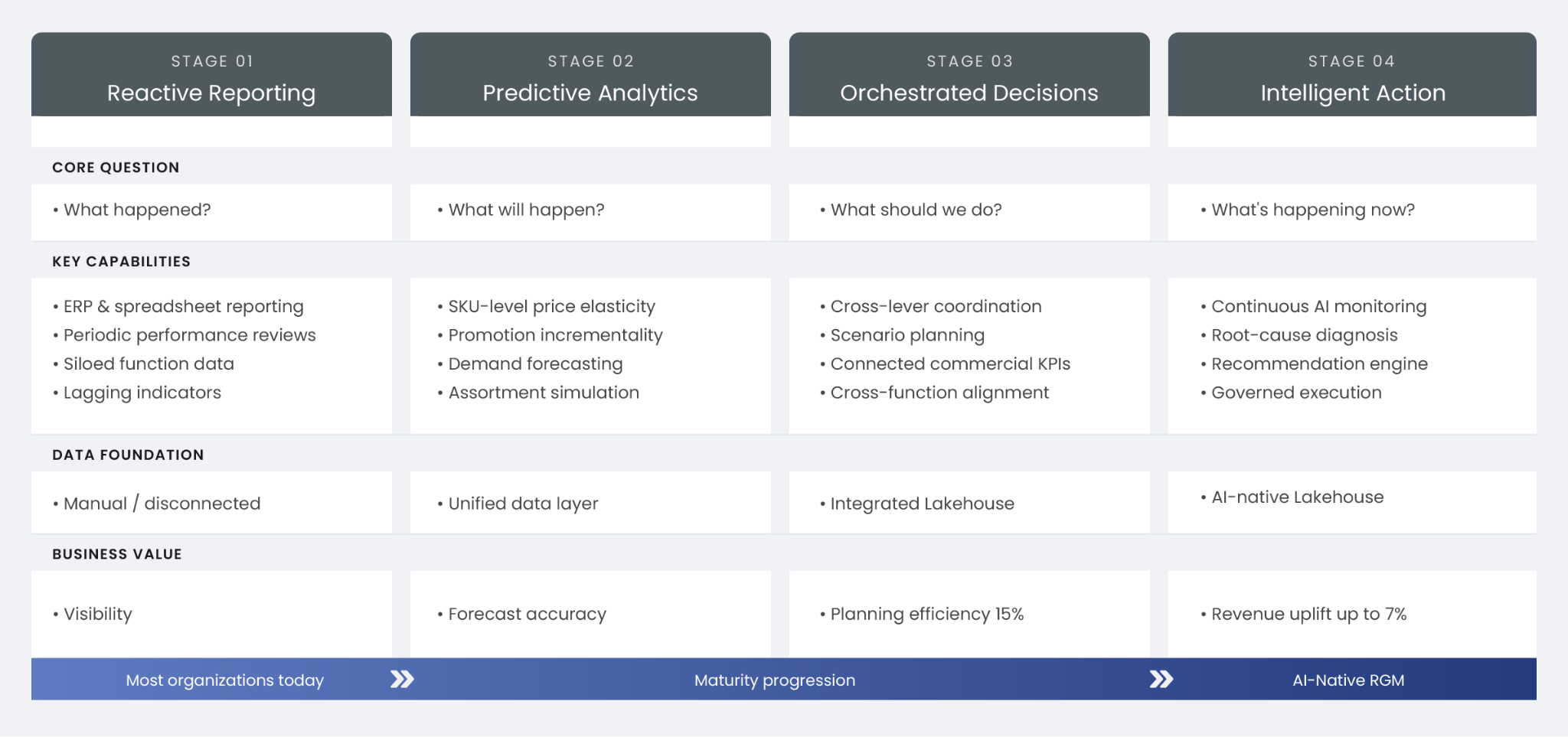
Fig.1. Evolution stages of a commercial operating system
Importantly, value compounds across this journey. Each stage generates measurable business outcomes while creating the data, processes, and organizational capabilities required to support the next phase of transformation.
## The data foundation powering AI-native RGM
The evolution from reporting to intelligent action places new demands on the underlying technology stack. Traditional RGM environments were built to support analysis. Data was collected, transformed, and presented through dashboards and reports that helped teams understand performance and make periodic planning decisions. A commercial operating system requires something fundamentally different.
It must continuously connect [data, analytics, machine learning models](/case-studies/franchise-transformation-with-data-products-optimizes-joint-budget-planning/), business rules, and decision workflows across the enterprise. It must support both human decision-making and AI-driven recommendations while maintaining governance, transparency, and control.
For many organizations, this remains the biggest obstacle to advancing RGM maturity. Commercial data is often fragmented across ERP systems, retailer POS feeds, trade promotion management platforms, syndicated market data, and internal planning tools. As a result, insights remain trapped within functions and are difficult to operationalize at scale.
This is where [Databricks provides a strategic advantage](/databricks-partnership/). Built on an open Lakehouse architecture, Databricks enables organizations to unify structured and unstructured commercial data, govern analytical assets centrally, and operationalize AI workflows within a single environment. Commercial teams can establish a common foundation for data, analytics, machine learning, and AI-driven decision support.
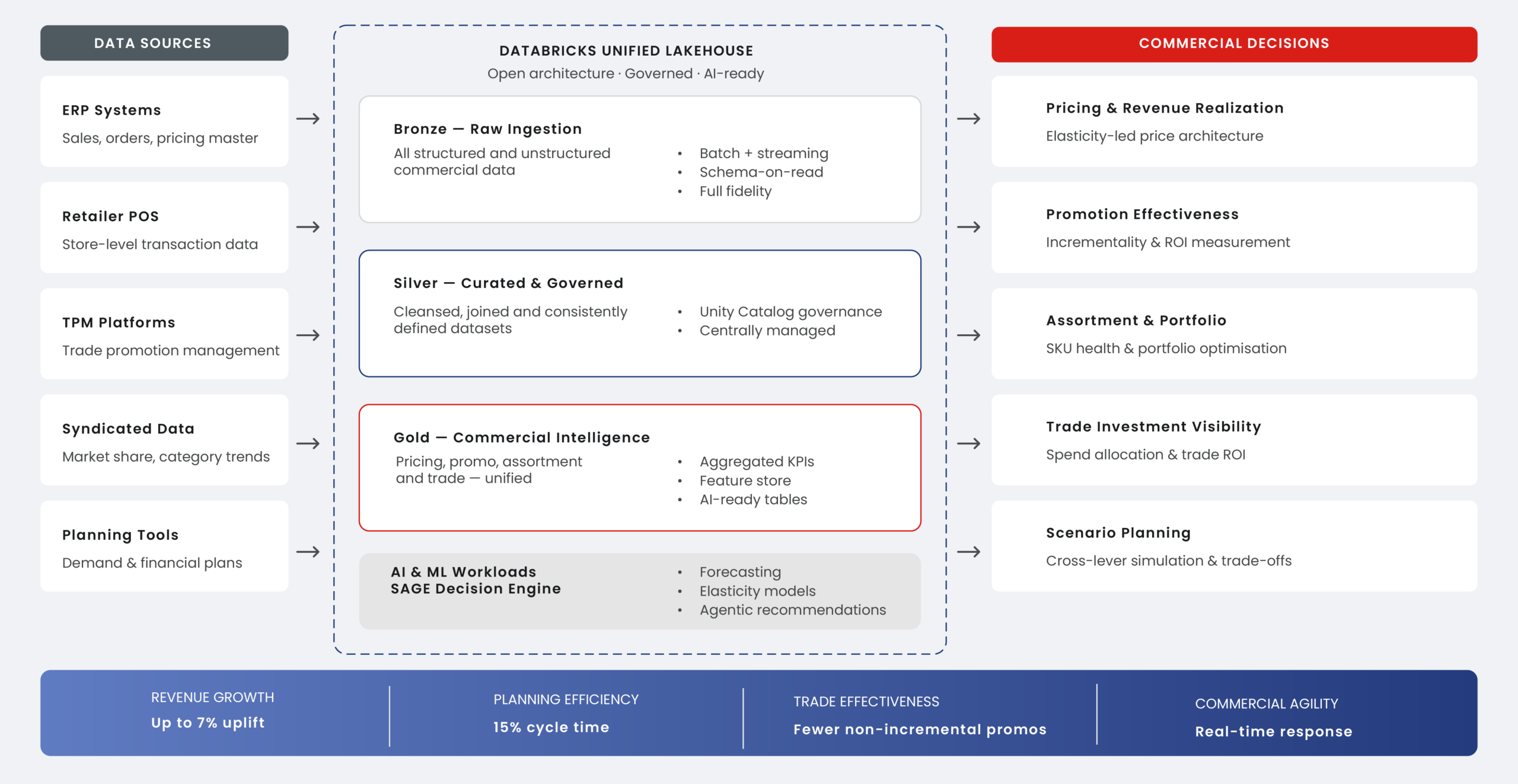
Fig.2. Databricks commercial operating system architecture
Within this architecture, Databricks solutions support each layer of the Commercial Operating System.
Commercial Operating System Layer
Databricks Capabilities
Purpose
Data Foundation
Delta Lake, Auto Loader, Lakeflow Connect, Unity Catalog
Unify POS, ERP, TPM, retailer, syndicated, and external market data into a governed, enterprise-wide commercial data foundation.
Intelligence Layer
Databricks Machine Learning, Feature Engineering, Mosaic AI
Power forecasting, elasticity modeling, promotion analytics, trade optimization, and scenario simulation across commercial functions.
Governance Layer
Unity Catalog, Lakehouse Monitoring, MLflow
Enable centralized governance, data lineage, access controls, model lifecycle management, and auditability.
AI & Agent Layer
Mosaic AI, AgentBricks, Model Serving, Vector Search
Build, deploy, evaluate, and orchestrate GenAI applications, decision intelligence workflows, and agentic commercial experiences.
Consumption & Activation Layer
Databricks Apps, SQL Warehouses, Delta Sharing
Deliver insights, recommendations, workflows, and governed data products to business users, partners, and downstream applications.
Commercial priorities, market dynamics, and AI technologies continue to evolve rapidly. Organizations need an architecture that allows them to incorporate new data sources, analytical models, and AI capabilities without rebuilding the underlying platform. An open, cloud-agnostic foundation helps provide that flexibility while maintaining consistency, governance, and operational efficiency.
The result is not simply better reporting or faster analytics. It is the ability to establish the technology foundation required for a commercial operating system that can continuously learn, adapt, and improve over time.
## Translating intelligence into actions
Traditional analytics platforms excel at measuring performance. More advanced analytical models help explain outcomes and forecast future scenarios. Yet even with these capabilities in place, many commercial decisions still depend on manual interpretation, cross-functional alignment, and lengthy planning cycles.
Today's commercial environment demands a different model that shortens the insight to action time. This is where [agentic intelligence begins to reshape commercial decision-making](/accelerators/sigmoid-inrm/). Instead of requiring users to navigate dashboards, generate reports, and manually connect signals across pricing, promotions, assortment, and trade investments, agentic systems continuously monitor performance, identify emerging opportunities, and recommend the next best course of action.
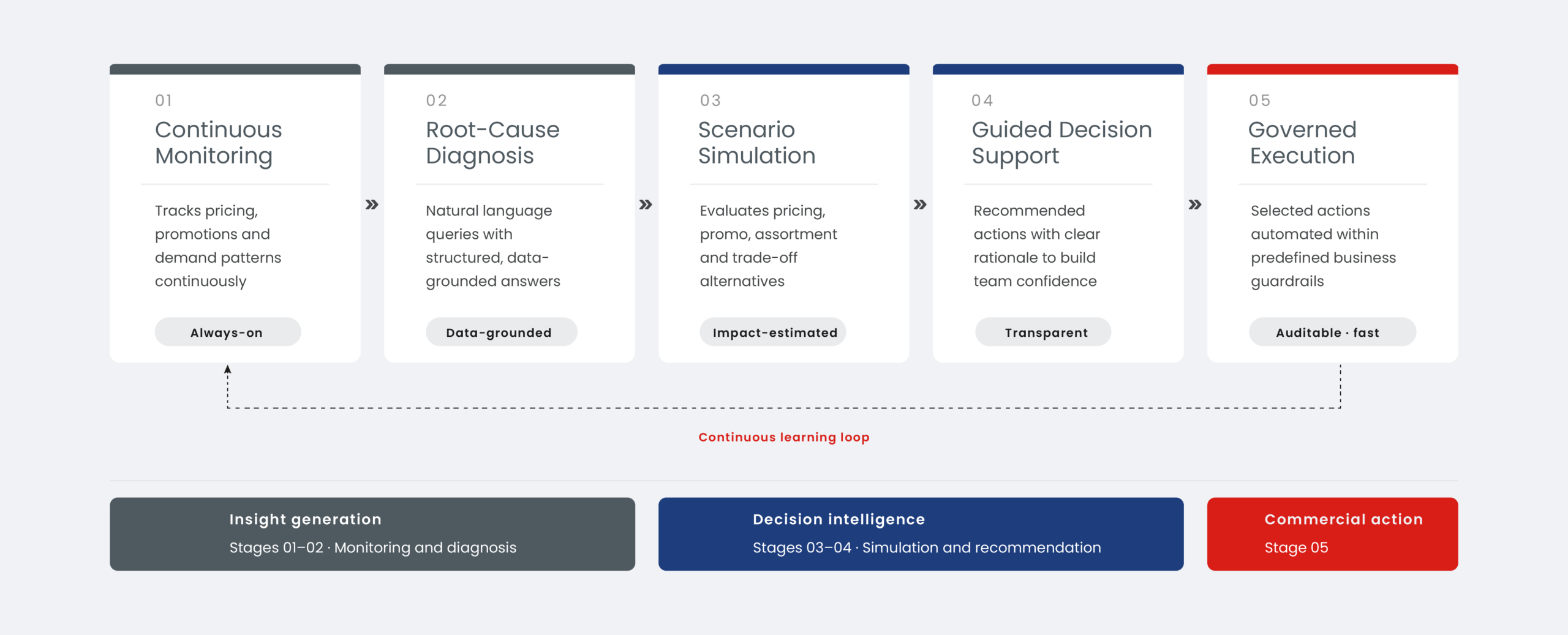
These capabilities can be operationalized through AI-powered decision intelligence layers embedded within the broader RGM ecosystem. One example is SAGE (Strategy Advisor and Growth Expert), enables users to interact with commercial data through natural language while surfacing recommendations, simulations, and contextual insights across multiple RGM workflows.
SAGE operates across the full spectrum of commercial decision-making:
- Continuous monitoring: SAGE continuously tracks key commercial indicators across pricing, promotions, portfolio performance, demand patterns, retailer performance, and trade investments. Emerging opportunities and risks are surfaced proactively rather than waiting for periodic reviews.
- Root-cause diagnosis: Commercial users can interact with SAGE through natural language and receive structured, data-grounded explanations. Instead of manually tracing multiple reports, teams can quickly understand the factors influencing performance shifts and emerging market trends.
- Recommendation and scenario simulation: SAGE evaluates alternative actions across pricing, promotions, assortment, and trade investments while estimating their potential financial impact. Teams can compare scenarios before execution and understand the trade-offs associated with different strategies.
- Guided decision support: Rather than simply providing recommendations, SAGE helps commercial users understand why a particular action is being suggested, increasing transparency and accelerating adoption across business teams.
- Governed execution: Extends decision intelligence beyond recommendations to action by automating selected interventions within predefined business guardrails. This helps organizations respond more quickly to market changes while maintaining governance and accountability.
## The rise of agent-led commerce
The significance of these investments extends beyond today's commercial challenges. A broader shift is beginning to reshape how products are discovered, evaluated, purchased, and replenished. AI-powered assistants are increasingly influencing purchase decisions, while automated procurement and replenishment systems are becoming more common across both consumer and enterprise environments.
As these trends accelerate, commercial organizations will need systems capable of operating at a very different speed and level of complexity. Decisions that once relied on periodic planning cycles may increasingly require real-time responses. Pricing strategies may need to adapt dynamically to changing conditions. Product information, availability, and commercial policies will need to be accessible not only to people but also to intelligent systems acting on their behalf.
Preparing for this future requires capabilities that many organizations are only beginning to build today. Real-time commercial intelligence, dynamic pricing, connected product and pricing data, AI-ready architectures, and governed decision engines are rapidly becoming strategic requirements rather than competitive differentiators.
Organizations that invest in AI-native RGM are doing more than improving pricing and promotion effectiveness. They are establishing the commercial infrastructure required to compete in a marketplace where decisions increasingly occur at machine speed.
## Driving business value with AI-native RGM
The value of [AI-native Revenue Growth Management](/blogs/the-arms-race-in-rgm-why-ai-will-separate-winners-from-the-rest/) is ultimately measured not by analytical sophistication, but by business outcomes. Across consumer goods organizations, the combination of integrated commercial intelligence, advanced analytics, and agentic decision support is delivering measurable improvements across revenue growth, margin expansion, trade efficiency, and planning productivity.
Organizations that progress through the RGM maturity journey commonly realize value across four dimensions:
Business Outcome
Representative Impact
Revenue Growth
Up to 4% uplift through pricing optimization and up to 7% through portfolio and price-pack architecture improvements
Trade Investment Effectiveness
Significant reduction in non-incremental promotions and improved allocation of trade spending toward higher-return activities
Planning Efficiency
Up to 15% reduction in planning cycle times through automation and streamlined decision workflows
Commercial Agility
Faster identification of opportunities and accelerated response to changing market conditions
The value compounds as organizations move from isolated optimization initiatives toward integrated decision-making.
For many enterprises, the journey begins with a focused set of high-impact use cases that deliver measurable returns within months. These early wins establish the data foundation, business confidence, and organizational momentum needed to expand capabilities across additional commercial functions.
This phased approach helps organizations build sustainable value while reducing transformation risk. Rather than pursuing large-scale change programs upfront, teams can create a self-funding pathway where each stage of maturity generates the outcomes required to support the next. The result is a more connected, responsive, and intelligent commercial organization.
## Conclusion
RGM is entering a period of profound transformation. The next phase is not defined by a single analytical model, dashboard, or AI capability. It is defined by the ability to create a commercial operating system that continuously senses change, evaluates options, and guides action across pricing, promotions, assortment, and trade investments. This is where AI-native RGM changes the equation. By combining integrated commercial intelligence, advanced analytics, and agentic decision support, organizations can move beyond understanding what happened and begin shaping what happens next. Decisions become faster, more connected, and increasingly responsive to market dynamics.
Databricks provides the foundation for this evolution, while Sigmoid brings the commercial expertise, accelerators, and implementation experience required to translate technology into measurable business outcomes. The organizations that create lasting advantage will not necessarily be those with the most dashboards or the most models. They will be the ones who build the capabilities to continuously sense, decide, and act across the commercial value chain. The future of RGM is not simply optimization. It is intelligent commercial decision-making at scale.
## About the author
**Nishant Ghosh** is Director, Partnerships at Sigmoid. He has extensive experience in technology consulting, strategic alliances and solution selling. Over the course of his career, he has worked with organizations across consumer goods, financial services, manufacturing, and other industries to accelerate their digital and analytics transformation initiatives. In his current role, Nishant leads Sigmoid's global cloud and independent software vendor (ISV) partnerships, driving strategic collaborations that help enterprises unlock greater value from data, AI, and modern technology platforms.
**Ritwick Pandey** is a Databricks Champion and a seasoned Data Engineering professional with over 14 years of experience in building scalable data platforms and driving data-driven solutions. He has extensive expertise across modern data engineering, cloud architectures, and AI-driven projects. With multiple certifications and badges in AWS and Databricks, along with experience across other cloud platforms, he brings a strong blend of technical depth and practical implementation skills.
[lc_the_tags]
## Suggested resources
[View all](/blogs/)

#### Rewiring Revenue Growth Management: Why CPGs must move beyond siloed execution
[Read blog](/blogs/rewiring-revenue-growth-management-why-cpgs-must-move-beyond-siloed-execution/)

#### The arms race in RGM: Why AI will separate winners from the rest
[Read blog](/blogs/the-arms-race-in-rgm-why-ai-will-separate-winners-from-the-rest/)
#### Integrated Revenue Growth Management
[Watch video](https://www.youtube.com/watch?v=6DppeBGWcto)
## Featured blogs
[lc_get_posts post_type="post"
posts_per_page="4" orderby="date" output_view="lc_get_posts_mycustom_view" output_number_of_columns="4"
output_wrapper_class="row" output_article_class="shadow" output_hide_elements="Excerpt"
output_excerpt_length="0" output_excerpt_text="Read More" output_heading_tag="span"
output_featured_image_format="thumbnail" output_featured_image_class="card-img-left" ]
## Share
[addtoany]
## Subscribe to get latest insights
## Talk to our experts
Get the best ROI with Sigmoid’s services in data engineering and AI
---
## Categories
- AI/ML
---
## Navigation
- [Company](/about-sigmoid)
- [Newsroom](/newsroom)
- [Life at Sigmoid](/careers)
- [Takshashila](/takshashila)
- [Contact Us](/contact-us)
- [AI Strategy Blueprint your AI advantage](/enterprise-ai-strategy/)
- [Generative AI Drive innovation with Generative AI](/generative-ai/)
- [Responsible AI Build trust with ethical AI practices](/responsible-ai-in-enterprise/)
- [Agentic AI Reshape business with scalable agentic systems](/agentic-ai-solutions/)
- [AI Managed Services Ensure reliable AI performance](/ai-managed-services/)
- [Advanced Analytics Transform your business with data-driven insights](/advanced-data-analytics-solutions/)
- [Download whitepaper](/ebooks-whitepapers/the-new-qsr-playbook-transforming-menu-strategy-into-a-growth-engine/)
- [Data Strategy Strong data foundations for scalable AI](/data-analytics-strategy/)
- [Data Management Leverage data as a strategic asset](/ai-data-management-services/)
- [DataOps Automate data for speed and quality](/data-devops/)
- [Forward Deployed Engineering Scale enterprise AI with FDEs & specialized agents](/forward-deployed-engineering/)
- [Data Engineering Deliver insights faster with scalable pipelines](/data-engineering/)
- [Cloud Transformation Modernize data to maximise efficiency](/cloud-migration/)
- [Download whitepaper](/ebooks-whitepapers/building-data-products-in-a-data-mesh-to-drive-business-value/)
- [Data Modeling Structure data for better decisions](/data-modeling-services/)
- [Data Visualization Transform data into actionable stories](/data-visualization-service/)
- [BI Migration Enhance decision making with modern BI tools](/bi-migration/)
- [Data Observability Build trust with healthy, accurate data](/data-observability/)
- [Automated Insights Make smarter decisions with auto-generated insights](/automated-insights/)
- [Download whitepaper](/ebooks-whitepapers/how-cognitive-bi-drives-an-intelligent-enterprise/)
- [CPG & Retail End-to-end analytics for planning, operations, and commercial excellence](/industries/cpg-analytics/)
- [Life Sciences Trusted intelligence across clinical, commercial, and operational workflows](/industries/life-sciences/)
- [Financial Services AI-powered analytics for risk, compliance and customer experience](/industries/banking-financial-analytics-services/)
- [Download infographic](/wp-content/uploads/2026/03/Infographic_Maturity-Framework-for-Scaling-Agentic-AI.pdf)
- [Helios Turn marketing data into measurable business outcomes](/marketing-suite-helios/)
- [Stratos AI-powered platform for resilient supply chains](/supply-chain-stratos/)
- [MediaIQ Advanced platform for in-flight marketing measurement](/accelerators/sigmoid-mediaiq-multi-touch-attribution-tool/)
- [CampaignIQ AI-driven platform for optimized campaign budget allocation](/accelerators/sigmoid-campaigniq/)
- [AssistBot GenAI email assistant that automates human-like responses](/accelerators/sigmoid-assistbot-for-ai-email-assistant/)
- [CreativeBot GenAI tool for personalized and brand-aligned creative design](/accelerators/sigmoid-creativebot/)
- [SocialBot GenAI platform to analyze digital conversations and trends](/accelerators/#marketing|socialbot)
- [DemandIQ Predict trends accurately and optimize inventory management](/accelerators/sigmoid-demandiq/)
- [NetworkIQ Track and optimize logistics operations in real-time to quickly address disruptions](/accelerators/sigmoid-networkiq/)
- [SupplyIQ End-to-end platform to optimize supply chain operations](/accelerators/sigmoid-supplyiq/)
- [ProcurementIQ Automated procurement operations for maximum savings, compliance and efficiency](/accelerators/sigmoid-procurementiq/)
- [RapidML Accelerated deployment for machine learning models](/accelerators/sigmoid-rapidml/)
- [DataGuard Comprehensive platform for proactive data quality management](/accelerators/data-quality-tool-sigmoid-dataguard/)
- [CloudPulse Cloud cost optimization platform with multi-cloud management](/accelerators/sigmoid-cloudpulse/)
- [RAPID GenAI foundation with built-in governance and cost clarity](/accelerators/sigmoid-rapid/)
- [AnalyticsBot GenAI based platform to streamline decision-making in analytics](/accelerators/sigmoid-analyticsbot/)
- [DataConnect Seamlessly ingest, integrate and harmonize data from diverse sources](/accelerators/sigmoid-dataconnect/)
- [Reconica AI-powered data harmonization and reconciliation engine](/accelerators/sigmoid-reconica/)
- [ConverseBot GenAI driven insights generation for automated insights from reports](/accelerators/#sales|conversebot)
- [iNRM Cross-lever revenue growth optimization platform](/accelerators/sigmoid-inrm/)
- [AssortmentIQ Optimize shelf layouts and assortment mix at scale with AI-based insights](/accelerators/sigmoid-assortmentiq/)
- [Read whitepaper](/ebooks-whitepapers/building-agentic-ai-chatbots-for-business-process-transformation/)
- [Listen Podcast](/events/podcast/how-jack-in-the-box-is-redefining-personalization-and-supply-chain-with-ai/)
- [Blogs](/blogs/)
- [White Papers](/ebooks-whitepapers/)
- [Case Studies](/case-studies/)
- [Podcast](/events/podcast/#Podcasts)
- [Download case study](/case-studies/ai-based-dynamic-targeting-and-personalized-hcp-engagement-for-pharma-marketing/)
- [ConverseBot](/accelerators/#sales|conversebot/)
## Tags
- Agentic AI
- Commercial Analytics
- CPG
- Databricks
- Decision Intelligence
- Price-pack Architecture
- Promotion Optimization
- RGM
---
## Footer Links
- [Talk to our AI experts](/contact-us/)
- [AI Strategy](/enterprise-ai-strategy/)
- [Agentic AI](/agentic-ai-solutions/)
- [Generative AI](/generative-ai/)
- [AI Managed Services](/ai-managed-services/)
- [Responsible AI](/responsible-ai-in-enterprise/)
- [Advanced Analytics](/advanced-data-analytics-solutions/)
- [Data Strategy](/data-analytics-strategy//)
- [Data Engineering](/data-engineering/)
- [Data Management](/ai-data-management-services/)
- [Cloud Transformation](/cloud-transformation/)
- [DataOps](/data-devops/)
- [Forward Deployed Engineering](/forward-deployed-engineering/)
- [Data Visualization](/data-visualization-service/)
- [Automated Insights](/automated-insights/)
- [BI Migration](/bi-migration/)
- [Data Modeling](/data-modeling-services/)
- [Data Observability](/data-observability/)
- [CPG & Retail](/industries/cpg-analytics/)
- [Financial Services](/industries/banking-financial-analytics-services/)
- [Life Sciences](/industries/life-sciences/)
- [Case Studies](/case-studies/)
- [Thought Leadership](/ebooks-whitepapers/)
- [Blogs](/blogs/)
- [Helios](/marketing-suite-helios/)
- [Stratos](/supply-chain-stratos/)
- [Company](/about-sigmoid/)
- [Newsroom](/newsroom/)
- [Accelerators](/accelerators/)
- [Careers](/careers/)
- [Privacy Policy |](/privacy-policy/)
- [Cookie Policy](/cookie-policy/)