---
# What your LLM judge is measuring and what it is not
**URL:** https://www.sigmoid.com/blogs/what-your-llm-judge-is-measuring-and-what-it-is-not/
Date: 2026-09-23
Author: Joha Momin
Post Type: post
Summary: Key takeaways An LLM judge built from the same data as the model it grades will share its blind spots, so their...Read More...
Categories: AI/ML
Tags: Data Modeling, LLM Evaluation, LLMOps, Responsible AI, Validation
Featured Image: https://www.sigmoid.com/wp-content/uploads/2026/09/What-your-LLM-judge-is-measuring-and-what-it-is-not.png
---
## Key takeaways
- An LLM judge built from the same data as the model it grades will share its blind spots, so their errors compound rather than cancel.
- The judge agrees with humans most reliably on the comparisons you could have called yourself, and starts guessing on the ones you brought it in to settle.
- Four systematic biases including position, verbosity, self-preference, and provenance, distort scores in the same direction every time. Running more evaluations will not average them out.
- Fixed benchmarks are not a safe fallback either. Public benchmarks leak into training data over time so that a high score can reflect memorization rather than reasoning.
- A judge is a measurement instrument, not a fact, and it needs to be validated for independence and bias before it's allowed to gate a release or steer training.
Here is a situation that plays out more often than most teams would like to admit. A new version of the model goes through evaluation, the score comes back four points higher than the previous release, so the change gets approved and shipped. A few weeks later, nobody can point to the improvement. Satisfaction scores sit where they were before, the support queue is closing tickets at the rate it always has, and the only place that four-point gain ever showed up was on the dashboard that produced it.
It helps to know where that score came from. Most teams now evaluate their systems using an approach called LLM-as-a-judge: the model under development answers a set of test questions, and a second model reads those answers and grades them. Run it across a few thousand questions and you get the number on the dashboard. Human reviewers are too slow and too expensive to sit inside a pipeline that runs on every code change, so the work went to a machine, and the authority to define what "good" means went with it.
That is where the trouble starts, because the judge is usually built from the same data and the same instincts as the model it grades. This shared origin undermines the score far more than any individual bias does, and it explains how a four-point gain can be entirely real as a measurement and entirely meaningless as an outcome.
The problem is not that the judge needs to be smarter. It is that almost no one checks whether the judge deserves to be trusted at all. This piece examines why LLM evaluation hides real blind spots, what those blind spots reward, and how to validate an evaluator before you let it decide what ships.
## The agreement holds only where it doesn't matter
The figure that made LLM judges feel safe came from a 2023 paper introducing MT-Bench and Chatbot Arena, which found strong judges like GPT-4 agreed with human preferences more than 80% of the time, roughly the rate at which two humans agree with each other. The result is real and worth taking seriously, because it establishes that an LLM judge is not making things up.
The difficulty lies in what that average conceals. Most comparisons in a large evaluation set are easy ones, a clearly strong answer beside a clearly weak one, and the judge gets those right the same way a human would. Easy cases were never the reason teams reach for an automated judge; they adopt one for the hard cases, the close calls where two answers are defensible and the verdict actually costs something. That is precisely where agreement breaks down.
The numbers in the paper itself testify to this. The 80%+ figure counts only the comparisons where the judge returned a clean, decisive verdict. Fold in the ties, and the cases where the judge reversed itself depending on which answer it saw first, and agreement with humans falls to roughly 60 to 64%. So the judge is reliably agreeing with you on the calls you could have made yourself, and guessing on the ones you brought it in to settle.
This distinction governs everything that follows. Random error cancels out as you take more measurements. A consistent bias never does, because every reading is wrong in the same direction. An LLM judge carries exactly that kind of bias.
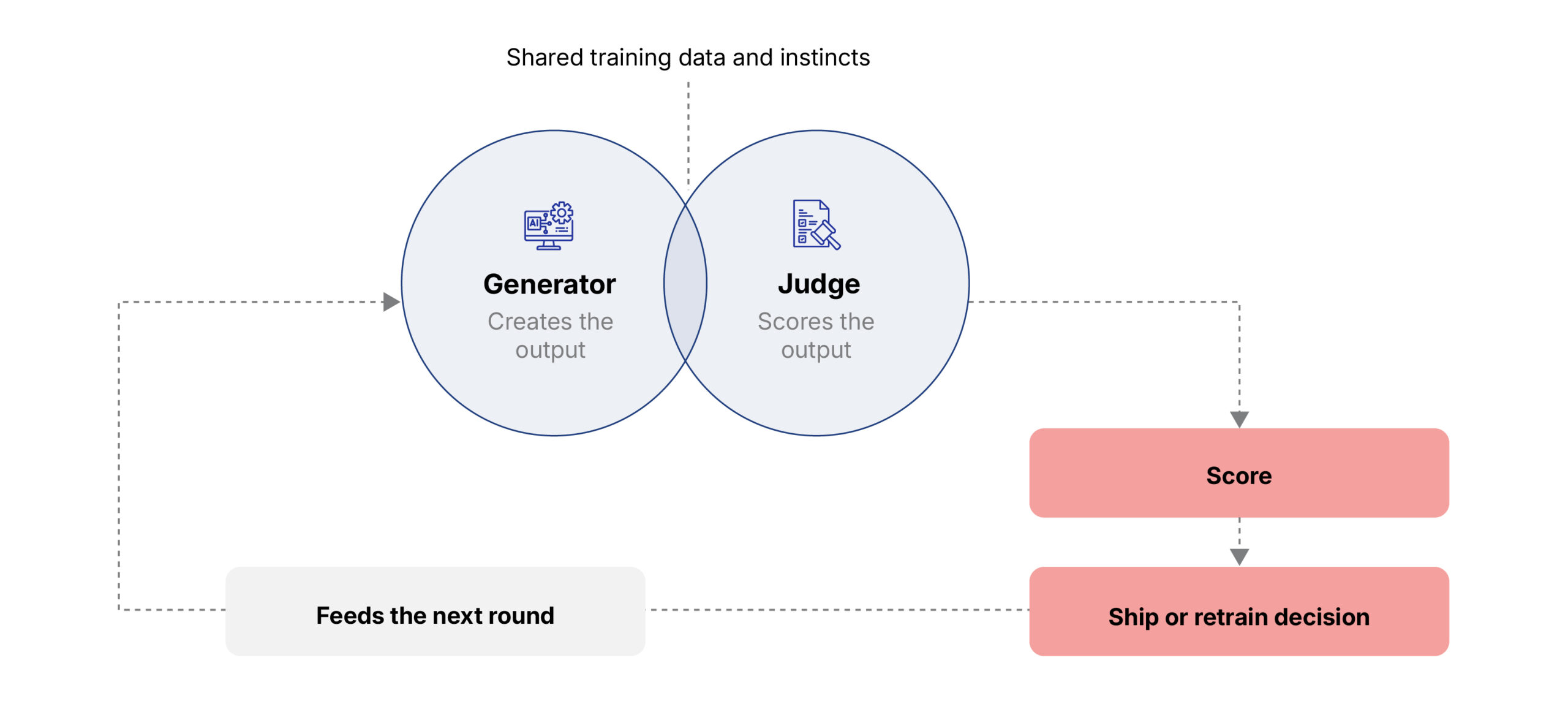
Fig. 1. The evaluation loop
The generator and judge appear as overlapping circles rather than separate boxes, because the overlap is the entire argument: the two are rarely independent, so their agreement can resemble objectivity when it is really shared bias.
## Four biases that affect every score
Each bias below pushes scores in a consistent direction, which is what makes them so difficult to escape. You cannot average your way out of an error that leans the same way every time.
1. Position bias
A judge can favor an answer for where it appears rather than what it says. Swap the order of the same two answers, and the verdict can reverse. Across 15 judges and more than 150,000 comparisons, researchers found the effect is real and varies sharply by judge and task, concentrating on the close calls, where a narrow quality gap leaves the outcome exposed.
2. Verbosity bias
Longer answers tend to score higher whether or not they're more correct, because length reads as effort and fluency gets mistaken for substance. Meta showed how expensive this can get in 2025 when a specially tuned, more talkative version of Llama 4 reached second place on the LMArena leaderboard, while the version anyone could actually download sat around 32nd position. The leaderboard had ranked the more agreeable model above the better one.
3. Self-preference
A judge rates outputs from its own model family higher than a human would, partly because a model finds its own style easiest to predict. There's an important complication. A 2026 paper found that once you control for how good the answers genuinely are, much of that apparent preference disappears, because some of what looked like bias was a strong model correctly recognizing a strong answer that happened to be its own. From the score alone, "I prefer my own style" and "my output is genuinely better" are indistinguishable, and that ambiguity is the real problem.
4. Provenance bias
Label an answer ‘expert-written’ or ‘most recent,’ and the score shifts even when the text is word-for-word identical. The judge grades the metadata along with the content.
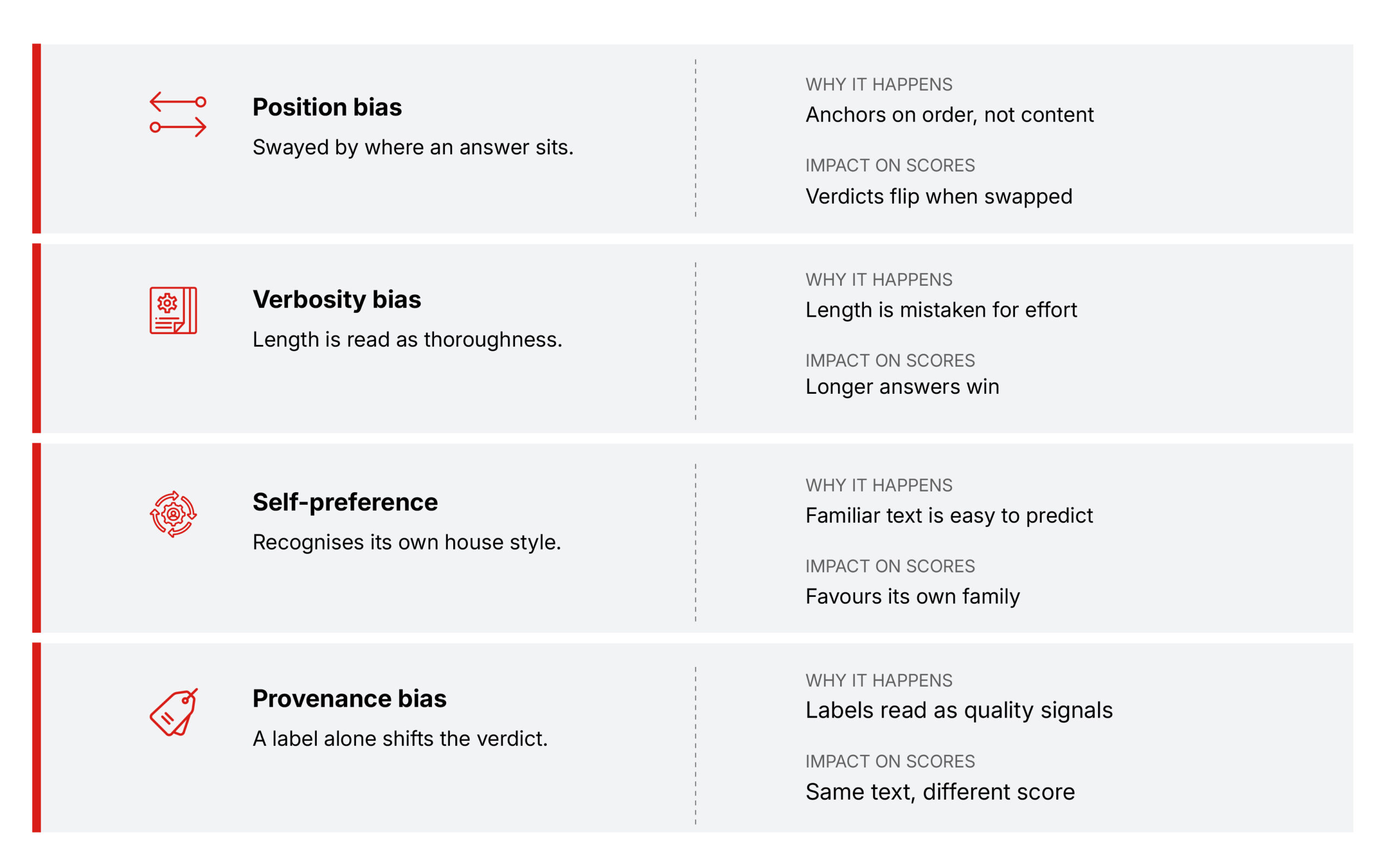
Fig.2. Four biases that skew every score
## When a judge shares your model’s blind spots
Every measuring instrument carries some bias and that alone would not be the cause for concern. The concern is that an LLM judge carries the same bias as the model it grades, because both were built from overlapping data and share the same underlying instincts.
For a measurement to be trustworthy, the instrument's errors must be unrelated to whatever it is measuring, so that across many readings those errors cancel out. LLM evaluation breaks that condition. When a generator produces a confident, fluent falsehood, a judge trained on similar data finds it equally convincing. Both systems fail on the same input, in the same direction, and their errors compound instead of offsetting. What reaches your dashboard as a strong score is often two systems making the same mistake and agreeing with each other about it.
The research puts numbers on this. A model can recognize its own writing roughly 73% of the time. Thus, the better it is at recognizing its own output, the more strongly it favors that output, which means the bias intensifies precisely as the model grows more capable. The same dynamic appears at the training level under the name preference leakage: when a model is trained on data generated by one family and then graded by a judge from that same family, the judge inclines reliably in its favor. In both cases the root cause is identical; *the evaluator and the evaluated were never independent to begin with.*
This is a validity problem rather than a bias problem. A reliable instrument gives the same reading every time. A valid one gives a reading that reflects what you meant to measure. An LLM judge can be highly reliable and barely valid at all, staying perfectly consistent while measuring style in place of substance. A skewed instrument returns the same wrong number on every use, and that consistency is exactly what makes it so easy to trust.
## Fixed benchmarks carry the same flaw
The obvious alternative is to drop the LLM judge for a fixed benchmark with known answers. This is the same problem in a different form.
Static benchmarks leak. After years circulating on the public web, sets like MMLU, HumanEval, and GSM8K seep into training data, so a high score can mean the [model relied on memory](/blogs/from-stateless-to-personal-how-memory-powers-trustworthy-agentic-ai/) of the answer key rather than reasoned its way to it. Strip the leaked items back out and inflated scores drop by roughly 20%. Newer benchmarks that only score a model on problems appearing after its training cutoff are a real improvement, yet the underlying failure remains unchanged: an evaluator you have never checked for independence is not measuring what you assume it is.
## Validating the judge before you trust it
There is no product you can buy that fixes this, because the problem is not a missing capability. What has to change is the question the team asks. Most teams ask what the judge said and treat the answer as a finding. The question that actually protects you is whether the judge has earned the right to be believed at all, and that is something you establish through evidence rather than assume by default. [Validating a judge](/blogs/building-trustworthy-agentic-ai-starts-with-the-right-guardrails/) is not complicated work, and it is considerably cheaper than shipping against a metric that has been misleading you for two quarters. The protocol below is the part worth following to ensure accuracy.
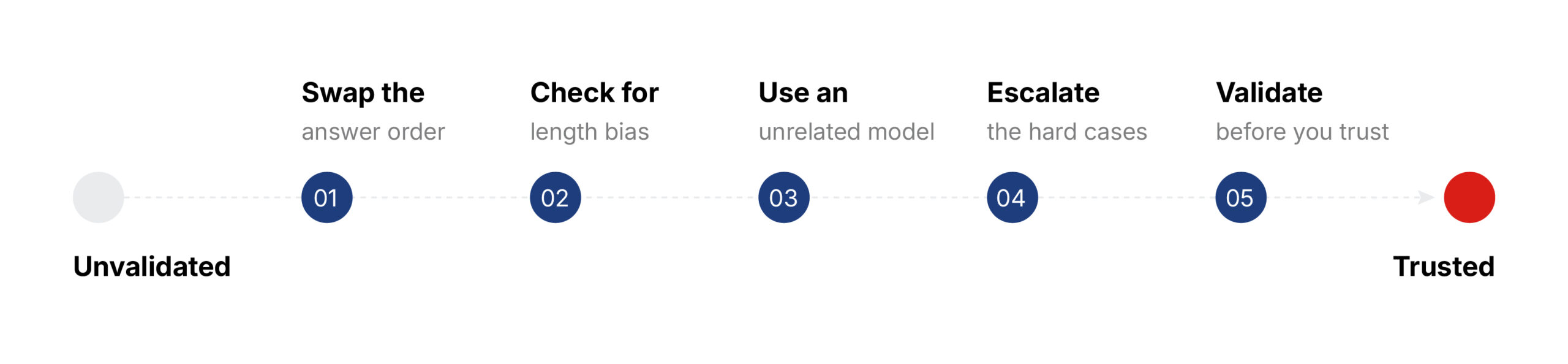
Fig.3. A validity-first evaluation protocol
An unvalidated judge has to pass through each of these checks before it earns the right to gate a release.
- Randomize answer order and measure the flips: Run every comparison both ways round, and treat any verdict that changes when the order swaps as noise rather than signal. The rate at which verdicts flip sets a measure below which no reported "win" should be believed.
- Test for length effects directly: Check whether scores rise as answers grow longer. If they do, you have found a verbosity problem you can correct for rather than be misled by.
- Use a judge from a different model family than the generator: This is the most direct remedy for shared bias, because breaking the family link breaks the correlated errors along with it, and a small panel of judges drawn from different families does better still.
- Keep humans in the loop and spend them where they count: Rather than sampling at random cases, concentrate human review on the hard, ambiguous cases where the judge is weakest, and its verdicts matter most.
- Validate before you let it decide anything: Measure the evaluation pipeline's biases and its agreement with trusted human labels first, and only then let it gate a release or steer training, a discipline that bodies like NIST are increasingly formalizing.
## Conclusion
Go back to the team from the opening, the one whose evaluation score climbed four points and whose product never changed. They were right to measure, because measuring is the job. Their mistake was trusting the measurement without examining the instrument that produced it.
LLM judges earn their place for sound reasons, and their agreement with human judgment is real but partial: solid on the easy calls and thin on the hard ones. The question worth carrying forward was never really "how good is our model?" but "how good is our ruler?" Sigmoid works with teams building and evaluating LLM systems at scale to design evaluation pipelines that are validated, not just convenient, so the metrics driving a release actually reflect what users experience.
## References:
1. L. Zheng, W.-L. Chiang, Y. Sheng, et al. "Judging LLM-as-a-Judge with MT-Bench and Chatbot Arena." arXiv:2306.05685. NeurIPS 2023 (Datasets & Benchmarks).
2. L. Shi, C. Ma, W. Liang, X. Diao, W. Ma, S. Vosoughi. "Judging the Judges: A Systematic Study of Position Bias in LLM-as-a-Judge." arXiv:2406.07791. IJCNLP-AACL 2025.
3. K. Wataoka, T. Takahashi, R. Ri. "Self-Preference Bias in LLM-as-a-Judge." arXiv:2410.21819. 2024.
4. A. Panickssery, S. R. Bowman, S. Feng. "LLM Evaluators Recognize and Favor Their Own Generations." arXiv:2404.13076. NeurIPS 2024.
5. D. Roytburg, M. Bozoukov, M. Nguyen, et al. "Are LLM Evaluators Really Narcissists? Sanity Checking Self-Preference Evaluations." arXiv:2601.22548. ICML 2026.
6. D. Li, R. Sun, Y. Huang, et al. "Preference Leakage: A Contamination Problem in LLM-as-a-judge." arXiv:2502.01534. 2025 (preprint).
7. A. Marioriyad, M. H. Rohban, M. Soleymani Baghshah. "The Silent Judge: Unacknowledged Shortcut Bias in LLM-as-a-Judge." arXiv:2509.26072. 2025.
8. NIST CAISI. "Practices for Automated Benchmark Evaluations of Language Models" (NIST AI 800-2, 2026); "Expanding the AI Evaluation Toolbox with Statistical Models" (NIST AI 800-3, 2026).
## About the Author
**Devansh Parikh** is an AI Product Manager at Sigmoid. He leads the strategy, roadmap, and P&L for a portfolio of AI-powered marketing intelligence products serving global CPG and e-commerce clients. He works at the intersection of data science and product management, translating advanced analytics into scalable products and business strategies. His expertise spans Bayesian Media Mix Modeling, causal inference, media measurement, and ML-driven platforms that help marketing teams make better investment decisions. His work focuses on turning complex, ambiguous business problems into measurable product outcomes and enabling data-driven marketing decisions at scale.
[lc_the_tags]
## Suggested readings
[View all](/blogs/)

#### The GenAI adoption triad: Responsibility, Ethics, and Explainability
[Read blog](/blogs/the-genai-adoption-triad-responsibility-ethics-and-explainability/)

#### Building trustworthy Agentic AI starts with the right guardrails
[Read blog](/blogs/building-trustworthy-agentic-ai-starts-with-the-right-guardrails/)

#### Scaling Enterprise AI with LLMOps on Databricks
[Read blog](/blogs/scaling-enterprise-ai-with-llmops-on-databricks/)
## Featured blogs
[lc_get_posts post_type="post"
posts_per_page="4" orderby="date" output_view="lc_get_posts_mycustom_view" output_number_of_columns="4"
output_wrapper_class="row" output_article_class="shadow" output_hide_elements="Excerpt"
output_excerpt_length="0" output_excerpt_text="Read More" output_heading_tag="span"
output_featured_image_format="thumbnail" output_featured_image_class="card-img-left" ]
## Share
[addtoany]
## Subscribe to get latest insights
## Talk to our experts
Get the best ROI with Sigmoid’s services in data engineering and AI
---
## Categories
- AI/ML
---
## Navigation
- [Company](/about-sigmoid)
- [Newsroom](/newsroom)
- [Life at Sigmoid](/careers)
- [Takshashila](/takshashila)
- [Contact Us](/contact-us)
- [AI Strategy Blueprint your AI advantage](/enterprise-ai-strategy/)
- [Generative AI Drive innovation with Generative AI](/generative-ai/)
- [Responsible AI Build trust with ethical AI practices](/responsible-ai-in-enterprise/)
- [Agentic AI Reshape business with scalable agentic systems](/agentic-ai-solutions/)
- [AI Managed Services Ensure reliable AI performance](/ai-managed-services/)
- [Advanced Analytics Transform your business with data-driven insights](/advanced-data-analytics-solutions/)
- [Download whitepaper](/ebooks-whitepapers/the-new-qsr-playbook-transforming-menu-strategy-into-a-growth-engine/)
- [Data Strategy Strong data foundations for scalable AI](/data-analytics-strategy/)
- [Data Management Leverage data as a strategic asset](/ai-data-management-services/)
- [DataOps Automate data for speed and quality](/data-devops/)
- [Forward Deployed Engineering Scale enterprise AI with FDEs & specialized agents](/forward-deployed-engineering/)
- [Data Engineering Deliver insights faster with scalable pipelines](/data-engineering/)
- [Cloud Transformation Modernize data to maximise efficiency](/cloud-migration/)
- [Download whitepaper](/ebooks-whitepapers/building-data-products-in-a-data-mesh-to-drive-business-value/)
- [Data Modeling Structure data for better decisions](/data-modeling-services/)
- [Data Visualization Transform data into actionable stories](/data-visualization-service/)
- [BI Migration Enhance decision making with modern BI tools](/bi-migration/)
- [Data Observability Build trust with healthy, accurate data](/data-observability/)
- [Automated Insights Make smarter decisions with auto-generated insights](/automated-insights/)
- [Download whitepaper](/ebooks-whitepapers/how-cognitive-bi-drives-an-intelligent-enterprise/)
- [CPG & Retail End-to-end analytics for planning, operations, and commercial excellence](/industries/cpg-analytics/)
- [Life Sciences Trusted intelligence across clinical, commercial, and operational workflows](/industries/life-sciences/)
- [Banking & Financial Services AI-powered analytics for risk, compliance and customer experience](/industries/banking-financial-analytics-services/)
- [Insurance Modernize core insurance platforms and unlock new revenue streams with AI](/industries/insurance-reimagined-with-ai/)
- [Download infographic](/wp-content/uploads/2026/03/Infographic_Maturity-Framework-for-Scaling-Agentic-AI.pdf)
- [Helios Turn marketing data into measurable business outcomes](/marketing-suite-helios/)
- [Stratos AI-powered platform for resilient supply chains](/supply-chain-stratos/)
- [DataGuard Agentic AI platform for data quality and governance](/data-quality-dataguard/)
- [MediaIQ Advanced platform for in-flight marketing measurement](/accelerators/sigmoid-mediaiq-multi-touch-attribution-tool/)
- [CampaignIQ AI-driven platform for optimized campaign budget allocation](/accelerators/sigmoid-campaigniq/)
- [AssistBot GenAI email assistant that automates human-like responses](/accelerators/sigmoid-assistbot-for-ai-email-assistant/)
- [CreativeBot GenAI tool for personalized and brand-aligned creative design](/accelerators/sigmoid-creativebot/)
- [SocialBot GenAI platform to analyze digital conversations and trends](/accelerators/#marketing|socialbot)
- [DemandIQ Predict trends accurately and optimize inventory management](/accelerators/sigmoid-demandiq/)
- [NetworkIQ Track and optimize logistics operations in real-time to quickly address disruptions](/accelerators/sigmoid-networkiq/)
- [SupplyIQ End-to-end platform to optimize supply chain operations](/accelerators/sigmoid-supplyiq/)
- [ProcurementIQ Automated procurement operations for maximum savings, compliance and efficiency](/accelerators/sigmoid-procurementiq/)
- [RapidML Accelerated deployment for machine learning models](/accelerators/sigmoid-rapidml/)
- [DataGuard Comprehensive platform for proactive data quality management](/accelerators/data-quality-tool-sigmoid-dataguard/)
- [CloudPulse Cloud cost optimization platform with multi-cloud management](/accelerators/sigmoid-cloudpulse/)
- [RAPID GenAI foundation with built-in governance and cost clarity](/accelerators/sigmoid-rapid/)
- [AnalyticsBot Conversational analytics for faster business decisions](/accelerators/sigmoid-analyticsbot/)
- [DataConnect Seamlessly ingest, integrate and harmonize data from diverse sources](/accelerators/sigmoid-dataconnect/)
- [Reconica AI-powered data harmonization and reconciliation engine](/accelerators/sigmoid-reconica/)
- [ConverseBot GenAI driven insights generation for automated insights from reports](/accelerators/#sales|conversebot)
- [iNRM Cross-lever revenue growth optimization platform](/accelerators/sigmoid-inrm/)
- [AssortmentIQ Optimize shelf layouts and assortment mix at scale with AI-based insights](/accelerators/sigmoid-assortmentiq/)
- [Read whitepaper](/ebooks-whitepapers/building-agentic-ai-chatbots-for-business-process-transformation/)
- [Listen Podcast](/events/podcast/how-jack-in-the-box-is-redefining-personalization-and-supply-chain-with-ai/)
- [Blogs](/blogs/)
- [White Papers](/ebooks-whitepapers/)
- [Case Studies](/case-studies/)
- [Podcast](/events/podcast/#Podcasts)
- [Download case study](/case-studies/ai-based-dynamic-targeting-and-personalized-hcp-engagement-for-pharma-marketing/)
- [ConverseBot](/accelerators/#sales|conversebot/)
## Tags
- Data Modeling
- LLM Evaluation
- LLMOps
- Responsible AI
- Validation
---
## Footer Links
- [Talk to our AI experts](/contact-us/)
- [AI Strategy](/enterprise-ai-strategy/)
- [Agentic AI](/agentic-ai-solutions/)
- [Generative AI](/generative-ai/)
- [AI Managed Services](/ai-managed-services/)
- [Responsible AI](/responsible-ai-in-enterprise/)
- [Advanced Analytics](/advanced-data-analytics-solutions/)
- [Data Strategy](/data-analytics-strategy//)
- [Data Engineering](/data-engineering/)
- [Data Management](/ai-data-management-services/)
- [Cloud Transformation](/cloud-transformation/)
- [DataOps](/data-devops/)
- [Forward Deployed Engineering](/forward-deployed-engineering/)
- [Data Visualization](/data-visualization-service/)
- [Automated Insights](/automated-insights/)
- [BI Migration](/bi-migration/)
- [Data Modeling](/data-modeling-services/)
- [Data Observability](/data-observability/)
- [CPG & Retail](/industries/cpg-analytics/)
- [Life Sciences](/industries/life-sciences/)
- [Banking & Financial Services](/industries/banking-financial-analytics-services/)
- [Insurance](/industries/insurance-reimagined-with-ai/)
- [Case Studies](/case-studies/)
- [Thought Leadership](/ebooks-whitepapers/)
- [Blogs](/blogs/)
- [Helios](/marketing-suite-helios/)
- [Stratos](/supply-chain-stratos/)
- [DataGuard](/data-quality-dataguard/)
- [Company](/about-sigmoid/)
- [Newsroom](/newsroom/)
- [Accelerators](/accelerators/)
- [Careers](/careers/)
- [Privacy Policy |](/privacy-policy/)
- [Cookie Policy](/cookie-policy/)