---
# The enterprise Databricks migration field guide: A governed framework from root cause to production
**URL:** https://www.sigmoid.com/ebooks-whitepapers/the-enterprise-databricks-migration-field-guide/
Date: 2026-09-09
Author: Joha Momin
Post Type: page
Summary: The enterprise Databricks migration field guide: A governed framework from root cause to production In this whitepaper Introduction Why platforms end up...Read More...
---
# The enterprise Databricks migration field guide: A governed framework from root cause to production
In this whitepaper
Introduction
Why platforms end up on the migration roadmap
The delivery framework: 12 governed steps across three phases
Architecture that supports an agentic layer
The framework applied across legacy stacks
From linear delivery to a self-optimising operating model
Five lessons for enterprise data leaders
Conclusion
Download PDF
## 1. Introduction
Enterprise data migrations rarely fail for the reasons anyone expects going in. The story usually told is one of technology: the wrong platform, an underpowered warehouse, a vendor that overpromised. The real story, in every migration Sigmoid has been asked to rescue or has helped design from the start, is different. It is a story about which failures are treated as symptoms and which as causes, and how almost everything that determines whether a modernization program survives its first 18 months comes down to that distinction.
[Technical debt quietly becomes a FinOps problem](/case-studies/technical-debt-reduction-streamlines-finance-data-operations-drives-85-cost-savings/): data that technically exists still can't be reached, trusted, or acted on in time, and a ceiling on artificial intelligence sits there unnoticed until the business tries to build past it. None of these is new problems, and none of them announces themselves as urgent the way a system outage does. They accumulate quietly, and by the time a platform lands on the migration roadmap, the visible symptoms like slow queries, stale dashboards, and forecasts that miss by a wide margin are usually years downstream of the cause that actually needs fixing.
What follows is the discipline that separates a migration that resolves those causes from one that simply relocates them onto newer infrastructure: a delivery framework built around confidence and reversibility rather than speed for its own sake, a control architecture where governance, security, and cost stop being three separate fights, and the single conversion decision that quietly drives more risk than any other step in a migration. Three engagements, spanning medical technology, industrial manufacturing, and consumer goods, show what that Databricks migration discipline looks like when it stems from three different legacy estates.
## 2. Why platforms end up on the migration roadmap
Enterprise migrations are rarely triggered by the platform itself. Three structural causes compound into three everyday signals long before anyone diagnoses the root condition, and the gap between when the signals appear and when the causes are named is where most modernisation budgets are lost.
### 2.1. Structural causes
- **Every legacy platform accumulates technical debt** in the form of undocumented stored procedures, brittle script layers, and static clusters sized for peak rather than average load, and that debt rarely stays a purely technical problem for long. Infrastructure that cannot autoscale, maintenance that consumes engineering capacity instead of building new capability, and spend nobody can cleanly attribute to a workload all degrade cost forecasting into guesswork, which is how a purely technical problem quietly turns into a financial one.
- **Data existing somewhere in the enterprise is not the same as data being usable.** An enterprise may hold an accurate figure across several systems, a source database, a spreadsheet, a shadow table, without being able to act on it, because each version refreshes independently and no single version is treated as authoritative. A precise number delivered late carries the same operational cost as an imprecise one delivered on time.
- **The first two constraints compound into a ceiling on AI adoption.** An organization that has not resolved technical debt and data accessibility has not simply slowed its reporting; it has made agentic AI structurally unworkable. AI agents can only act as reliably as the data supporting them is governed, current, and consistent.
### 2.2. Early warning signals
- **Latency in data access:** Refresh cycles measured in days or weeks describe a version of the business that has already changed by the time it is reviewed.
- **Inconsistent metrics across teams:** The same figure is calculated differently by different functions, because the underlying logic is distributed across disconnected systems rather than governed centrally.
- **Decision paralysis:** The compounding effect of the first two signals: when leadership cannot trust the data in front of them, decisions default to intuition or are deferred, and at enterprise scale, deferral is typically the most costly option.
Migration programs aimed at these signals tend to relapse, because a faster warehouse does not remove the conditions that made the old one slow. The programs that are successful are the ones aimed to address the causes underneath, not the signals on top of them.
## 3. The delivery framework: 12 governed steps across three phases
[Underneath every well-run migration](/ebooks-whitepapers/palantir-foundry-to-databricks-migration/) is the same confidence-based triage pattern. An AI-assisted assessment layer scores workloads and validates gate checks, a skill library reuses what has already been solved rather than re-solving it, and human sign-off is preserved at exactly the points where judgment still matters.
Sigmoid operationalizes the pattern through a three-phase delivery model running twelve governed steps from first signal through to production cut-over. The framework is applicable whether the source platform is Teradata, Oracle, Netezza, Hadoop, SSIS, SAS, or a cloud-native pipeline sprawl, because the discipline is the same even when the starting technology is not.
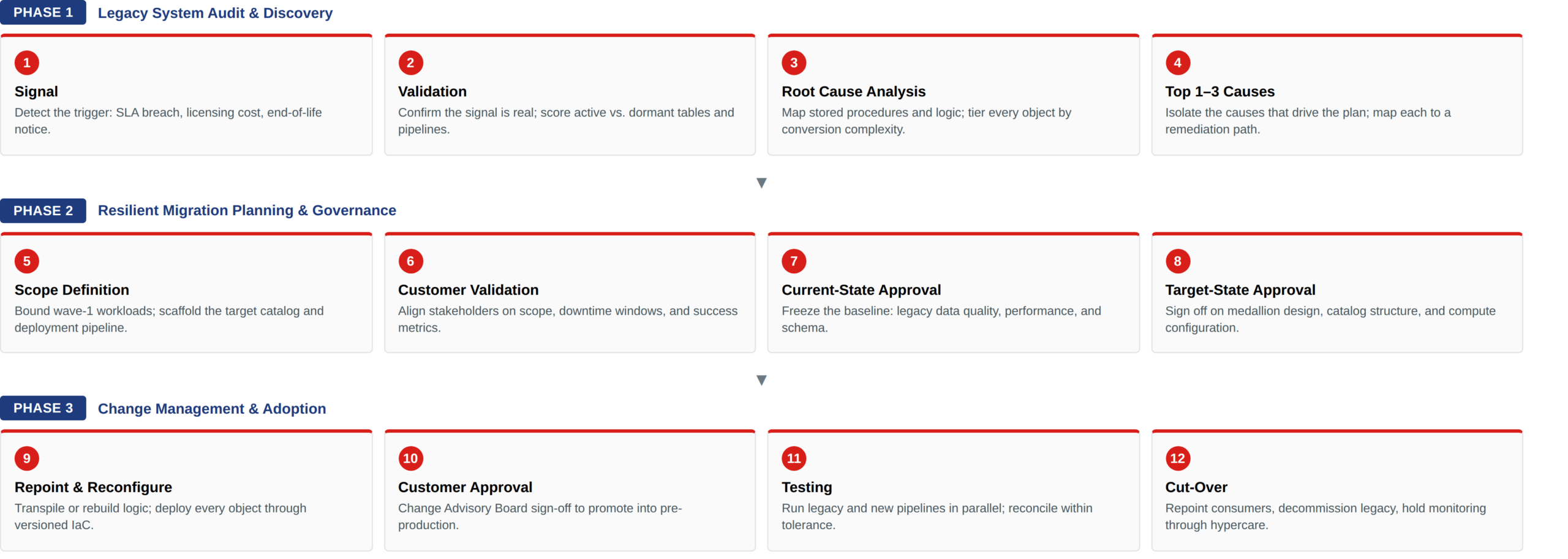
Fig.1. 12-step migration delivery model
**Phase 1 | System audit and discovery:** A quantified trigger, an SLA breach, a licensing renewal, an end-of-life notice, opens a formal assessment, which validates which tables and pipelines are genuinely active before scope is committed. A root-cause pass then works through every in-scope object, tags it by conversion complexity, and routes the result through a structured validity check before it is accepted as the basis for planning. The phase closes by narrowing to the one to three causes that will drive the migration plan, each mapped to a specific remediation: a proprietary SQL dialect to automated code conversion, a monolithic schema to medallion decomposition, undocumented logic to catalog metadata captured during conversion.
**Phase 2 | Migration Planning and Governance:** The first wave is deliberately bounded, typically the lowest-dependency workloads, and the target catalog and deployment pipeline are scaffolded so subsequent work ships in a repeatable, version-controlled way. Stakeholders sign off on scope, downtime windows, and success criteria before architecture work begins. Two baselines are then frozen: the current state, providing a fixed reference point for everything measured downstream, and the target state, the medallion design, catalog structure, and compute configuration, formally reviewed before conversion starts.
**Phase 3 | Change Management and Adoption:** Straightforward objects are converted through automated transpilation; objects carrying material business logic are rebuilt as governed pipelines with explicit data-quality checks attached. A change board formally approves promotion into pre-production, informed by an automated readiness check that supports the human review rather than replacing it. Legacy and new pipelines then run concurrently, reconciled at the row, checksum, and aggregate level, until results hold within tolerance across multiple cycles. Only then does cut-over occur: consumers repointed, legacy pipelines decommissioned, monitoring maintained through an agreed hypercare window.
### 3.1. Governance, security and cost as one architecture
Governance, security, and cost each have their own tooling and their own owners, which is exactly why treating a Databricks Lakehouse's controls as three separate programs tends to backfire. Deploying them as separate workstreams tends to produce three operating models, three tools ecosystems, and three remediation programmes once the initial gaps surface.
- **Governance as a platform property:** Unity Catalog acts as the single control plane for tables, models, features, and volumes, and every asset carries lineage, tags, and access policies that follow it through its lifecycle. Data quality expectations are declared and monitored through Delta Live Tables and Lakehouse Monitoring, so that regressions surface immediately rather than being discovered by a business user weeks later.
- **Security from a zero-trust posture:** Security ensures access enforced at the row and column level through Unity Catalog, service principals in place of shared credentials, secrets held in managed stores rather than in code, and every data movement logged for audit. [Automated PII and PHI detection](/blogs/implementation-of-a-privacy-first-pii-framework-on-azure/) at ingestion classifies and protects sensitive data before it reaches the analytical layer.
- **Cost discipline as an engineering discipline:** Cost discipline is engineered through tagged compute environments, workload isolation between production and development, and continuous monitoring of query costs by team and use case. When this is instrumented from the first month of Migration, every workload lands in an environment tagged to a business owner, and every team gets visibility into its own consumption before finance has to escalate.
### 3.2. The conversion decision that drives cost and timeline
Every migration project plan has a line that says "convert legacy objects." That single line hides the decision that actually drives cost, risk, and timeline more than anything else in the migration: for each object, **does it get repointed, or does it get refactored?** These are two very different operations, and treating them as the same thing is a common reason waves miss their schedules.
A repoint redirects a connection while the underlying logic stays the same. It is cheap, low-risk, and mostly automatable. A refactor rewrites the logic itself for the [Databricks-native environment](/blogs/implementation-of-a-privacy-first-pii-framework-on-azure/), which is slower, higher-risk, and only partly automatable. Which one an object needs has nothing to do with the source platform. It depends on where the business logic actually lives, and that answer is different for every legacy stack.
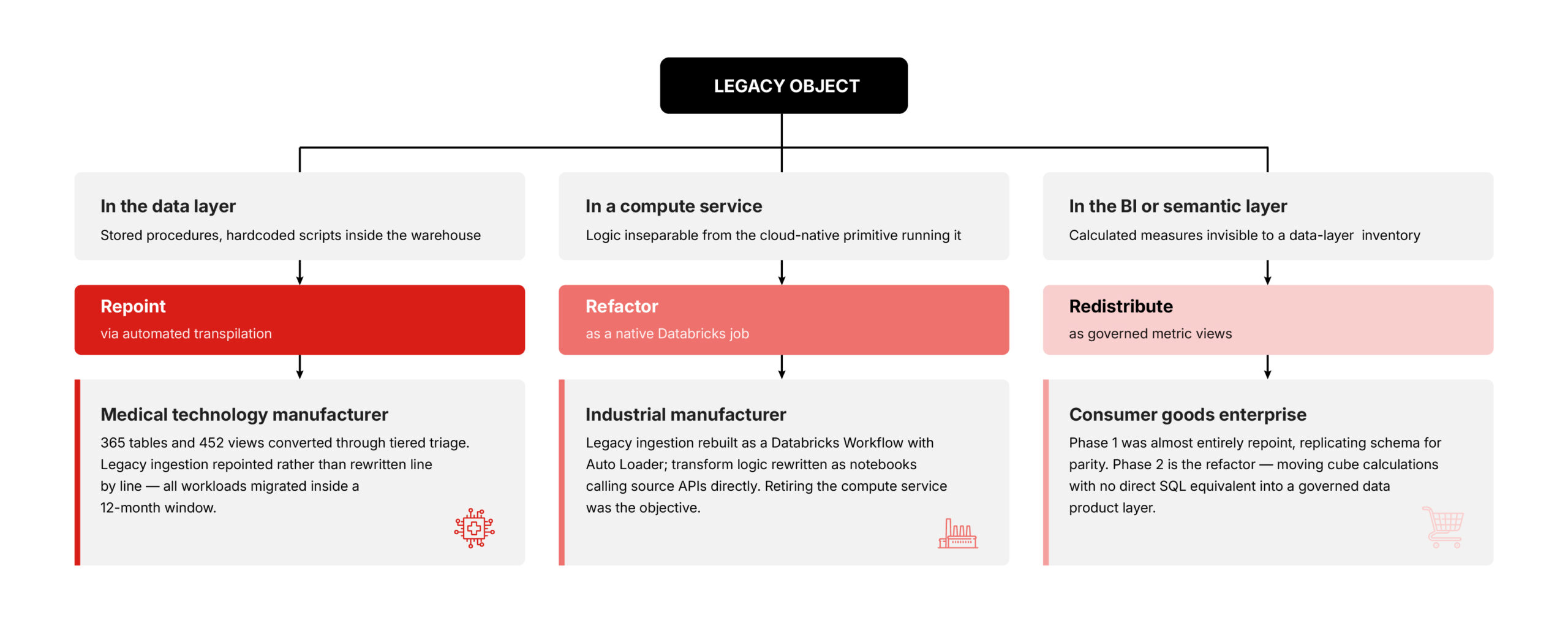
Fig.2. Refactor vs repoint decision tree inline
Two rules apply no matter which path an object takes. First, nothing gets repointed until it passes validation. A transpiled table and a hand-rewritten pipeline go through the same parallel-run checks, because the downstream consumer only cares that the result is correct, not how it got there. Second, repointing the downstream consumers themselves, meaning BI tools, APIs, and reports, is its own deliberate step that happens after validation. Skip that step and a technically complete migration can still break a dashboard on cut-over day.
## 4. Architecture that supports an agentic layer
A platform is not AI-ready simply because it can support a conversational interface. A durable [AI architecture depends on three layers](/blogs/scaling-enterprise-ai-with-llmops-on-databricks/), each entirely reliant on the one beneath it: an application layer, where users and downstream systems interact through copilots and autonomous agents; an orchestration layer, a catalog of governed, access-controlled connectors together with the evaluation and audit tooling that separates a production-grade agent from a demonstration; and a data platform layer, a governed lakehouse with a single catalog of semantic truth, ensuring a dashboard and an autonomous agent can never disagree about what a number means.
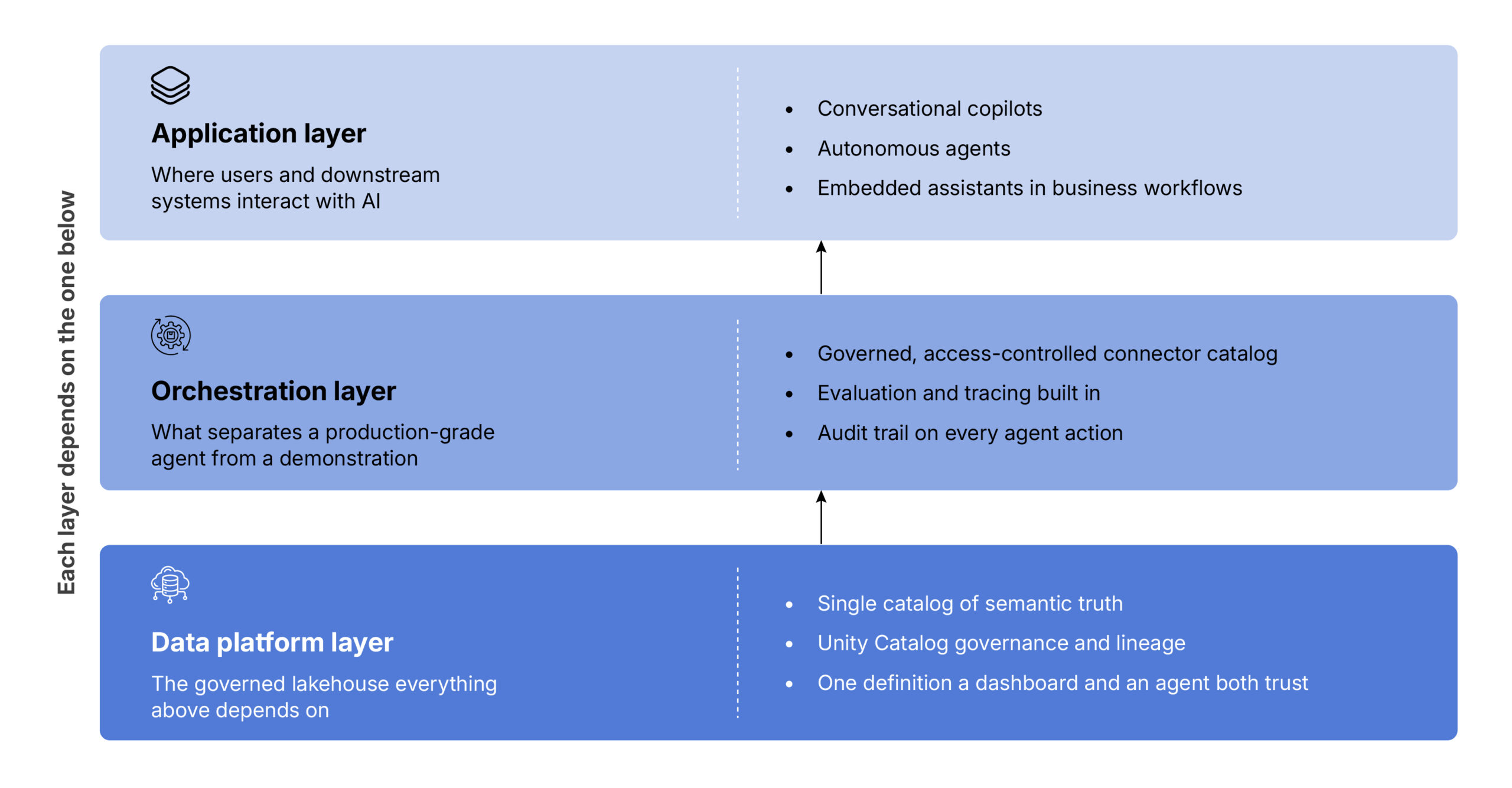
Fig.3. The three layer architecture that supports agentic AI
As the connector catalog and agent library expand, the cost of building each subsequent AI use case falls, since new capability is assembled from components that are already governed rather than built from scratch. This is also why AI readiness does not appear as a separate deliverable in any of the engagements that follow; it is a consequence of the migration exercise.
## 5. The framework applied across legacy stacks
The Databricks migration framework holds up in theory even when it begins from a legacy stack that has spent a decade accumulating debt, inside a business that cannot afford extended downtime. The three engagements put it to that test: a Hadoop-era Hive warehouse at a global medical technology manufacturer, a sprawl of AWS-native pipelines at a global industrial manufacturer, and an Azure Synapse and Azure Analysis Services stack at a global consumer goods enterprise.
### 5.1. Global medical technology manufacturer: Hive to Databricks
**Challenge:** A legacy SQL Hive warehouse supporting Sales, Marketing, and Supply Chain had accumulated Excel and Access layers over years of organic growth. Static clusters could not scale down with demand, query performance was bottlenecking downstream reporting, cloud spend visibility across business units was limited, and daily or weekly refresh cycles made real self-service analytics impossible. The clearest signal was financial: infrastructure budget forecasting carried roughly ±25% variance, which meant spend had become too unpredictable to govern, let alone optimise.
**Scope:** A structured pre-migration assessment uncovered a genuinely fragmented environment, with roughly 500 core tables and 100 stored procedures in the primary database, 500 additional views, more than 100 legacy scripts feeding ingestion alongside Azure Data Factory, and a reporting layer of 25 Power BI workspaces and over 130 reports, all mapped through pipeline-level lineage across more than 500 pipelines.
**Approach:** Each migrated workload went through system integration testing individually, and historical data was backfilled and reconciled against the legacy systems ahead of cut-over. User acceptance testing gave business stakeholders sign-off authority, and cut-over itself followed a pipeline-level approach, some workloads lifted and shifted, others redesigned outright, wrapped in CI/CD and continuous monitoring until every [workload was running on Delta pipelines](/blogs/modernizing-medtech-demand-forecasting-with-ai-on-databricks/). Hypercare then focused on technical debt resolution, performance tuning, and a structured handover, while adoption was resourced deliberately rather than left to chance: a cross-functional Cloud Center of Excellence, more than 15 engineers and analysts trained on the new platform, and 12 certifications earned across data engineering and FinOps disciplines.
**Outcomes:**
- 100% of Hive workloads migrated to Delta pipelines within twelve months
- Forecast accuracy improved from ±25% variance to 95%; budget approval cycle shortened from three weeks to one
- Cloud spend reduced 20–28% ($220K–$280K annualized)
- Time-to-insight improved 75%; refresh cycles moved to near real time
- Power BI adoption grew 2.5x, from roughly 500 to more than 1,200 users, supported by a lean team of 2.5 FTEs
### 5.2. Top industrial manufacturing enterprise: AWS-native to Databricks
**Challenge:** Existing AWS-native pipelines had grown fragmented and difficult to maintain, with lineage limited enough that tracking relied on manual monitoring rather than governed metadata. Recurring schema issues and operational overhead were slowing delivery, and because pipelines had evolved independently across business units, scaling any new dataset required significant rework rather than reuse.
**Scope:** The scope was deliberately bounded to re-platform the two highest-impact pipelines first, prove the pattern end to end, and hand internal teams a reusable framework rather than a one-off migration, covering roughly 30 endpoints, tables, and files across both ingestion patterns on a standardised medallion architecture.
**Approach:** The technical approach rested on five pillars: replacing legacy ETL with Databricks-native ingestion, a governance-first medallion design with quality expectations enforced in-pipeline, performance and cost optimisation through serverless compute and an aggressive file-optimisation strategy, CI/CD through Git-integrated release pipelines, and observability through centralised dashboards and per-job SLA tracking.
**Outcomes:**
- 25% reduction in current cloud spend
- Near real-time visibility into supply chain metrics
- Reusable frameworks for easy scalability
### 5.3. A leading consumer goods enterprise: Azure Synapse and AAS to Databricks
**Challenge:** The legacy Synapse and Analysis Services warehouse had become expensive and brittle. Infrastructure ran on the order of £10K per month, performance bottlenecked on datasets as small as 4GB, and every calculated measure had to be manually recreated whenever business logic changed. Cost visibility was fragmented with no centralised governance, and the rigidity of the combination was blocking any real path toward AI and ML-driven analytics.
**Approach:** The roadmap was achieved in three phases. The first lifted the entire landscape into Databricks, replicating legacy table relationships and schema for data parity and validating accuracy through snapshot cross-checks, while refactoring the layers to align with the client's medallion standard. The second phase decommissioned the legacy warehouse and analytics services layer entirely and redistributed their calculations into a governed data product layer and the reporting tool itself, and the third phase expanded into AI-driven analytics on the new foundation.
**Outcomes:**
- ~£3,500/month in run-rate infrastructure savings
- 50% reduction on the respective cost lines for analysis-services layer and the legacy warehouse
## 6. From linear delivery to a self-optimising operating model
Most migration plans end at cut-over like a runbook, a decommission date, a retrospective. Few ask what happens next to the two things that don't actually stop there: the delivery capability built to run the framework, and the cost discipline built to govern what it produces. Both keep maturing long after the program that funded them has closed.
### 6.1. Every wave leaves the next one smarter
The twelve-step framework is presented as a linear sequence because that is how enterprise migrations run on a new platform: a single pass from signal to cut-over, with human review at each step before the next begins. This remains the appropriate model for the first migration on unfamiliar ground. The same framework, however, evolves into a continuous model, in which each phase group operates as an ongoing loop around a shared operating engine rather than a sequence that concludes at cut-over.
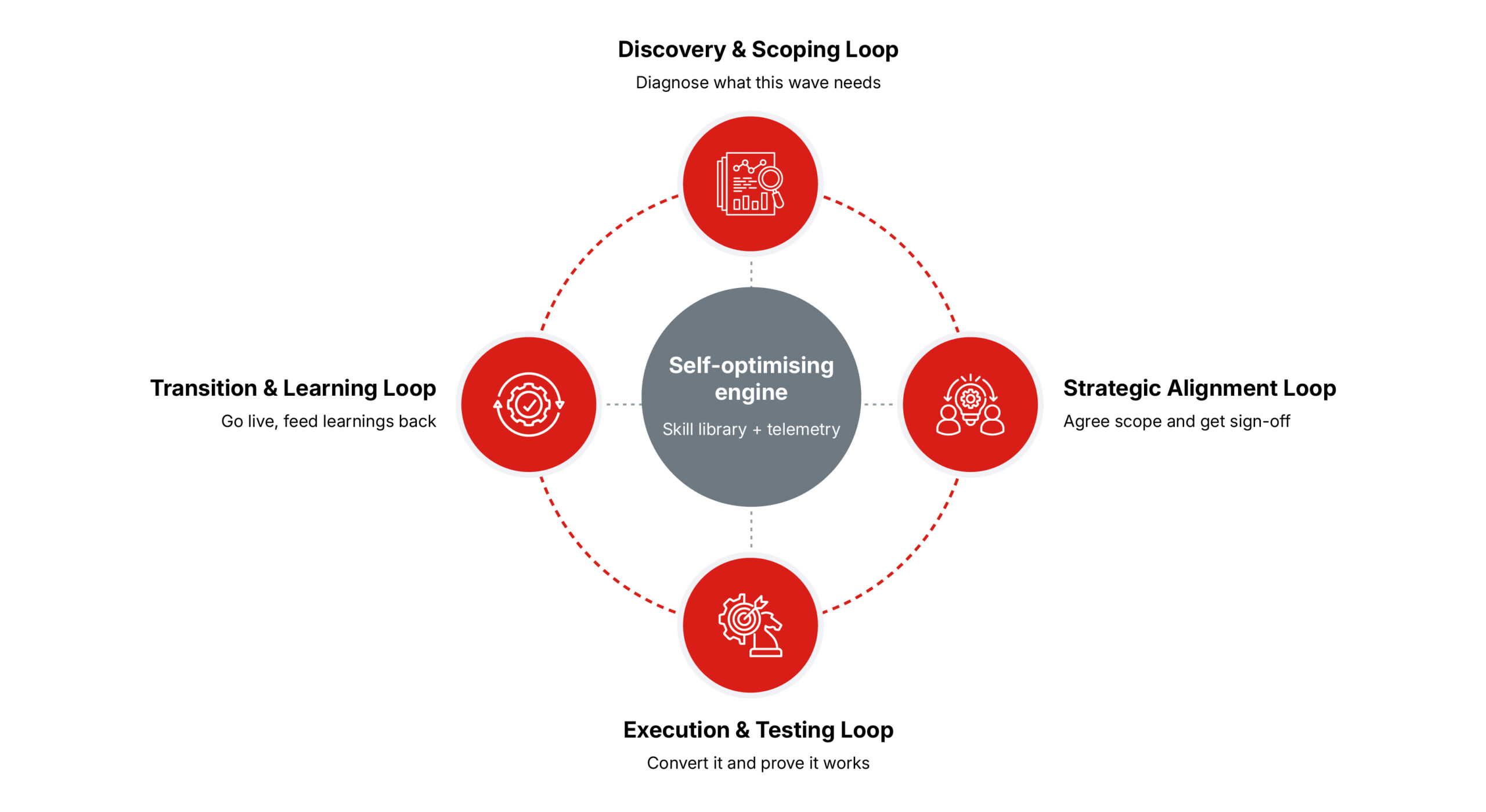
Fig.4. Self-optimizing migration delivery model
That flywheel turns on three reinforcing mechanisms. Self-expanding automation means every root-cause finding, transpilation rule, or cut-over checklist solved once becomes a reusable pattern for the next loop rather than tribal knowledge that leaves with whoever solved it, while a hard-gate rule keeps human sign-off from ever being automated away, only the evaluation work feeding it. Test-harness evolution closes the loop: validation environments improve with every wave instead of being rebuilt from scratch each time.
Early indicators of this shift are already visible in the engagements described above, in the form of reusable conversion patterns, deliberately bounded first waves, and savings backlogs carried forward in stages. What currently requires an individual to carry forward between waves becomes, in the continuous model, a function of the system itself.
### 6.2. Cost control that keeps working after go-live
Cost governance matures at different rates across enterprises. It can be built in from day one, closed against a defined backlog after the platform is live, or deferred until the migration reaches a phase where it becomes urgent, and all three patterns appear in the engagements above. The response in each case is the same: apply the observe, engage, and act discipline already standard in IT operations to FinOps itself, running continuously on the [governed Lakehouse the migration has already built](/blogs/ai-era-reinvention-of-the-transactional-database-with-sigmoid-latticeiq/).
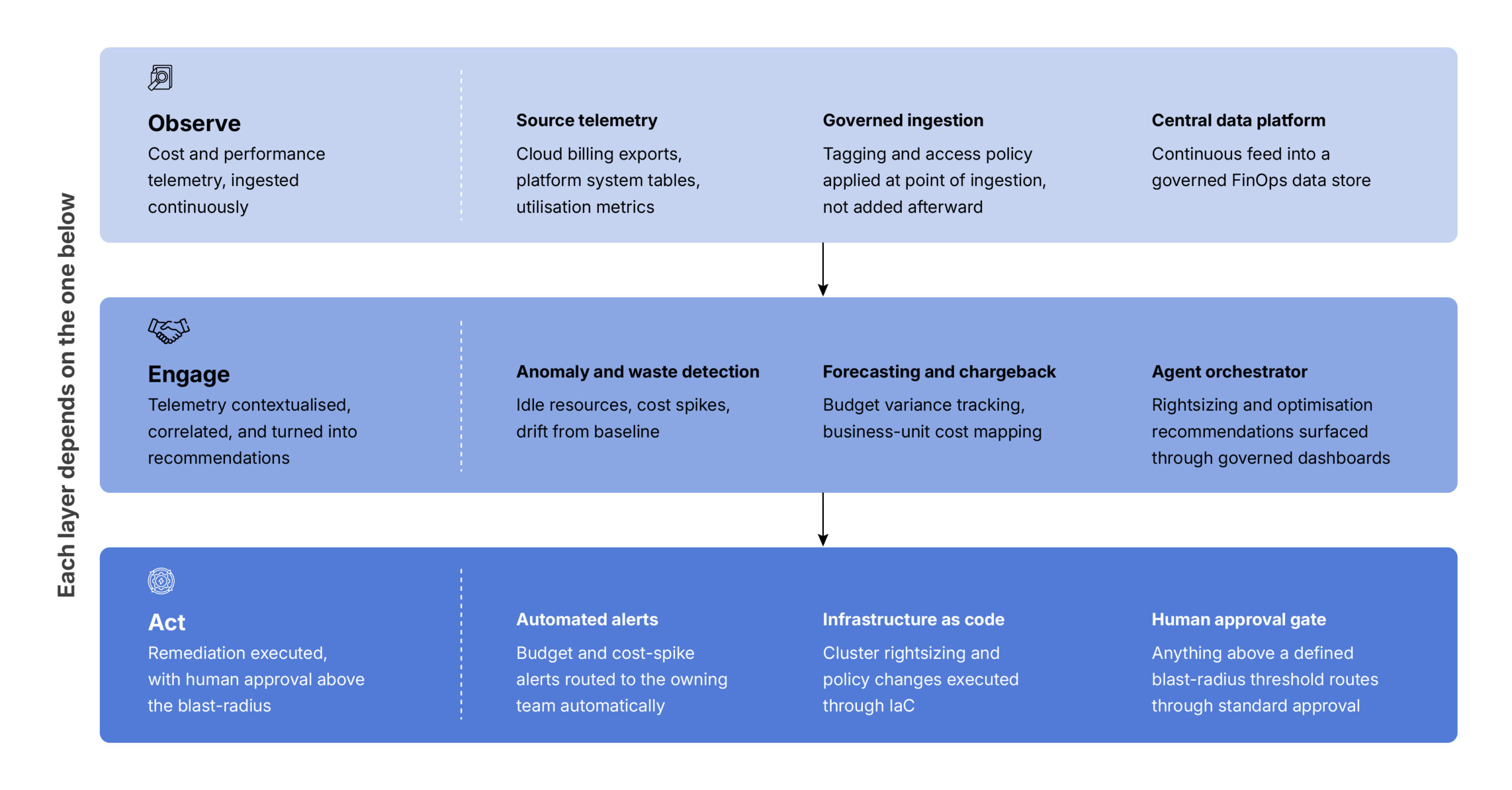
Fig.5. Agentic FinOps discipline that runs on governed Lakehouse
Dedicated FinOps engagements point to a repeatable maturity path that any enterprise running a governed Lakehouse can follow. None of this replaces the [FinOps discipline](/ai-managed-services/) already built into the delivery model, but it is what that discipline becomes once it runs continuously rather than being rebuilt by hand for every new engagement.
Stage
Duration
What it delivers
Outcomes in comparable engagements
Observability foundation
2-3 months
Cost maturity assessment, telemetry integrated into centralised dashboards for engineering, operations, and finance
- 50%+ improvement in cost visibility
- 90%+ cost attribution accuracy
Operational automation
3-4 months
Cost driver identification, policy-based and automated optimisation
- 70%+ of optimisation actions automated
- 20%+ cloud cost reduction
Intelligent operations
1–2 months
AI-assisted anomaly detection integrated with ticketing, predictive remediation
- ~40% reduction in manual operational effort
## 7. Five lessons for enterprise data leaders
Here is a consistent set of lessons about what separates a sustainable migration program from one that relapses.
- **The foundation is actual the deliverable, not the migration.** All three engagements targeted the same substrate, a [governed medallion Lakehouse](/case-studies/unified-data-marketplace-for-unlocking-faster-insights/) with a unified catalog, regardless of what they migrated from. Enterprises that fund the migration and the AI roadmap as two separate initiatives usually end up re-litigating governance decisions twice, once for the platform and again for every agent built on it. Funding them together, as one substrate with two outputs, is what let each of these three engagements skip that second fight.
- **FinOps must be designed into the architecture.** Forecast accuracy improving from ±25% error to 95% happens when cost governance is built in from day one. It is much harder to add later. Budget overruns usually trace back to early cost estimates that lacked a granular enough view of platform cost drivers, and a living baseline, revised monthly rather than set once, closes that gap.
- **Governance gates cause slippage, but removing them isn't the fix.** Approvals that shift ownership mid-project, or that surface too late, cascade delays through everything downstream. The gates exist to catch this before it becomes a parallel-run cost, so the fix is finishing them before they sit on the critical path, not stripping them out.
- **A deliberately bounded first wave compounds returns.** Scoping the first wave to a small number of pipelines, with explicit exclusions, follows the same logic as tiered triage during assessment: prove the pattern on a controlled slice, bank the reusable framework, and let every wave after it move faster. The real value shows up in what the third and fourth waves save, not in what the first one delivers alone.
- **Adoption requires dedicated resourcing.** The kind of user growth seen in the medical technology engagement doesn't happen by default. It comes from a resourced Cloud Center of Excellence, structured training, and certification, funded and run with the same intent as the technical migration itself. A platform nobody uses hasn't solved the underlying causes. It's just moved them onto newer infrastructure.
## 8. Conclusion
Every enterprise now has access to the same platform, the same primitives, the same reference architecture. What separates a migration that lasts from one that quietly relapses was never the technology; it was always the discipline. The causes are the familiar ones: debt that quietly turns into a FinOps problem, data that can't be trusted in time, and a ceiling on what the business can automate before anyone notices it's there. Treating these as the actual target, rather than chasing the slow queries and stale dashboards they produce, is what decides whether a modernization program holds or repeats itself within eighteen months.
So the real question isn't which platform to choose. It is: **when this program is done, will it be the last modernization this enterprise ever has to run?**
## Authored by:
**Nishant Ghosh** is Director, Partnerships at Sigmoid. He has extensive experience in technology consulting, strategic alliances and solution selling. Over the course of his career, he has worked with organizations across consumer goods, financial services, manufacturing, and other industries to accelerate their digital and analytics transformation initiatives. In his current role, Nishant leads Sigmoid’s global cloud and independent software vendor (ISV) partnerships, driving strategic collaborations that help enterprises unlock greater value from data, AI, and modern technology platforms.
[lc_get_post post_type="lc_section" slug="aerial-object-detection"]
---
## Navigation
- [Company](/about-sigmoid)
- [Newsroom](/newsroom)
- [Life at Sigmoid](/careers)
- [Takshashila](/takshashila)
- [Contact Us](/contact-us)
- [AI Strategy Blueprint your AI advantage](/enterprise-ai-strategy/)
- [Generative AI Drive innovation with Generative AI](/generative-ai/)
- [Responsible AI Build trust with ethical AI practices](/responsible-ai-in-enterprise/)
- [Agentic AI Reshape business with scalable agentic systems](/agentic-ai-solutions/)
- [AI Managed Services Ensure reliable AI performance](/ai-managed-services/)
- [Advanced Analytics Transform your business with data-driven insights](/advanced-data-analytics-solutions/)
- [Download whitepaper](/ebooks-whitepapers/the-new-qsr-playbook-transforming-menu-strategy-into-a-growth-engine/)
- [Data Strategy Strong data foundations for scalable AI](/data-analytics-strategy/)
- [Data Management Leverage data as a strategic asset](/ai-data-management-services/)
- [DataOps Automate data for speed and quality](/data-devops/)
- [Forward Deployed Engineering Scale enterprise AI with FDEs & specialized agents](/forward-deployed-engineering/)
- [Data Engineering Deliver insights faster with scalable pipelines](/data-engineering/)
- [Cloud Transformation Modernize data to maximise efficiency](/cloud-migration/)
- [Download whitepaper](/ebooks-whitepapers/building-data-products-in-a-data-mesh-to-drive-business-value/)
- [Data Modeling Structure data for better decisions](/data-modeling-services/)
- [Data Visualization Transform data into actionable stories](/data-visualization-service/)
- [BI Migration Enhance decision making with modern BI tools](/bi-migration/)
- [Data Observability Build trust with healthy, accurate data](/data-observability/)
- [Automated Insights Make smarter decisions with auto-generated insights](/automated-insights/)
- [Download whitepaper](/ebooks-whitepapers/how-cognitive-bi-drives-an-intelligent-enterprise/)
- [CPG & Retail End-to-end analytics for planning, operations, and commercial excellence](/industries/cpg-analytics/)
- [Life Sciences Trusted intelligence across clinical, commercial, and operational workflows](/industries/life-sciences/)
- [Banking & Financial Services AI-powered analytics for risk, compliance and customer experience](/industries/banking-financial-analytics-services/)
- [Insurance Modernize core insurance platforms and unlock new revenue streams with AI](/industries/insurance-reimagined-with-ai/)
- [Download infographic](/wp-content/uploads/2026/03/Infographic_Maturity-Framework-for-Scaling-Agentic-AI.pdf)
- [Helios Turn marketing data into measurable business outcomes](/marketing-suite-helios/)
- [Stratos AI-powered platform for resilient supply chains](/supply-chain-stratos/)
- [DataGuard Agentic AI platform for data quality and governance](/data-quality-dataguard/)
- [MediaIQ Advanced platform for in-flight marketing measurement](/accelerators/sigmoid-mediaiq-multi-touch-attribution-tool/)
- [CampaignIQ AI-driven platform for optimized campaign budget allocation](/accelerators/sigmoid-campaigniq/)
- [AssistBot GenAI email assistant that automates human-like responses](/accelerators/sigmoid-assistbot-for-ai-email-assistant/)
- [CreativeBot GenAI tool for personalized and brand-aligned creative design](/accelerators/sigmoid-creativebot/)
- [SocialBot GenAI platform to analyze digital conversations and trends](/accelerators/#marketing|socialbot)
- [DemandIQ Predict trends accurately and optimize inventory management](/accelerators/sigmoid-demandiq/)
- [NetworkIQ Track and optimize logistics operations in real-time to quickly address disruptions](/accelerators/sigmoid-networkiq/)
- [SupplyIQ End-to-end platform to optimize supply chain operations](/accelerators/sigmoid-supplyiq/)
- [ProcurementIQ Automated procurement operations for maximum savings, compliance and efficiency](/accelerators/sigmoid-procurementiq/)
- [RapidML Accelerated deployment for machine learning models](/accelerators/sigmoid-rapidml/)
- [DataGuard Comprehensive platform for proactive data quality management](/accelerators/data-quality-tool-sigmoid-dataguard/)
- [CloudPulse Cloud cost optimization platform with multi-cloud management](/accelerators/sigmoid-cloudpulse/)
- [RAPID GenAI foundation with built-in governance and cost clarity](/accelerators/sigmoid-rapid/)
- [AnalyticsBot Conversational analytics for faster business decisions](/accelerators/sigmoid-analyticsbot/)
- [DataConnect Seamlessly ingest, integrate and harmonize data from diverse sources](/accelerators/sigmoid-dataconnect/)
- [Reconica AI-powered data harmonization and reconciliation engine](/accelerators/sigmoid-reconica/)
- [ConverseBot GenAI driven insights generation for automated insights from reports](/accelerators/#sales|conversebot)
- [iNRM Cross-lever revenue growth optimization platform](/accelerators/sigmoid-inrm/)
- [AssortmentIQ Optimize shelf layouts and assortment mix at scale with AI-based insights](/accelerators/sigmoid-assortmentiq/)
- [Read whitepaper](/ebooks-whitepapers/building-agentic-ai-chatbots-for-business-process-transformation/)
- [Listen Podcast](/events/podcast/how-jack-in-the-box-is-redefining-personalization-and-supply-chain-with-ai/)
- [Blogs](/blogs/)
- [White Papers](/ebooks-whitepapers/)
- [Case Studies](/case-studies/)
- [Podcast](/events/podcast/#Podcasts)
- [Download case study](/case-studies/ai-based-dynamic-targeting-and-personalized-hcp-engagement-for-pharma-marketing/)
- [ConverseBot](/accelerators/#sales|conversebot/)
---
## Footer Links
- [Talk to our AI experts](/contact-us/)
- [AI Strategy](/enterprise-ai-strategy/)
- [Agentic AI](/agentic-ai-solutions/)
- [Generative AI](/generative-ai/)
- [AI Managed Services](/ai-managed-services/)
- [Responsible AI](/responsible-ai-in-enterprise/)
- [Advanced Analytics](/advanced-data-analytics-solutions/)
- [Data Strategy](/data-analytics-strategy//)
- [Data Engineering](/data-engineering/)
- [Data Management](/ai-data-management-services/)
- [Cloud Transformation](/cloud-transformation/)
- [DataOps](/data-devops/)
- [Forward Deployed Engineering](/forward-deployed-engineering/)
- [Data Visualization](/data-visualization-service/)
- [Automated Insights](/automated-insights/)
- [BI Migration](/bi-migration/)
- [Data Modeling](/data-modeling-services/)
- [Data Observability](/data-observability/)
- [CPG & Retail](/industries/cpg-analytics/)
- [Life Sciences](/industries/life-sciences/)
- [Banking & Financial Services](/industries/banking-financial-analytics-services/)
- [Insurance](/industries/insurance-reimagined-with-ai/)
- [Case Studies](/case-studies/)
- [Thought Leadership](/ebooks-whitepapers/)
- [Blogs](/blogs/)
- [Helios](/marketing-suite-helios/)
- [Stratos](/supply-chain-stratos/)
- [DataGuard](/data-quality-dataguard/)
- [Company](/about-sigmoid/)
- [Newsroom](/newsroom/)
- [Accelerators](/accelerators/)
- [Careers](/careers/)
- [Privacy Policy |](/privacy-policy/)
- [Cookie Policy](/cookie-policy/)