---
# The new QSR playbook: Transforming menu strategy into a growth engine
**URL:** https://www.sigmoid.com/ebooks-whitepapers/the-new-qsr-playbook-transforming-menu-strategy-into-a-growth-engine/
Date: 2026-06-30
Author: Joha Momin
Post Type: page
Summary: The new QSR playbook: Transforming menu strategy into a growth engine In this whitepaper Introduction QSR economics has structurally shifted Menu Engineering...Read More...
---
# The new QSR playbook: Transforming menu strategy into a growth engine
In this whitepaper
Introduction
QSR economics has structurally shifted
Menu Engineering now determines how profit is created and sustained
Menu strategy delivers value when executed well
What QSR leaders should do next
Balancing precision with differentiation
The next competitive moat: Loyalty-led menu design
Winning the next phase of QSR growth
Download PDF
## 1. Introduction
Every menu decision is ultimately a business decision.
What appears to customers as a list of products is, in reality, one of the most influential levers a QSR brand has to shape demand, influence profitability, improve operational efficiency, and strengthen the guest experience. Yet, despite its strategic importance, the menu is often managed through disconnected decisions across pricing, marketing, operations, and supply chain.
This fragmented approach made sense when growth was primarily driven by scale. Today, it creates missed opportunities. As margins tighten and execution becomes increasingly complex, operators need a more integrated way to manage performance.
This paper presents a different perspective, to reposition menu engineering from a periodic optimization exercise to a cross-functional business discipline. By treating the menu as a strategic operating system rather than a static catalogue of products, QSR brands can make more informed decisions, align functions around common business objectives, and create sustainable competitive advantage.
## 2. QSR economics has structurally shifted
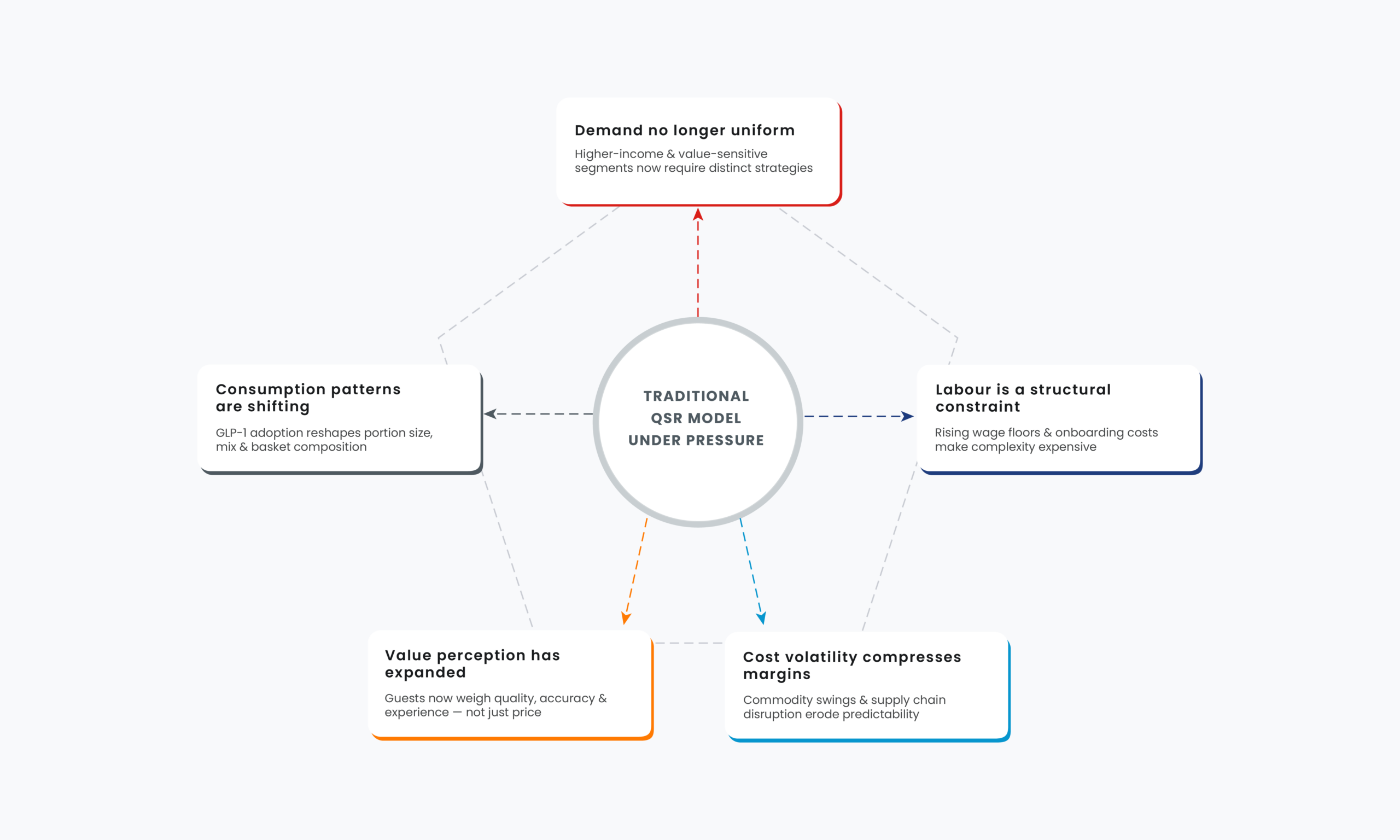
The QSR model was built for scale, driven by simplicity, standardization, and high throughput. For decades, this enabled consistent, volume-led growth. That foundation is now under pressure. A combination of demand fragmentation, labor constraints, cost volatility, and rising customer expectations is reshaping how value is created and delivered. The result is a structural shift in QSR economics that can no longer be addressed by traditional growth levers.
The five forces driving this shift, and the pressure each places on the traditional operating model, are illustrated below.
### 2.1. The strategic gap: why traditional levers are failing
These shifts expose a fundamental gap in how most QSR operators manage performance today:
- Pricing is reactive and often blunt
- Promotions drive traffic but erode margins
- Menu expansion adds complexity without proportional value
- Operational inefficiencies remain hidden within aggregate metrics
### 2.1.1. The transition from volume growth to engineered profitability
The next phase of QSR growth will not be driven by more stores or higher prices. It will be driven by **better decisions at the transaction level**. These decisions will be driven by a different kind of control system that can simultaneously:
- Shape customer demand
- Improve operational efficiency
- Protect and expand margins
That system is the **menu**.
### Expert insight: Redefining value in the QSR experience
**Ft. Lauren Peake, Director, Guest Feedback & Insights at Jack in the Box**
“Historically, QSR has been defined by speed and affordability. Guests chose QSR for convenience, and the value equation was heavily rooted in low prices and quick service. Because of that, areas like food quality and guest service, while still important, were often secondary and more easily overlooked. As long as the order was correct, fast, and inexpensive, the overall experience met expectations.
Over time, however, the landscape has shifted. As QSR prices have increased, the traditional value proposition has evolved. Guests are now paying more, and with that comes a natural rise in expectations. What was once considered ‘good enough’ is no longer sufficient. Guests are no longer willing to trade off quality or service simply for speed and price.
Today, value is more holistic. It’s not just about the cost of the meal, it’s about the entire experience. Guests are evaluating every touchpoint of their visit: how they are greeted and treated by team members, whether the environment feels clean and well-maintained, whether the wait time aligns with expectations, and whether the food meets a higher standard of quality and consistency.
Order accuracy remains table stakes, but it is no longer a differentiator on its own. This shift means that the definition of success in QSR has expanded. While price, speed, and accuracy are still critical, they are now only part of the equation. Quality food and friendly, engaging service have become equally important drivers of perceived value.
Brands that can consistently deliver across all of these dimensions will be best positioned to meet rising guest expectations and build long-term loyalty.”
## 3. Menu Engineering now determines how profit is created and sustained
In a margin-constrained environment, the menu becomes the most effective lever for influencing both revenue and cost simultaneously. However, realizing its full potential requires moving beyond traditional, one-dimensional approaches. It must evolve into a cross-functional control system that governs how value is created, delivered, and captured across the business.
### 3.1 Reframing the objective: Margin per guest, not price per item
At its core, menu engineering shifts the focus from individual item pricing to **total contribution margin per transaction**.
The objective is not to maximize the margin of a single item, but to optimize:
- What the customer orders
- How those items are combined
- How efficiently are they fulfilled
### 3.2 The core analytical framework: Profitability × Demand
The starting point remains the classic classification of menu items across profitability and popularity. However, its value lies not in categorization, but in the actions it enables.
The menu engineering matrix
Interactive scatter matrix showing menu items by profitability and popularity. Select a quadrant to update the strategy panel.
The menu engineering matrix
Plot each menu item by contribution margin against units sold. The quadrant it lands in defines the strategic action it warrants.
Select a quadrant to see how to manage it.
LOW
HIGH
LOW
HIGH
Profitability
contribution margin
Puzzles
High profit · Low demand
Stars
High profit · High demand
Optimize
Low profit · Low demand
Plowhorses
Low profit · High demand
Premium salad
Specialty coffee
Dessert
Signature burger
Combo meal
Chicken sandwich
Seasonal wrap
Side salad
Fries
Soft drink
Value burger
Popularity
units sold / demand
STARS
High profitability · High demand
The economic anchors of the menu
ROLE
IMPLICATION
STRATEGIC ACTION
*Item placements are illustrative.
Source: Sigmoid menu engineering framework.
### 3.2.1 Interpreting the Menu Engineering Matrix
At the core of menu engineering is a simple but powerful visualization: a two-axis matrix plotting Item Contribution Margin (profitability) against units sold (demand).
- The **X-axis (Popularity)** reflects how frequently an item is ordered
- The **Y-axis (Profitability)** reflects the contribution margin generated per item
Each menu item is plotted in this matrix, providing a clear view of how it contributes individually and to the menu's overall economics.
- **Stars (High Profit, High Demand)**
These are the economic anchors of the menu. These items must be retained, consistently available, and prominently positioned across channels. Any disruption to their availability or execution has a disproportionate impact on performance.
- **Plowhorses (Low Profit, High Demand)**
These items drive volume but dilute margins. The objective is not to remove them, but to redesign how they are consumed; typically through bundling or pairing with higher-margin add-ons to improve blended transaction economics.
- **Puzzles (High Profit, Low Demand)**
These represent untapped margin potential. Low demand is often a function of visibility, positioning, or naming rather than inherent customer preference. Strategic promotion and placement can unlock disproportionate value.
- **Optimize (Low Profit, Low Demand)**
These items consume resources without contributing meaningfully to revenue or margin. Their role must be explicitly justified, either as a traffic driver or a strategic placeholder or they should be reworked or removed.
### 3.2.2 Implications and strategic actions for each quadrant
Each quadrant carries a distinct strategic logic. Stars must be protected and prioritised across every channel. Plowhorses need their blended margin improved through intelligent bundling. Puzzles represent latent profitability that is typically a positioning problem, not a product problem. And items in the Optimize quadrant require an explicit reason for their place on the menu; if none exists, they are candidates for removal.
### 3.4 Moving beyond the matrix: A multidimensional view of the menu
While the profitability-demand matrix provides clarity, it does not capture the full complexity of how a menu performs in reality. True optimization requires integrating additional dimensions.
**The marketing lens: brand equity and identity**
Not all items are equal in how they shape perception. Some products define the brand and anchor customer expectations. Removing or altering these without consideration can erode long-term equity, even if short-term margins improve.
**The supply chain lens: stability and risk**
Items that rely on volatile or single-source ingredients introduce hidden risk. A high-margin product that cannot be consistently supplied becomes a liability. Procurement stability must be factored into menu decisions.
**The operations lens: assembly and accuracy**
Operational complexity is one of the most underappreciated drivers of cost. Items that require more steps, customization, or handling increase preparation time, error rates, and labor intensity. An item that appears profitable on paper may reduce overall throughput and revenue during peak periods.
**The portfolio lens: incrementality vs. cannibalization**
Not every new item drives growth. Some simply shift demand from higher-margin products to lower-margin alternatives. Understanding whether an item expands the market or redistributes it is critical.
## 4. Menu strategy delivers value when executed well
A well-engineered menu defines what should be sold. Competitive advantage, however, is determined by how consistently and efficiently that intent is executed at scale.
In a high-volume QSR environment, execution is not a back-end concern, it is the primary determinant of whether margin strategy translates into financial outcomes. The engineered menu must therefore be operationalized as a system that aligns kitchen workflows, digital interfaces, and decisioning logic in real time.
### 4.1. The operator playbook: designing for throughput and precision
At the store level, the objective is clear: maximize throughput without compromising accuracy or experience. This requires rethinking how the menu interacts with kitchen operations.
Throughput must become the governing principle of menu design. This starts by structuring the menu around how items are actually executed in the kitchen. Not all items should move through the same production flow.
**High-frequency, low-complexity items**
should be routed through streamlined, repeatable workflows. These are your throughput drivers and must be optimized for speed and consistency, especially during peak hours.
**Complex or highly customized items**,
on the other hand, should be handled through separate preparation paths. Isolating them prevents delays, reduces error spillover, and ensures that a single complicated order does not slow down the entire system.
The routing logic that operationalizes this principle is shown below.
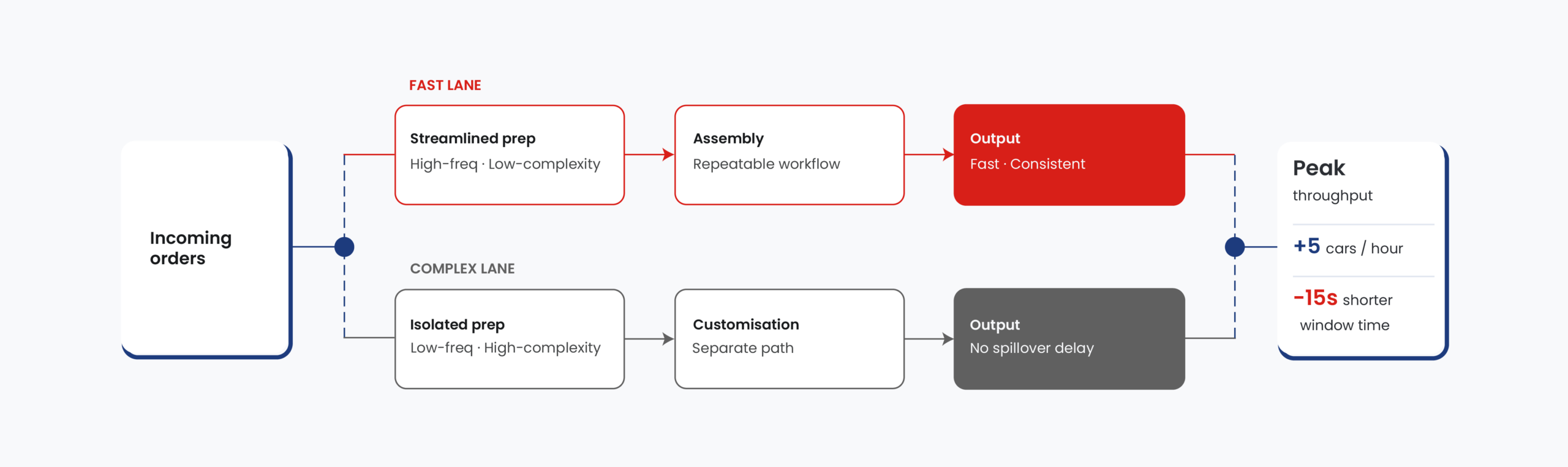
Fig. 1: Dual-lane kitchen routing design
The objective is to protect core throughput while containing complexity so the menu works with the kitchen, not against it. Every additional step in preparation introduces variability, increases error probability, and consumes incremental labor time. When multiplied across peak-hour volumes, even small inefficiencies translate into lost transactions.
Operators should therefore actively evaluate:
- Which items disproportionately slow down production during peak periods
- Where error rates are concentrated and how they correlate with menu complexity
- How menu design can reduce variability in assembly without reducing perceived choice
### Menu simplification is not a cost exercise; it is a revenue unlock.
### 4.2 Aligning digital and physical systems
The modern QSR operates across multiple ordering channels including drive-thru, in-store, mobile, and delivery. The menu must function as a unifying layer across these environments.
Digital interfaces, in particular, create a powerful opportunity to guide customer behavior in ways that align with operational capacity. Leading operators are increasingly shifting from static menu presentation to **context-aware menu orchestration**, where:
- High-margin, high-speed items are prioritized during peak demand windows
- Complex items are deprioritized when the kitchen load is high
- Out-of-stock or constrained items are dynamically removed to prevent downstream friction
- Recommendations are tailored based on customer behavior
This approach moves towards active demand shaping, ensuring that what customers choose is aligned with what the system can deliver efficiently. The goal is to balance brand perception and customer trust.
### 4.3 Technology enablers: AI-powered menu design
Operationalizing menu engineering at scale requires a technology backbone that can process data, generate insights, and act on them in near real time. This is where AI-enabled capabilities become central, enabled through multiple layers where each capability feeds the next.
DATA IN
1
Demand Forecasting Engine
Predicts order volumes at granular level to drive precision planning
Forecasting
Machine learning models predict order volumes at the store, daypart, and item level — enabling operators to align staffing, inventory, and prep schedules with actual demand patterns rather than averages.
Reduces over-preparation waste and service variability during peak windows
Enables precise staffing — aligning labor hours with forecasted transaction load
Improves inventory allocation across fresh and high-margin items
Feeds real-time signals into dynamic menu display and prep prioritisation
2
Price Elasticity Models
Identifies item-level pricing sensitivity to protect margin without hurting demand
Pricing
Localised elasticity models reveal the price points at which demand shifts — allowing operators to identify expansion zones where margin can grow, and risk zones where even minor increases erode traffic.
Item and location-level granularity — not blunt category-wide adjustments
Distinguishes inelastic Stars from price-sensitive Plowhorses
Avoids reactive discounting that erodes perceived value long-term
Continuously recalibrates as demand patterns and competitive context shift
3
Reinforcement Learning Systems
Optimises upsell and recommendation strategies by learning from every interaction
Optimisation
RL agents continuously test and refine recommendation strategies across digital channels — adapting what to suggest, when, and how based on real conversion signals rather than static rules.
Maximises attachment rates and basket value across app, kiosk and drive-thru
Adapts to time-of-day, weather, and channel context automatically
Balances short-term conversion with long-term customer satisfaction
Gets measurably sharper with every transaction — a true compounding asset
4
Market Basket Intelligence
Finds high-probability product pairings to power smarter bundle design
Bundling
Association mining across millions of transactions surfaces which items are ordered together, in what contexts, and with what effect on total transaction value — turning bundling from intuition into engineered margin.
Pairs high-margin add-ons with Plowhorse anchors to lift blended economics
Surfaces Puzzle items as natural complements to high-demand Stars
Improves operational predictability by concentrating prep around known combos
Reduces decision fatigue for guests — fewer choices, better outcomes
5
Personalisation Layer
Integrates with loyalty data to surface the right offer for each individual guest
Personalisation
Loyalty ecosystems provide the identity layer that makes everything above more precise. Individual ordering history, preferences, visit frequency, and contextual signals allow the menu to adapt in real time — turning a broadcast into a conversation.
Delivers targeted offers without the margin erosion of broad discounting
Increases visit frequency by surfacing offers timed to individual lapse signals
Digital interfaces — app, kiosk, drive-thru AI — become active decision engines
Each interaction generates richer data, sharpening the next recommendation
DECISIONS OUT
Real-time
pricing
Dynamic
recommendations
Optimised
bundling
Personalised
offers
Together, these capabilities transform the menu into a **continuous learning system**, one that evolves with demand patterns, operational conditions, and customer behavior.
### 4.4. ROI impact: translating execution into measurable outcomes
The value of an engineered menu becomes most visible when translated into tangible business outcomes across three interconnected dimensions, namely financial performance, operational throughput, and labor efficiency. Together, they create a compounding effect that drives enterprise-level value.
Dimension
Driver
Observed business impact
Financial
Improved product mix and optimized pricing, bundling, and product positioning.
- 10-15% contribution margin per transaction
- Increased average order value (AOV)
- EBITDA lift across high-volume store networks
Operational
Aligning menu design with execution capability
- **10–15 second reduction** in drive-thru window times
- **~5 additional cars served per hour** during peak periods
- **~9% improvement** in order completion times
Labor
Demand predictability and simplified workflows
- Enhances sales per labor hour (SPLH)
- Reduces variability in execution leading to order accuracy and better service quality
- **~8% reduction** in labor costs
### 4.4.1. Operational health metrics for sustaining performance
Beyond financial and throughput gains, engineered menus improve core operating stability. Leading operators track a focused set of KPIs to ensure sustained impact, which also acts as an early warning system:
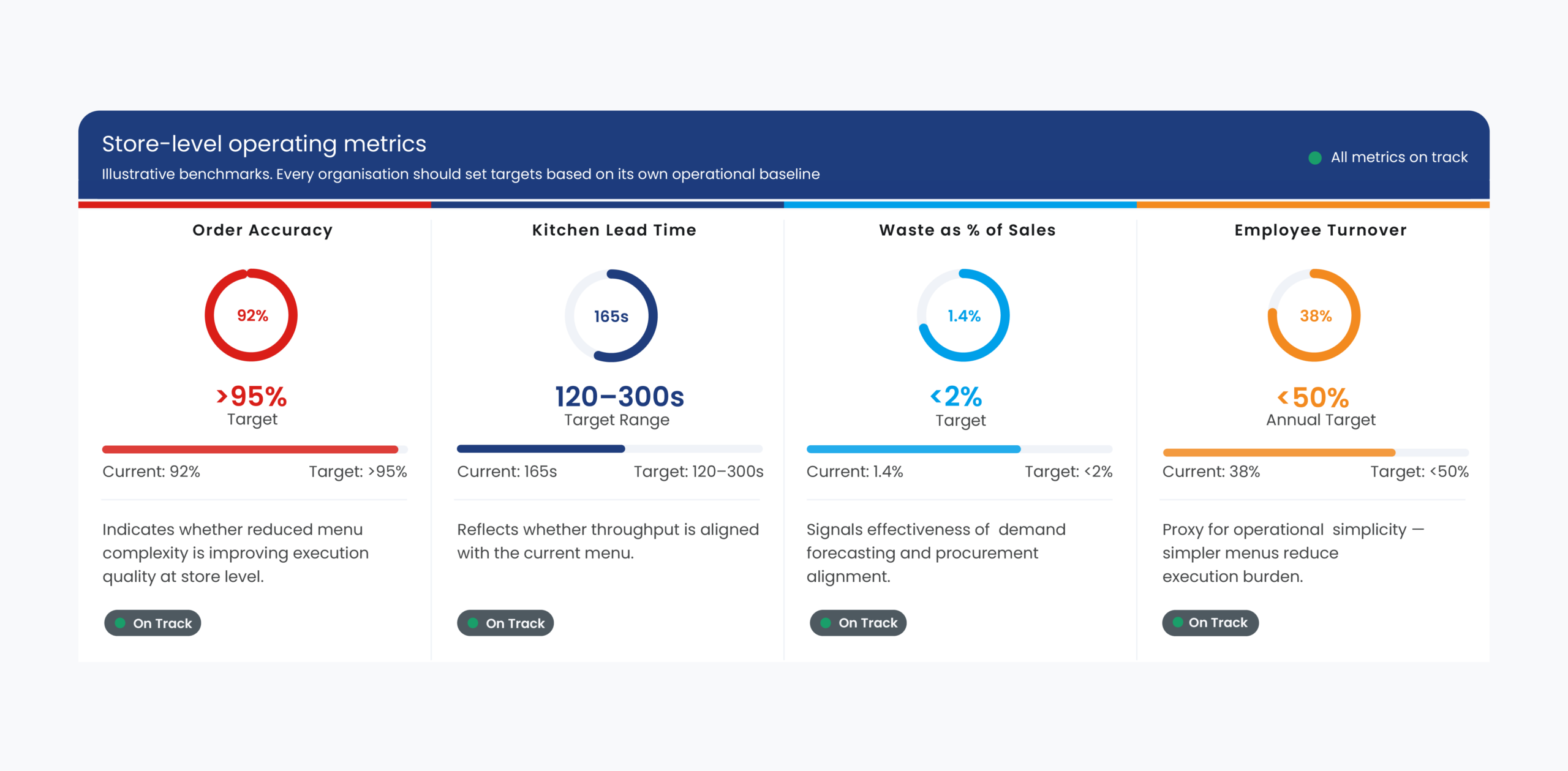
Fig.2. Store-level operational health metrics
**Why it matters:**
In a system processing thousands of transactions daily, even small improvements in margin, speed, or efficiency scale rapidly. For example, a **$0.50 increase in margin per guest**, applied across a 2,000-store network with 500 daily transactions per store, can translate into **~$190M+ annual EBITDA impact.** The calculator below lets you model the same effect for your own network.
The compounding math of margin
A few cents per guest, multiplied across the network
In a system processing thousands of transactions a day, small per-guest margin gains scale into enterprise-level EBITDA impact. Adjust the inputs to model your own network.
Added margin per guest$0.50
Uplift from improved mix, pricing precision, and bundling
Stores in network2,000
Total locations across the footprint
Daily transactions per store500
Average guest transactions per store, per day
Estimated annual EBITDA impact
$182.5M
from $0.50 across 2,000 stores · 500 transactions/day
**
Per store, per year**$91.3K**
Per day, network-wide**$500K**
Illustrative model: added margin per guest × stores × daily transactions × 365. Actual results depend on item mix, elasticity, and execution.
Menu engineering converts these micro-improvements into **macro-level impact**, making it one of the most powerful and underutilized levers in QSR profitability.
## 5. What QSR leaders should do next
Transitioning to an engineered menu requires a consistent shift in how decisions are made across pricing, product, operations, and supply chain. The following actions provide a practical pathway for leaders to translate strategy into sustained advantage.
- **Conduct a multidimensional menu audit:** Evaluate every menu item beyond margin and demand to include operational complexity and supply risk. This surfaces inefficient items that drive volume but slow throughput, increase errors, or introduce cost volatility and establish a clear baseline for rationalization.
- **Redesign bundles for blended margin:** Move beyond value-led bundling to margin-led design. Pair high-frequency, lower-margin items with high-margin add-ons to improve overall transaction economics while maintaining a strong value perception.
- **Segment the menu experience:** Leverage digital channels to tailor menu presentation by customer type. Guide convenience-driven customers toward premium, frictionless options, while structuring clear value pathways for price-sensitive segments, without diluting margins.
- **Adopt forward-looking labor metrics:** Shift from cost-based metrics to productivity-focused measures such as sales per labor hour (SPLH) and transactions per labor hour (TLPH). This enables better alignment of staffing with demand and menu complexity.
- **Rationalize the ingredient base:** Reduce reliance on single-use and volatile ingredients. Increasing ingredient reuse across menu items simplifies operations, improves procurement stability, and reduces waste.
- **Reinvest gains into innovation:** Treat optimization as a funding mechanism, not an endpoint. Reinvest a portion of margin gains into new products, formats, and experiences to sustain differentiation and long-term growth.
## 6. Balancing precision with differentiation
Menu engineering introduces discipline into decision-making, but discipline alone does not create growth. Growth is driven by relevance, and relevance requires continuous innovation. The risk is not over-optimization itself, but optimization without intent. In a market where customer choice is increasingly driven by experience and brand affinity, this creates a new risk: profitable but interchangeable menus.
The objective, therefore, is not to optimize every item purely for margin and simplicity, but to ensure that optimization strengthens brand relevance.
Avoiding over-optimization
Using optimization to fund innovation
The most effective operators recognize that optimizing every item purely for margin and simplicity can narrow the menu to a point where it loses distinctiveness. While this improves operational efficiency, it can reduce variety, limit excitement, and weaken brand identity over time.
This often results in menus that:
- Converge toward similar high-margin, easy-to-execute items
- Lose elements that drive trial and repeat engagement
- Compete more on price than on preference
**Implication:** Efficiency is necessary, but without creative risk, the menu loses its ability to drive demand and long-term loyalty.
The most effective operators treat menu engineering as a means to unlock capacity. Margin improvements generated through better mix, pricing precision, and operational alignment create financial headroom that can be reinvested into innovation.
This allows brands to:
- Sustain multiple new product experiments without margin pressure
- Support limited-time offerings and seasonal launches
- Fund creative development while maintaining economic discipline
**Implication:** Treat optimization as a lever to fund innovation.
Expanding demand through new occasion and segments
Establishing a balanced menu portfolio
Lost transactions do not always need to be recovered from the same customer base. Instead of focusing solely on retention, they identify new demand pools that can offset declines and drive incremental growth.
This enables brands to:
- Create new consumption occasions such as late-night, snack, or post-activity meals
- Attract new customer segments with distinct needs or preferences (health-conscious, premium seekers)
- Reframe declining demand as an opportunity to expand the market or explore new channels (retail, at-home consumption)
**Implication:** Growth comes from expanding the demand pool, not just competing within existing demand.
A well-engineered menu should function as a balanced portfolio where each item serves a specific strategic purpose. Not every product is designed to maximize margin, some act as traffic drivers, others as brand anchors, and some as experimental innovations.
This ensures the menu contains
- Core items that drive margin and volume
- Value items or signature products sustain customers and accessibility
- New, innovative items that create differentiation and refresh relevance
**Implication:** A high-performing menu balances profitability with purpose. Each item must justify its role within the system.
## 7. The next competitive moat: Loyalty-led menu design
The integration of menu engineering with digital loyalty ecosystems is redefining how QSR brands compete. It shifts the menu from a static construct to a dynamic, data-driven system that continuously adapts to customer behavior and business conditions. The three stages of this evolution and how they connect are explored in the interactive below.
1
Evolving the menu
Static → personalised
2
The data flywheel
The mechanism
3
Continuous capability
The organisational shift
One menu for everyone
↓
Individual-level menu experience
Broad discounting
↓
Targeted offers without margin erosion
Passive display layer
↓
Active decision engine
Periodic menu reviews
↓
Real-time adaptive decisions
BETTER DATA
SHARPENS
EVERY DECISION
1
Capture
Every transaction generates data
on item selection, channel, timing
and price sensitivity
2
Learn
Models sharpen pricing, mix and
bundling at granular store level,
continuously recalibrating
3
Personalise
Real-time recommendations via app,
kiosk and drive-thru AI. Upsell
strategies adapt with every order
4
Compound
Margin, throughput and efficiency
improve at scale. Each cycle
sharpens every future decision
Periodic model
Continuous model
Annual menu reviews
→
Real-time adaptive decisions
Siloed functions
→
Shared data signals across teams
Static pricing rules
→
AI-tested pricing iteration
Product differentiation alone
→
System-wide learning that compounds over time
**The compounding advantage:** competitive advantage in QSR is no longer defined by who has the best product or the lowest price. It is defined by **who can make better decisions faster, more consistently, and at scale.**
## 8. Winning the next phase of QSR growth
The QSR growth model has undergone a structural change. Expansion is constrained, pricing power is limited, and demand is fragmenting. Profitability can no longer be managed at scale, it must be engineered at the transaction level.
This is where the menu becomes critical. When treated as static, the menu reflects the business. When engineered, it controls the business by shaping demand, enabling execution, and driving margin in real time.
The brands that will lead the next phase of QSR will be those that balance **discipline with differentiation** by using menu engineering to drive efficiency, while reinvesting those gains to sustain relevance, innovation, and customer connection. They will not treat optimization and creativity as opposing forces, but as complementary levers within a single, integrated strategy.
The implication is clear. The competitive advantage in QSR is no longer defined by who has the best product, the lowest price, or the largest footprint. It is defined by **who can make better decisions faster, more consistently, and at scale**.
## Authored by:
**Lauren Peake** is Director, Guest Feedback & Insights at Jack in the Box. With over 14 years of experience, she is helping restaurant brands strengthen customer experience and business performance. Throughout her career, she has led initiatives spanning guest insights, consumer research, and operational strategy, enabling organizations to better understand evolving customer expectations and translate those insights into measurable business outcomes. Lauren works at the intersection of guest experience and restaurant operations, helping leadership teams make informed decisions that enhance service quality, build customer loyalty, and drive sustainable growth.
**Malhar Yadav** is an Associate Lead Data Scientist at Sigmoid.He specializes in applying data science and AI to solve complex business challenges in the QSR industry. He works closely with restaurant leaders to develop analytics-driven strategies across menu engineering, pricing, customer experience, restaurant operations, and commercial performance. His work bridges advanced analytics with practical business execution, helping QSR organizations improve profitability, streamline operations, and make faster, more informed decisions.
[lc_get_post post_type="lc_section" slug="aerial-object-detection"]
---
## Navigation
- [Company](/about-sigmoid)
- [Newsroom](/newsroom)
- [Life at Sigmoid](/careers)
- [Takshashila](/takshashila)
- [Contact Us](/contact-us)
- [AI Strategy Blueprint your AI advantage](/enterprise-ai-strategy/)
- [Generative AI Drive innovation with Generative AI](/generative-ai/)
- [Responsible AI Build trust with ethical AI practices](/responsible-ai-in-enterprise/)
- [Agentic AI Reshape business with scalable agentic systems](/agentic-ai-solutions/)
- [AI Managed Services Ensure reliable AI performance](/ai-managed-services/)
- [Advanced Analytics Transform your business with data-driven insights](/advanced-data-analytics-solutions/)
- [Download whitepaper](/ebooks-whitepapers/the-new-qsr-playbook-transforming-menu-strategy-into-a-growth-engine/)
- [Data Strategy Strong data foundations for scalable AI](/data-analytics-strategy/)
- [Data Management Leverage data as a strategic asset](/ai-data-management-services/)
- [DataOps Automate data for speed and quality](/data-devops/)
- [Forward Deployed Engineering Scale enterprise AI with FDEs & specialized agents](/forward-deployed-engineering/)
- [Data Engineering Deliver insights faster with scalable pipelines](/data-engineering/)
- [Cloud Transformation Modernize data to maximise efficiency](/cloud-migration/)
- [Download whitepaper](/ebooks-whitepapers/building-data-products-in-a-data-mesh-to-drive-business-value/)
- [Data Modeling Structure data for better decisions](/data-modeling-services/)
- [Data Visualization Transform data into actionable stories](/data-visualization-service/)
- [BI Migration Enhance decision making with modern BI tools](/bi-migration/)
- [Data Observability Build trust with healthy, accurate data](/data-observability/)
- [Automated Insights Make smarter decisions with auto-generated insights](/automated-insights/)
- [Download whitepaper](/ebooks-whitepapers/how-cognitive-bi-drives-an-intelligent-enterprise/)
- [CPG & Retail End-to-end analytics for planning, operations, and commercial excellence](/industries/cpg-analytics/)
- [Life Sciences Trusted intelligence across clinical, commercial, and operational workflows](/industries/life-sciences/)
- [Banking & Financial Services AI-powered analytics for risk, compliance and customer experience](/industries/banking-financial-analytics-services/)
- [Insurance Modernize core insurance platforms and unlock new revenue streams with AI](/industries/insurance-reimagined-with-ai/)
- [Download infographic](/wp-content/uploads/2026/03/Infographic_Maturity-Framework-for-Scaling-Agentic-AI.pdf)
- [Helios Turn marketing data into measurable business outcomes](/marketing-suite-helios/)
- [Stratos AI-powered platform for resilient supply chains](/supply-chain-stratos/)
- [DataGuard Agentic AI platform for data quality and governance](/data-quality-dataguard/)
- [MediaIQ Advanced platform for in-flight marketing measurement](/accelerators/sigmoid-mediaiq-multi-touch-attribution-tool/)
- [CampaignIQ AI-driven platform for optimized campaign budget allocation](/accelerators/sigmoid-campaigniq/)
- [AssistBot GenAI email assistant that automates human-like responses](/accelerators/sigmoid-assistbot-for-ai-email-assistant/)
- [CreativeBot GenAI tool for personalized and brand-aligned creative design](/accelerators/sigmoid-creativebot/)
- [SocialBot GenAI platform to analyze digital conversations and trends](/accelerators/#marketing|socialbot)
- [DemandIQ Predict trends accurately and optimize inventory management](/accelerators/sigmoid-demandiq/)
- [NetworkIQ Track and optimize logistics operations in real-time to quickly address disruptions](/accelerators/sigmoid-networkiq/)
- [SupplyIQ End-to-end platform to optimize supply chain operations](/accelerators/sigmoid-supplyiq/)
- [ProcurementIQ Automated procurement operations for maximum savings, compliance and efficiency](/accelerators/sigmoid-procurementiq/)
- [RapidML Accelerated deployment for machine learning models](/accelerators/sigmoid-rapidml/)
- [DataGuard Comprehensive platform for proactive data quality management](/accelerators/data-quality-tool-sigmoid-dataguard/)
- [CloudPulse Cloud cost optimization platform with multi-cloud management](/accelerators/sigmoid-cloudpulse/)
- [RAPID GenAI foundation with built-in governance and cost clarity](/accelerators/sigmoid-rapid/)
- [AnalyticsBot Conversational analytics for faster business decisions](/accelerators/sigmoid-analyticsbot/)
- [DataConnect Seamlessly ingest, integrate and harmonize data from diverse sources](/accelerators/sigmoid-dataconnect/)
- [Reconica AI-powered data harmonization and reconciliation engine](/accelerators/sigmoid-reconica/)
- [ConverseBot GenAI driven insights generation for automated insights from reports](/accelerators/#sales|conversebot)
- [iNRM Cross-lever revenue growth optimization platform](/accelerators/sigmoid-inrm/)
- [AssortmentIQ Optimize shelf layouts and assortment mix at scale with AI-based insights](/accelerators/sigmoid-assortmentiq/)
- [Read whitepaper](/ebooks-whitepapers/building-agentic-ai-chatbots-for-business-process-transformation/)
- [Listen Podcast](/events/podcast/how-jack-in-the-box-is-redefining-personalization-and-supply-chain-with-ai/)
- [Blogs](/blogs/)
- [White Papers](/ebooks-whitepapers/)
- [Case Studies](/case-studies/)
- [Podcast](/events/podcast/#Podcasts)
- [Download case study](/case-studies/ai-based-dynamic-targeting-and-personalized-hcp-engagement-for-pharma-marketing/)
- [ConverseBot](/accelerators/#sales|conversebot/)
---
## Footer Links
- [Talk to our AI experts](/contact-us/)
- [AI Strategy](/enterprise-ai-strategy/)
- [Agentic AI](/agentic-ai-solutions/)
- [Generative AI](/generative-ai/)
- [AI Managed Services](/ai-managed-services/)
- [Responsible AI](/responsible-ai-in-enterprise/)
- [Advanced Analytics](/advanced-data-analytics-solutions/)
- [Data Strategy](/data-analytics-strategy//)
- [Data Engineering](/data-engineering/)
- [Data Management](/ai-data-management-services/)
- [Cloud Transformation](/cloud-transformation/)
- [DataOps](/data-devops/)
- [Forward Deployed Engineering](/forward-deployed-engineering/)
- [Data Visualization](/data-visualization-service/)
- [Automated Insights](/automated-insights/)
- [BI Migration](/bi-migration/)
- [Data Modeling](/data-modeling-services/)
- [Data Observability](/data-observability/)
- [CPG & Retail](/industries/cpg-analytics/)
- [Life Sciences](/industries/life-sciences/)
- [Banking & Financial Services](/industries/banking-financial-analytics-services/)
- [Insurance](/industries/insurance-reimagined-with-ai/)
- [Case Studies](/case-studies/)
- [Thought Leadership](/ebooks-whitepapers/)
- [Blogs](/blogs/)
- [Helios](/marketing-suite-helios/)
- [Stratos](/supply-chain-stratos/)
- [DataGuard](/data-quality-dataguard/)
- [Company](/about-sigmoid/)
- [Newsroom](/newsroom/)
- [Accelerators](/accelerators/)
- [Careers](/careers/)
- [Privacy Policy |](/privacy-policy/)
- [Cookie Policy](/cookie-policy/)