---
# Modernizing MedTech demand forecasting with AI on Databricks
**URL:** https://www.sigmoid.com/blogs/modernizing-medtech-demand-forecasting-with-ai-on-databricks/
Date: 2026-05-29
Author: Joha Momin
Post Type: post
Summary: Key takeaways AI-powered demand forecasting is helping MedTech organizations move beyond static planning toward real-time, continuously adaptive forecasting ecosystems. Fragmented ERP systems,...Read More...
Categories: AI/ML
Tags: AI/ML, Data Governance, Databricks, Demand Forecasting, GenAI, MedTech, Supply Chain
Featured Image: https://www.sigmoid.com/wp-content/uploads/2026/05/Modernizing-MedTech-demand-forecasting-with-AI-on-Databricks-Banner-1.png
---
## Key takeaways
- AI-powered demand forecasting is helping MedTech organizations move beyond static planning toward real-time, continuously adaptive forecasting ecosystems.
- Fragmented ERP systems, disconnected demand signals, and growing SKU complexity are making traditional forecasting models ineffective for modern MedTech supply chains.
- Databricks and Azure enable unified demand intelligence, scalable ML operations, and real-time demand sensing to improve forecast accuracy and supply responsiveness.
- Generative AI is unlocking forecasting intelligence from contracts, regulatory documents, and operational reports to improve scenario planning, explainability, and decision-making.
- Modern AI-ready forecasting platforms combining governed data, machine learning, and real-time analytics can significantly reduce inventory inefficiencies, stockouts, and forecasting errors.
In MedTech, forecasting failures extend far beyond operational inefficiencies. A delayed shipment of surgical consumables, inaccurate inventory positioning, or unexpected demand spikes can directly affect patient outcomes, vendor relationships, and financial performance.
Yet many MedTech organizations continue to rely on fragmented ERP systems, disconnected planning tools, and spreadsheet-driven forecasting processes that struggle to respond to rapidly changing market conditions. Increasing SKU complexity, fluctuating procedure volumes, regulatory uncertainty, and evolving provider demand patterns have made traditional forecasting models difficult to scale effectively.
The challenge for MedTech organizations is no longer limited to improving forecast accuracy. It is about building an intelligent forecasting ecosystem that can continuously learn from fragmented enterprise signals, adapt to changing market conditions in near real time, and support faster decision-making across commercial and supply chain operations.
## Why traditional forecasting models are falling short
MedTech forecasting environments are inherently more complex than conventional retail or manufacturing ecosystems. [Data and demand signals are distributed](/blogs/overcoming-data-challenges-for-ai-powered-demand-forecasting-in-medtech/) across ERP platforms, CRM systems, provider networks, contracts, logistics platforms, and connected medical devices, often with little interoperability between them.
At the same time, organizations must account for:
- Large and highly specialized SKU portfolios
- Capital equipment dependencies influencing downstream consumable demand
- Regulatory approval delays and market disruptions
- Regional demand variability
- Limited visibility into real-time provider behavior
Most legacy forecasting systems were not designed to process this volume, velocity, and variety of data. As a result, planners often operate with delayed insights, fragmented reporting structures, and forecasting models that cannot continuously adapt to changing demand patterns. This may lead to challenges such as excess inventory and product expirations, stockouts, longer planning cycles, reduced supply chain responsiveness, and limited forecasting visibility across business teams.
Addressing these challenges requires more than isolated forecasting models. It requires a modern data and AI architecture capable of unifying demand signals, operationalizing machine learning, and enabling governed intelligence across the forecasting lifecycle.
## Four pillars of intelligent forecasting transformation
Modern forecasting transformation requires an operating framework that connects enterprise data, machine learning, real-time intelligence, and governance into a unified forecasting ecosystem.
- Unified demand intelligence: Forecasting accuracy depends heavily on the ability to integrate and contextualize enterprise demand signals. Using Databricks Lakehouse architecture with Azure-native ingestion services, organizations can bring together data from ERP systems, CRM platforms, contracts, logistics networks, provider systems, and connected medical devices into a governed, centralized environment. This creates a consistent, enterprise-wide view of demand while reducing the latency and duplication that often exist across traditional forecasting workflows.
- Scalable AI and machine learning operations: Forecasting models in MedTech must operate across thousands of SKU-region-account combinations, making scalability and governance essential. Databricks capabilities such as MLflow, Feature Store, and AutoML help enterprises accelerate experimentation, standardize feature engineering, and operationalize model lifecycle management at scale. Instead of maintaining isolated forecasting models across business units, organizations can establish reusable and governed ML frameworks that continuously improve with new demand data. This becomes especially valuable when forecasting demand tied to installed medical equipment bases, provider utilization patterns, or evolving commercial contracts.
- Real-time forecasting and demand sensing: Traditional forecasting cycles often operate weekly or monthly, creating a significant gap between market changes and planning decisions. Solutions like Azure Event Hubs, Databricks Structured Streaming, Delta Live Tables, enable organizations to ingest live operational signals and dynamically adjust forecasts as conditions change. This allows planners to detect demand anomalies earlier, improve [responsiveness to supply chain disruptions](/case-studies/ai-powered-demand-forecasting-improved-order-planning-efficiency-by-30/), and reduce the risk of stockouts or excess inventory. Real-time demand sensing also enables forecasting systems to become more adaptive during events such as product launches, regulatory changes, or sudden shifts in provider demand.
Generative AI for planning intelligence: One of the most promising developments in forecasting transformation is the use of Generative AI to operationalize previously underutilized enterprise data. Large volumes of forecasting intelligence often remain locked inside contracts, pricing agreements, regulatory documents, and operational reports. By combining Azure OpenAI capabilities with Databricks AI workflows, organizations can extract, structure, and operationalize these signals within forecasting models.
GenAI can also automate:
- Forecast variance analysis
- Executive reporting narratives
- [Scenario interrogation and planning](/blogs/the-future-with-gen-ai-in-demand-planning/)
- Regulatory impact assessments
- Planner recommendations
These capabilities augment forecasting teams with faster access to contextual intelligence and operational insights while improving the speed and consistency of planning decisions across the enterprise.
### Governance and trust fabric become foundational
For MedTech organizations, forecasting modernization must also align with increasingly stringent governance and compliance expectations. Solutions such as Unity Catalog, Azure Purview, and Microsoft Entra ID help organizations strengthen lineage visibility, role-based access controls, auditability, security monitoring and compliance reporting. As AI adoption expands across supply chain and commercial operations, [enterprise-wide governance](/data-observability/) becomes critical not only for regulatory compliance, but also for building trust in AI-driven decision systems.
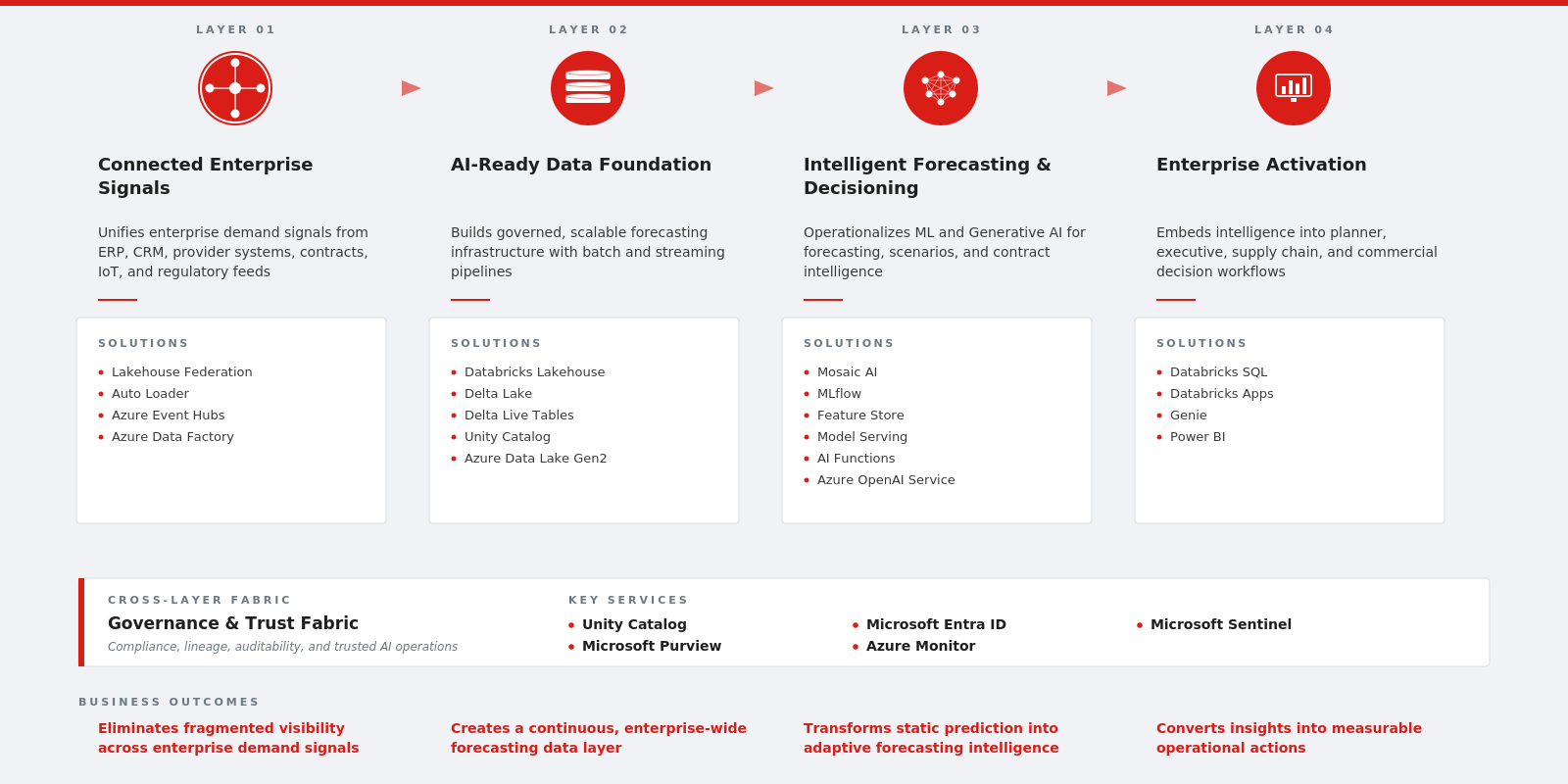
Fig. 1. AI-based demand forecasting framework with Databricks+ Azure foundation
## How Sigmoid enables MedTech organizations operationalize forecasting intelligence
Sigmoid combines deep data engineering expertise, advanced analytics, and Generative AI capabilities to help MedTech organizations design, build, and scale demand forecasting platforms on Databricks. Working alongside MedTech data, supply chain, and commercial teams, Sigmoid brings industry-specific accelerators like [DemandIQ](/accelerators/sigmoid-demandiq/) and proven implementation patterns to reduce time-to-value and de-risk the journey from pilot to enterprise scale.
### Forecasting transformation in practice
A leading American medical devices and healthcare company partnered with Sigmoid to modernize its demand forecasting capability across a diversified portfolio of approximately 400,000 products spanning medical devices, diagnostics, branded generic medicines, and nutritional products. The engagement required accurate demand predictions across stable, newly launched, and high-volume product categories over a 28-month forecast horizon.
Challenge
Solution
Impact
Inconsistent forecasts across business teams with no single source of truth.
An ML-based forecasting platform that decomposes sales into base, trend, and seasonality components.
30 percentage point improvement in forecast accuracy.
Poor prediction accuracy for newly launched products and items with sporadic sales.
SKU similarity and pattern-based forecasting models for new product introductions.
WAPE reduced to as low as 1.3% for high-volume products and below 19% for new launches and erratic-sales items.
Long forecasting cycles and high WAPE driving supply chain inefficiencies and stockouts.
Continuous testing and monitoring across multiple demand categories.
Reduced inventory inefficiencies and improved supply responsiveness.
The engagement enabled the organization to operationalize more adaptive and scalable forecasting workflows while improving alignment between commercial planning and supply chain operations.
### Building AI-ready forecasting foundations with Databricks and Azure
Modern MedTech forecasting hinges on the ability to unify structured and unstructured demand signals into a scalable, governed, and continuously learning ecosystem. This is where the combination of Databricks Lakehouse architecture and Azure-native data services provides a strong foundation for enterprise forecasting transformation.
By integrating capabilities across data engineering, machine learning, governance, and real-time analytics, organizations can build a modern forecasting ecosystem where data, models, and operational workflows remain continuously connected and evolve with changing business requirements.
Key Databricks and Azure solutions enabling this shift:
Unified enterprise demand data
Lakehouse architecture with Delta Lake
Scalable data ingestion and transformation
Azure Data Factory + Delta Live Tables
Real-time demand sensing
Azure Event Hubs + Structured Streaming
Enterprise ML lifecycle management
MLflow and Databricks Model Serving
Governed and compliant AI operations
Unity Catalog + Azure Purview
Self-service forecasting intelligence
Databricks SQL + Power BI
AI-driven contract and document intelligence
Azure OpenAI + Azure AI Document Intelligence
## Conclusion
For MedTech organizations, the demand forecasting challenge has moved from whether to adopt AI to how to architect a platform that brings data, machine learning, Generative AI, and governance together in a way that scales with the industry's complexity and compliance demands. Databricks provides the foundation for building unified, AI-ready forecasting environments, and the right implementation partner brings the MedTech domain depth needed to translate that environment into measurable supply chain, inventory, and commercial outcomes.
Organizations that modernize forecasting through real-time intelligence, scalable AI architectures, and governed operations will be better positioned to reduce operational risk, improve responsiveness, and build more resilient supply chains in increasingly volatile healthcare environments.
[lc_the_tags]
## Suggested resources
[View all](/blogs/)

#### How AI agents are transforming MedTech compliance processes
[Read blog](/blogs/how-ai-agents-are-transforming-medtech-compliance-processes/)
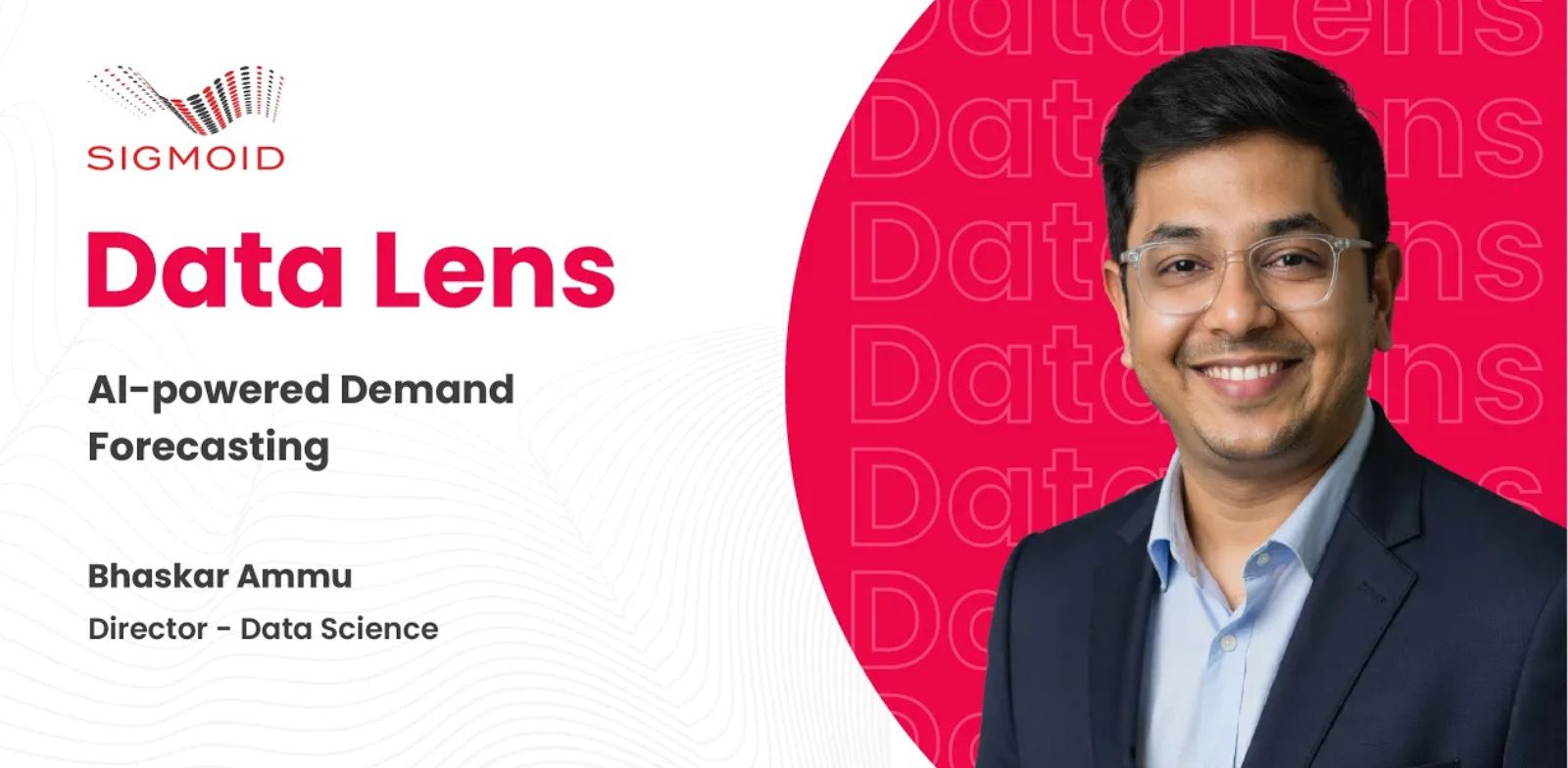
#### AI-powered demand forecasting
[Watch video](https://www.youtube.com/watch?v=cqkzrk58VbM)

#### Empowering decision autonomy with Databricks for enterprise AI initiatives
[Read blog](/blogs/empowering-decision-autonomy-with-databricks-for-enterprise-ai-initiatives/)
## Featured blogs
[lc_get_posts post_type="post"
posts_per_page="4" orderby="date" output_view="lc_get_posts_mycustom_view" output_number_of_columns="4"
output_wrapper_class="row" output_article_class="shadow" output_hide_elements="Excerpt"
output_excerpt_length="0" output_excerpt_text="Read More" output_heading_tag="span"
output_featured_image_format="thumbnail" output_featured_image_class="card-img-left" ]
## Share
[addtoany]
## Subscribe to get latest insights
## Talk to our experts
Get the best ROI with Sigmoid’s services in data engineering and AI
---
## Categories
- AI/ML
---
## Navigation
- [Company](/about-sigmoid)
- [Newsroom](/newsroom)
- [Life at Sigmoid](/careers)
- [Takshashila](/takshashila)
- [Contact Us](/contact-us)
- [AI Strategy Blueprint your AI advantage](/enterprise-ai-strategy/)
- [Generative AI Drive innovation with Generative AI](/generative-ai/)
- [Responsible AI Build trust with ethical AI practices](/responsible-ai-in-enterprise/)
- [Agentic AI Reshape business with scalable agentic systems](/agentic-ai-solutions/)
- [AI Managed Services Ensure reliable AI performance](/ai-managed-services/)
- [Advanced Analytics Transform your business with data-driven insights](/advanced-data-analytics-solutions/)
- [Download whitepaper](/ebooks-whitepapers/the-new-qsr-playbook-transforming-menu-strategy-into-a-growth-engine/)
- [Data Strategy Strong data foundations for scalable AI](/data-analytics-strategy/)
- [Data Management Leverage data as a strategic asset](/ai-data-management-services/)
- [DataOps Automate data for speed and quality](/data-devops/)
- [Forward Deployed Engineering Scale enterprise AI with FDEs & specialized agents](/forward-deployed-engineering/)
- [Data Engineering Deliver insights faster with scalable pipelines](/data-engineering/)
- [Cloud Transformation Modernize data to maximise efficiency](/cloud-migration/)
- [Download whitepaper](/ebooks-whitepapers/building-data-products-in-a-data-mesh-to-drive-business-value/)
- [Data Modeling Structure data for better decisions](/data-modeling-services/)
- [Data Visualization Transform data into actionable stories](/data-visualization-service/)
- [BI Migration Enhance decision making with modern BI tools](/bi-migration/)
- [Data Observability Build trust with healthy, accurate data](/data-observability/)
- [Automated Insights Make smarter decisions with auto-generated insights](/automated-insights/)
- [Download whitepaper](/ebooks-whitepapers/how-cognitive-bi-drives-an-intelligent-enterprise/)
- [CPG & Retail End-to-end analytics for planning, operations, and commercial excellence](/industries/cpg-analytics/)
- [Life Sciences Trusted intelligence across clinical, commercial, and operational workflows](/industries/life-sciences/)
- [Banking & Financial Services AI-powered analytics for risk, compliance and customer experience](/industries/banking-financial-analytics-services/)
- [Insurance Modernize core insurance platforms and unlock new revenue streams with AI](/industries/insurance-reimagined-with-ai/)
- [Download infographic](/wp-content/uploads/2026/03/Infographic_Maturity-Framework-for-Scaling-Agentic-AI.pdf)
- [Helios Turn marketing data into measurable business outcomes](/marketing-suite-helios/)
- [Stratos AI-powered platform for resilient supply chains](/supply-chain-stratos/)
- [DataGuard Agentic AI platform for data quality and governance](/data-quality-dataguard/)
- [MediaIQ Advanced platform for in-flight marketing measurement](/accelerators/sigmoid-mediaiq-multi-touch-attribution-tool/)
- [CampaignIQ AI-driven platform for optimized campaign budget allocation](/accelerators/sigmoid-campaigniq/)
- [AssistBot GenAI email assistant that automates human-like responses](/accelerators/sigmoid-assistbot-for-ai-email-assistant/)
- [CreativeBot GenAI tool for personalized and brand-aligned creative design](/accelerators/sigmoid-creativebot/)
- [SocialBot GenAI platform to analyze digital conversations and trends](/accelerators/#marketing|socialbot)
- [DemandIQ Predict trends accurately and optimize inventory management](/accelerators/sigmoid-demandiq/)
- [NetworkIQ Track and optimize logistics operations in real-time to quickly address disruptions](/accelerators/sigmoid-networkiq/)
- [SupplyIQ End-to-end platform to optimize supply chain operations](/accelerators/sigmoid-supplyiq/)
- [ProcurementIQ Automated procurement operations for maximum savings, compliance and efficiency](/accelerators/sigmoid-procurementiq/)
- [RapidML Accelerated deployment for machine learning models](/accelerators/sigmoid-rapidml/)
- [DataGuard Comprehensive platform for proactive data quality management](/accelerators/data-quality-tool-sigmoid-dataguard/)
- [CloudPulse Cloud cost optimization platform with multi-cloud management](/accelerators/sigmoid-cloudpulse/)
- [RAPID GenAI foundation with built-in governance and cost clarity](/accelerators/sigmoid-rapid/)
- [AnalyticsBot Conversational analytics for faster business decisions](/accelerators/sigmoid-analyticsbot/)
- [DataConnect Seamlessly ingest, integrate and harmonize data from diverse sources](/accelerators/sigmoid-dataconnect/)
- [Reconica AI-powered data harmonization and reconciliation engine](/accelerators/sigmoid-reconica/)
- [ConverseBot GenAI driven insights generation for automated insights from reports](/accelerators/#sales|conversebot)
- [iNRM Cross-lever revenue growth optimization platform](/accelerators/sigmoid-inrm/)
- [AssortmentIQ Optimize shelf layouts and assortment mix at scale with AI-based insights](/accelerators/sigmoid-assortmentiq/)
- [Read whitepaper](/ebooks-whitepapers/building-agentic-ai-chatbots-for-business-process-transformation/)
- [Listen Podcast](/events/podcast/how-jack-in-the-box-is-redefining-personalization-and-supply-chain-with-ai/)
- [Blogs](/blogs/)
- [White Papers](/ebooks-whitepapers/)
- [Case Studies](/case-studies/)
- [Podcast](/events/podcast/#Podcasts)
- [Download case study](/case-studies/ai-based-dynamic-targeting-and-personalized-hcp-engagement-for-pharma-marketing/)
- [ConverseBot](/accelerators/#sales|conversebot/)
## Tags
- AI/ML
- Data Governance
- Databricks
- Demand Forecasting
- GenAI
- MedTech
- Supply Chain
---
## Footer Links
- [Talk to our AI experts](/contact-us/)
- [AI Strategy](/enterprise-ai-strategy/)
- [Agentic AI](/agentic-ai-solutions/)
- [Generative AI](/generative-ai/)
- [AI Managed Services](/ai-managed-services/)
- [Responsible AI](/responsible-ai-in-enterprise/)
- [Advanced Analytics](/advanced-data-analytics-solutions/)
- [Data Strategy](/data-analytics-strategy//)
- [Data Engineering](/data-engineering/)
- [Data Management](/ai-data-management-services/)
- [Cloud Transformation](/cloud-transformation/)
- [DataOps](/data-devops/)
- [Forward Deployed Engineering](/forward-deployed-engineering/)
- [Data Visualization](/data-visualization-service/)
- [Automated Insights](/automated-insights/)
- [BI Migration](/bi-migration/)
- [Data Modeling](/data-modeling-services/)
- [Data Observability](/data-observability/)
- [CPG & Retail](/industries/cpg-analytics/)
- [Life Sciences](/industries/life-sciences/)
- [Banking & Financial Services](/industries/banking-financial-analytics-services/)
- [Insurance](/industries/insurance-reimagined-with-ai/)
- [Case Studies](/case-studies/)
- [Thought Leadership](/ebooks-whitepapers/)
- [Blogs](/blogs/)
- [Helios](/marketing-suite-helios/)
- [Stratos](/supply-chain-stratos/)
- [DataGuard](/data-quality-dataguard/)
- [Company](/about-sigmoid/)
- [Newsroom](/newsroom/)
- [Accelerators](/accelerators/)
- [Careers](/careers/)
- [Privacy Policy |](/privacy-policy/)
- [Cookie Policy](/cookie-policy/)